
(Oslo, Norway) – Five consortia have now made positive investment decisions for their planned hydrogen projects. “This is a crucial step towards building a hydrogen network along the Norwegian coast,” explains the Norwegian economic development agency Enova SF. The sites form a chain from Slagentangen on the Oslofjord in the southeast to Bodø in the north.
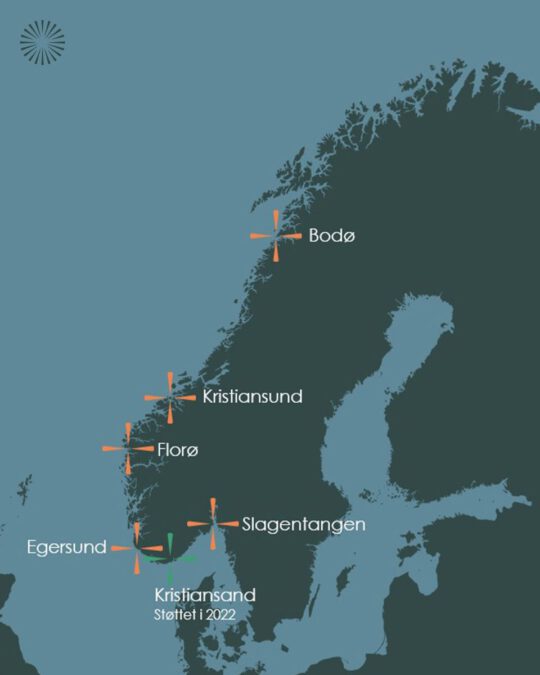
Five consortia have now made their investment decisions for their hydrogen production projects in Norway. © Enova SF
Last autumn, the agency allocated 777 million kroner (66 million euros) for this purpose. The energy produced in the plants and its derivatives are intended to eventually be available to the shipping sector as fuel. This will make it easier for shipping companies to opt for zero-emission solutions and could reduce emissions in the maritime sector by up to 200.000 tons of CO2 per year, which represents about five percent of Norwegian shipping and fishing, according to Enova. It is hoped that "the initiative will serve as a springboard for the further development and restructuring of the maritime sector in Norway." The projects are being built in
- Slagentangen (Vestfold) GreenH AS (Enova funding: 144 million kroner; 12,31 million euros) in cooperation with Grieg New Energy and Esso Norway. The Norwegian manufacturer Nel ASA will supply the electrolyzers. The final scope and delivery schedule have not yet been announced, but according to Nel, the capacity is "at least ten megawatts".
- Egersund (Rogaland) by Kaupanes Hydrogen AS (206 million kroner; 17,6 million euros), a consortium of Dalane Energi AS and Eigersund Næring og Havn KF led by co-owner Hydrogen Solutions AS. NEL ASA Its PEM electrolyzer system “MC 500” with a power output of 20 megawatts is to supply this.
- Florø (Vestland) from “HyFuel“(180 million kroner; 15,5 million euros), a consortium of Sogn og Fjordane Energi AS and Fjord Base Holding AS, also led by Hydrogen Solutions AS. This will also be NEL ASA deliver its PEM electrolyzer system “MC 500” with a power output of 20 megawatts.
- Kristiansund (Møre og Romsdal) by GreenH AS (119 million kroner; 10,14 million euros). Nel ASA is to supply electrolyzers of an as yet unspecified size, but according to its own estimate, also "at least ten megawatts". At the Vestbase in Kristiansund, one of the country's busiest maritime bases with over 16.000 port calls annually, GreenH also plans to develop a facility for bunkering hydrogen on ships together with NorSea.
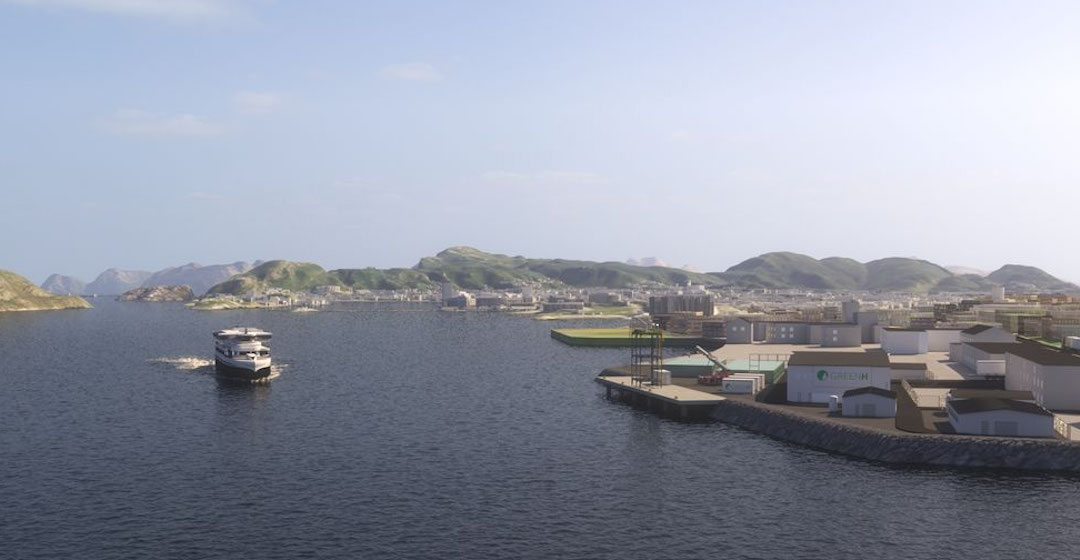
- Bodø (Northland) of GreenH AS (129 million kroner; 10,99 million euros). At the beginning of 2024, the Hamburg-based asset manager Luxcara acquired a majority stake in the project company GreenH Bodø AS. The first construction phase will develop a capacity of 20 megawatts with an annual production capacity of 3.100 tons of green hydrogen. In phase 2, a further ten megawatts could potentially be installed, increasing the production capacity to approximately 4.800 tons. The hydrogen will be supplied to the Vestfjorden ferry service operated by Torghatten Nord, with operations scheduled to begin in 2026.
Another project in Kristiansand (Agder) is already under construction and received funding of 148 million crowns (12,64 million euros) from Enova in 2022.
Hydrogen for shipping in Norway
As these five projects now move from the planning to the construction phase, “we are taking a major step towards making hydrogen an available fuel and a real alternative for shipping in Norway,” says Sigmund Ø. Størset, Enova’s hydrogen and ammonia manager. Now it’s a matter of “maintaining the pressure and building ships that can use hydrogen as fuel.”
Enova has also focused particularly on this over the past three years. "So far, we have supported ships that can operate completely emission-free using hydrogen or ammonia," says Elin Ulstad Stokland, Enova's manager for maritime transport. "Starting next year, we will also enable the conversion of existing ships." According to the company, the funding programs will initially run until 2028.
Ammonia is the next target
Enova's funding is also intended to help establish functioning value chains for ammonia as a fuel. The deadline for applications for funding to build ammonia bunkering facilities expired in October. The applications are currently being evaluated, and the results are expected to be published "by the new year." According to Enova, the implementation of these projects will lay the foundation for an initial network that will supply ammonia to shipping along the coast.
Photo above
Rendering of the future hydrogen production site in Bodø. © Luxcara



