
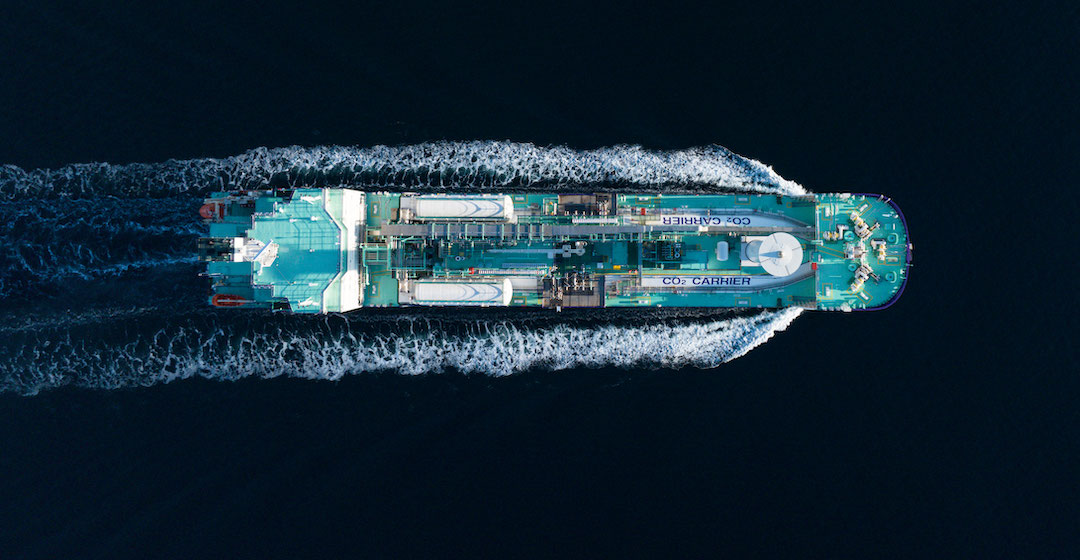
(Stavanger, Norway) – Northern Lights JV DA has, for the first time, stored carbon dioxide beneath the Norwegian North Sea. The liquefied gas from the Heidelberg Materials cement plant in Brevik was shipped to intermediate storage facilities in Øygarden on the country's west coast, then transported via pipeline and injected into the Aurora reservoir, located 100 kilometers away and 2.600 meters below the seabed. "Our ships, facilities, and wells are now operational," says Managing Director Tim Heijn.
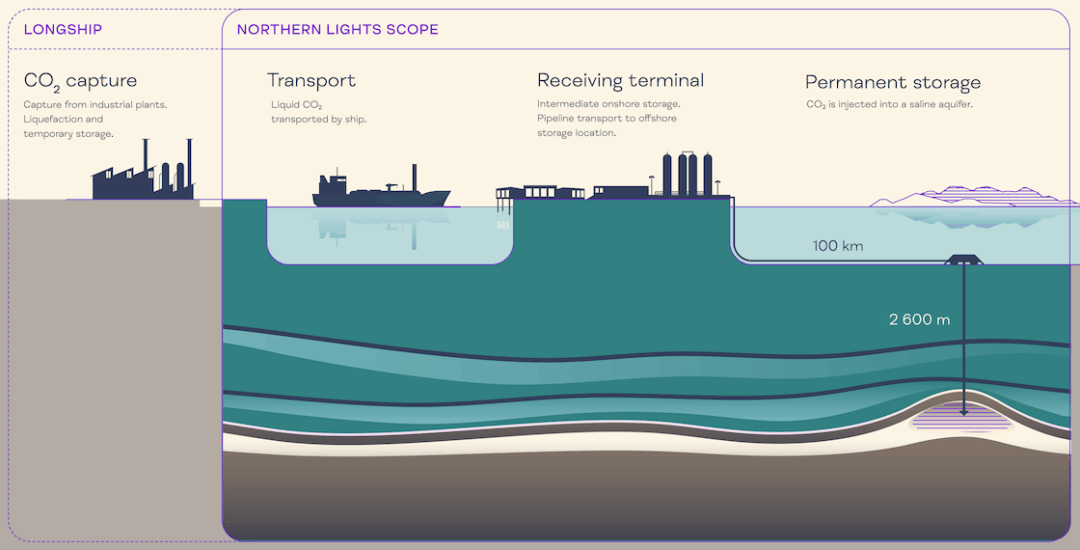
Northern Lights transports liquefied CO2 from the capture sites to an onshore terminal at Øygarden, before injecting it via pipeline into a reservoir 2.600 meters below the seabed for permanent storage. © Northern Lights JV DA
Northern Lights claims to be the world's first company to commercially offer carbon capture and storage (CCS) services. Shareholders are the three oil companies Equinor (Norway), Total Energies (France), and Shell (UK). Later this year, additional CO2 will be stored from Heidelberg Materials and from the Hafslund Celsio waste-to-energy plant in Oslo. Transports from Denmark and the Netherlands are expected to follow next year.
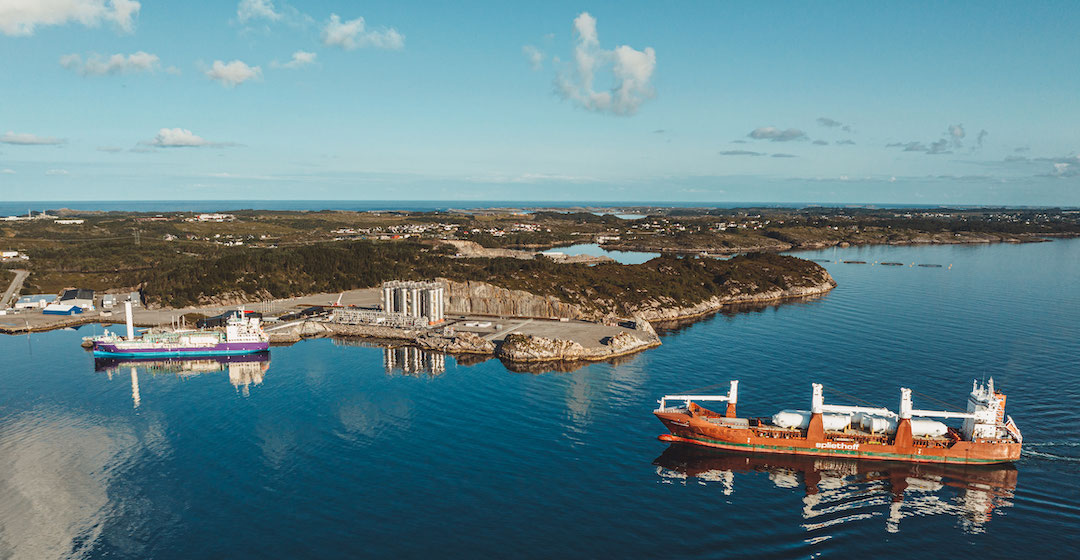
Arrival of the CO2 carrier (left) at the Øygarden site. The onshore interim storage facility, consisting of stationary tanks on land, has a capacity of 1,5 million tons in the initial construction phase. The freighter on the right is delivering additional tanks for later expansion. © Northern Lights JV DA / Ruben Soltvedt
The joint venture has so far signed commercial agreements with five industrial customers, including Heidelberg and Hafslund, the fertilizer manufacturer Yara in the Netherlands, the energy group Ørsted in Denmark, and the Swedish energy provider Stockholm Exergi. Great Britain also appears to be interested. In December 2024, British Prime Minister Keir Starmer visited the recently completed facilities in Øygarden together with Norwegian Prime Minister Jonas Gahr Støre. An agreement called the "Green Industrial Partnership" was signed between the two countries. The collaboration will "create more green jobs here in Norway and drive the green transition," Støre said.
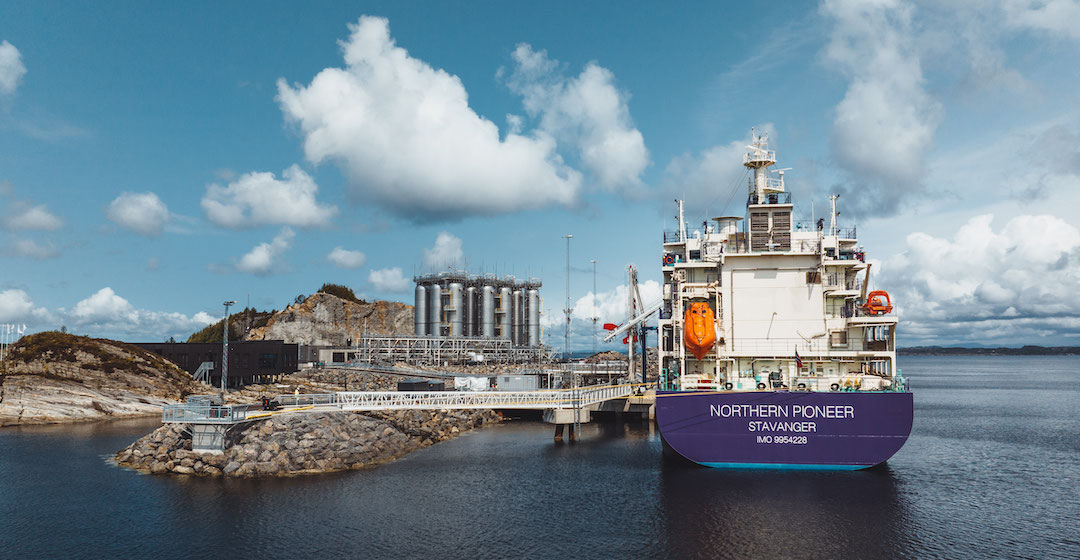
The Northern Pioneer at the Øygarden pier. © Northern Lights JV DA / Ruben Soltvedt
The first construction phase of Northern Lights is part of "Longship," a Norwegian government carbon capture and storage project. In May, Northern Lights received all permits for storage from the Ministry of Energy, the Norwegian Environmental Agency (NEA), and the Norwegian Ocean Industry Authority (Havtil): 37,5 million tons of CO2 for a period of 25 years.
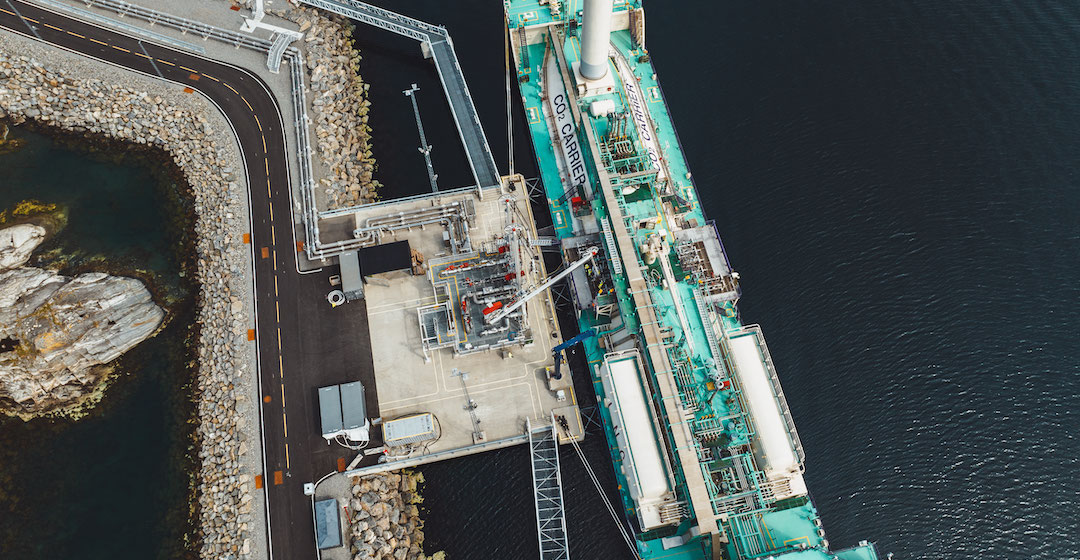
The CO2 transported by the tanker is unloaded at Øygarden, stored temporarily, and then transported by pipeline to the final storage site. © Northern Lights JV DA / Ruben Soltvedt
Northern Lights made the investment decision for the expansion back in March of this year. The interim storage facility's current capacity of 1,5 million tons of CO2 per year is fully booked by customers from Norway and continental Europe, according to co-owner Total Energies. In the second phase, capacity will increase to more than five million tons starting in 2028. Nine additional tanks from the Spanish manufacturer Ingenieria y Diseno Europeo SA (IDESA) have already arrived, each 30 meters high and with a volume of 680 cubic meters.
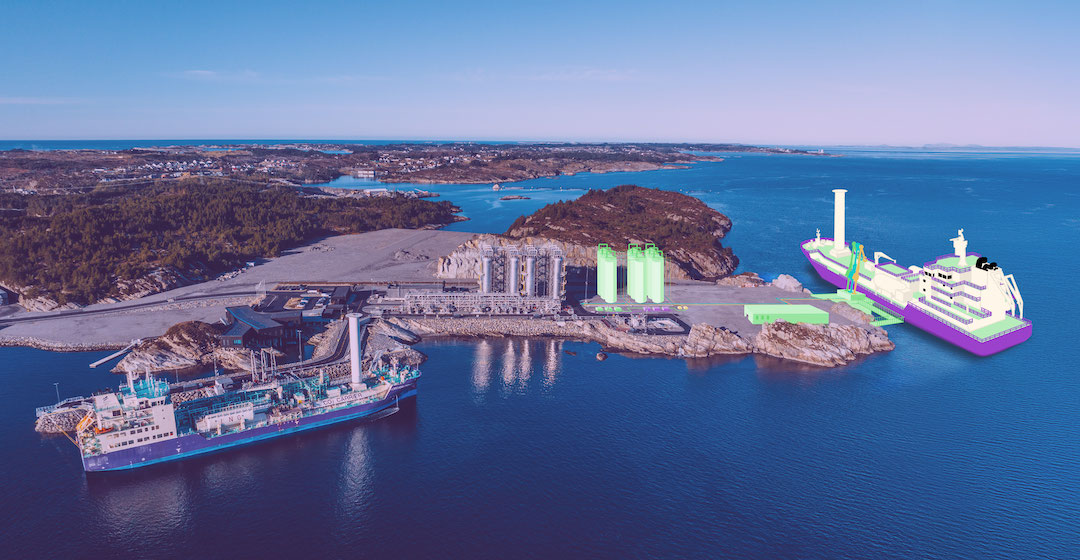
In June, Northern Lights received approval from the Norwegian Ministry of Energy for the expansion, including additional tanks and a second facility. A total of five million tons of CO2 will eventually be temporarily stored at Øygarden. © Northern Lights JV DA
The expansion will utilize existing infrastructure and, in addition to the onshore tanks, will include additional pumps, a new jetty, injection wells, and additional CO2 transport vessels. The expansion is receiving €131 million in funding from the EU's "Connecting Europe for Energy" program. According to Northern Lights, the total cost is 7,5 billion kroner (€0,6 billion).
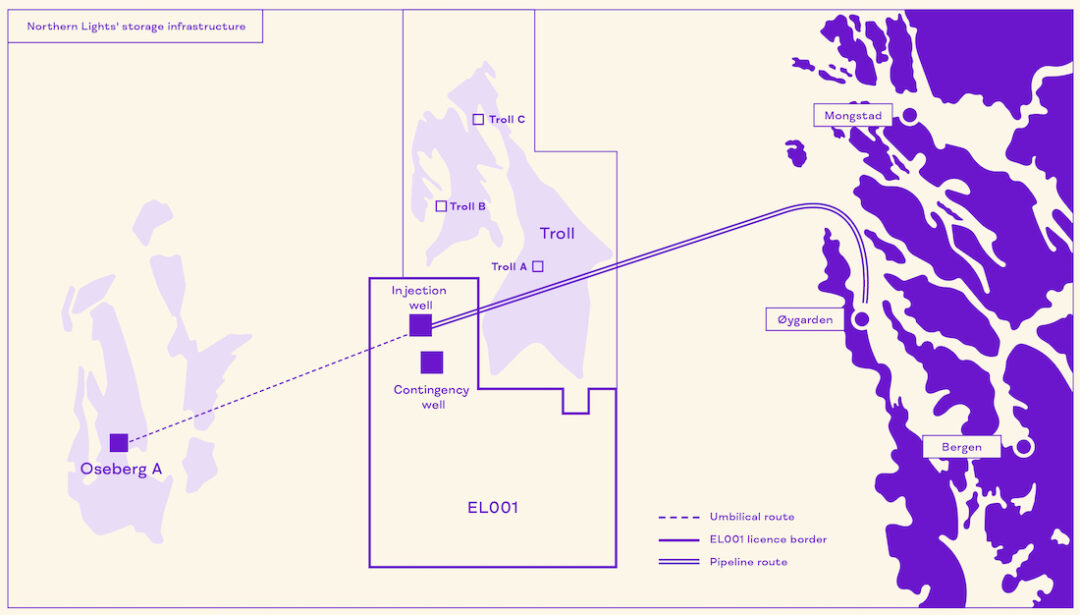
The CO2 is transported by pipeline from Øygarden to the Aurora reservoir. The outlined area "EL001" shows the area in the North Sea approved for storage. To the north are the 700-square-kilometer "Troll" oil and gas fields operated by Equinor Energy AS. © Northern Lights JV DA
The 130-meter-long "Northern Pioneer" has a capacity of 8.000 tons of liquid CO2. Its sister ship, the "Northern Pathfinder," is also 130 meters long and has a capacity of 7.500 tons. It was delivered in December by the Chinese shipyard Dalian Shipbuilding Industry Co. (DSIC) and was christened about eight weeks ago by the Norwegian Minister of Education, Kari Nessa Nordtun, who lives at the company's headquarters in Stavanger. The ceremony was also attended by the Norwegian Crown Prince and the Minister of Energy. Both ships fly the Norwegian flag and are managed by Kawasaki Kisen Kaisha, Ltd. (K-Line). The fleet will eventually comprise five CO2 tankers.
Photo above
The CO2 tanker "Northern Pioneer" at sea. It is owned by the Northern Lights joint venture, which is equally owned by Total Energies, Equinor, and Shell. © Northern Lights JV DA / Ruben Soltvedt



