
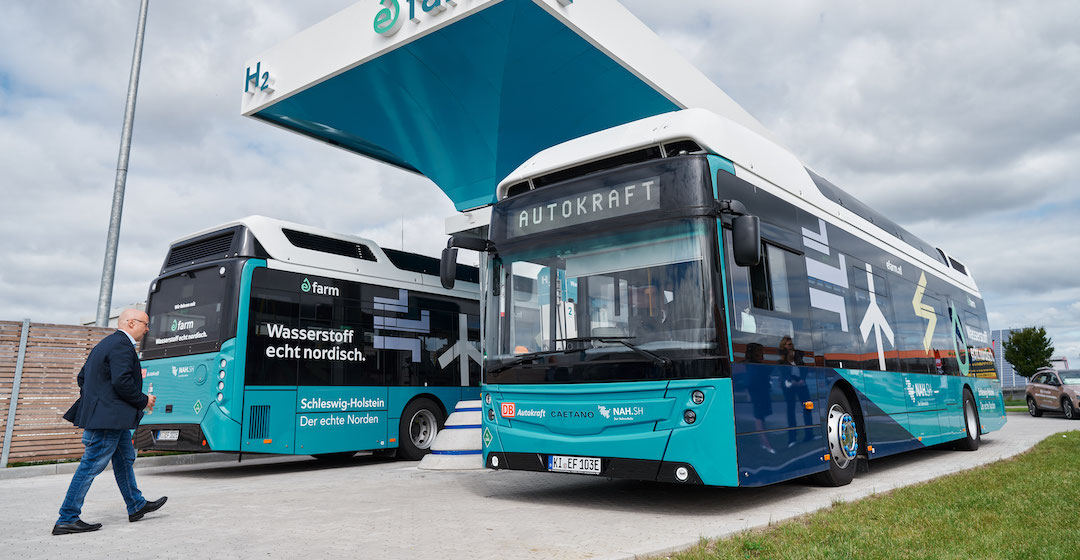
(Reußenköge / Germany) – Autokraft GmbH and Rohde Verkehrsbetriebe GmbH are expanding their fleets: From October 2024, ten more hydrogen buses will operate on public transport in North Frisia. Currently, there are two.
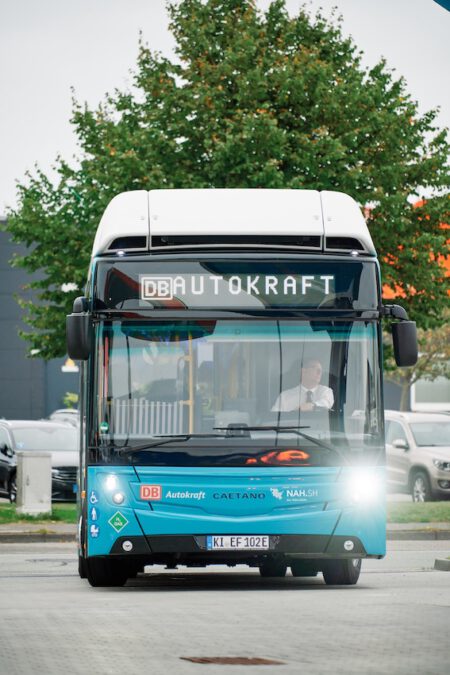
Five of the new vehicles from the Portuguese manufacturer Caetano Bus are powered by Autokraft, the others by Rohde. © JP Joule GmbH
Five of the vehicles from the Portuguese manufacturer Caetano Bus are used by the DB subsidiary Autokraft, and the other five are used by the Transdev subsidiary Rohde. The range is comparable to that of conventional diesel buses. This is why the buses with fuel cell drives can be "easily integrated into the operational process". The expansion of the hydrogen bus fleet is supported by the innovation clause of the district of Nordfriesland. This stipulates that the use of emission-free drive technologies is to be preferred and subsidizes additional operational costs.
The hydrogen is produced using green electricity from eFarm and distributed via two public filling stations in Husum and Niebüll. According to the information, 20 shareholders and companies are involved in the eFarm project, including community wind and community solar parks, so that more than 3.500 people from North Friesland are indirectly involved.
JP Joule GmbH began hydrogen production in Bosbüll, North Frisia, in the summer of 2020. "E-Farm has become a flagship project for all of Germany," explains Sören Nissen, product manager for hydrogen buses at GP Joule Hydrogen. Among other things, it strengthens local value creation. According to its own statements, the operating company GP Joule is currently implementing further hydrogen mobility projects based on the eFarm model, including in Kiel, Bremerhaven, Waiblingen, and Weilheim an der Teck.
Photo above
From October, ten more buses with fuel cells will be running on North Frisian public transport. © GP Joule GmbH



