
(Berlin / Germany) – The National Hydrogen Council has summarized its assessment of the necessary research needs regarding hydrogen and its derivatives in a recently published paper. The paper presents the relevant technologies according to their "maturity level".
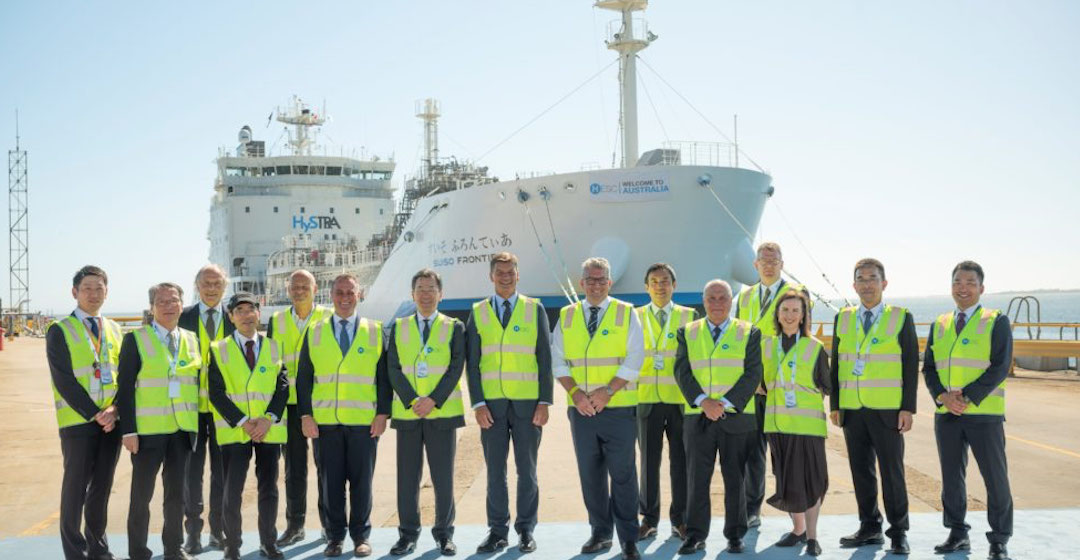
Pilot test: The "Suiso Frontier" set sail from Hastings, Australia, loaded with liquid hydrogen in January 2022 and arrived in Kobe, Japan, just over 14 days later. The ship was purpose-built to test the process from hydrogen production to unloading the cargo at its destination. © HESC
Overall, the industrial use of hydrogen is "safe and proven," according to the Hydrogen Council. However, due to technical properties such as a wide explosion range and high diffusivity, "special measures for safe handling" are necessary. "In particular, the material compatibility of hydrogen and the safety of its large-scale application require further research." The brief proposal aims to show "which processes and supply paths are already fully market-ready and where there is still a need for development," it states. The paper is intended to "provide a sound basis for the professional evaluation of technological development paths" and support the targeted orientation of future funding measures.
The list shows processes for the production and use of hydrogen for which, in the opinion of the Hydrogen Council, there is still a medium to high need for R&D.
- Fischer-Tropsch synthesis (FT synthesis): chemical process for producing liquid hydrocarbons (such as gasoline) from synthesis gas (CO + H2). Assessment: is considered technically mature, but so far fossil CO2 sources have been used. Initial pilot and test plants for the conversion to renewable synthesis gas are in operation. R&D needs: high.
- Plasmalysis: Conversion of natural gas/biogas/synthetic natural gas (SNG) to hydrogen and carbon using thermal plasma at more than 1.200 degrees Celsius using electricity from renewable energies or non-thermal plasma. Assessment: Both processes are still in the experimental phase. The technologies require testing and scaling to demonstration scale. R&D needs: high.
- Steam reforming (steam methane reforming): The primary technology for producing gray hydrogen from natural gas. This technology is associated with a high carbon footprint. This can be reduced through carbon capture and storage (CCS). Assessment: Large-scale experience exists with CO2 capture, and further action is needed with CO2 capture from flue gas (exhaust gas). However, there is no large-scale long-term experience in continuous operation with flue gas capture containing more than 90 percent CO2. R&D needs: medium.
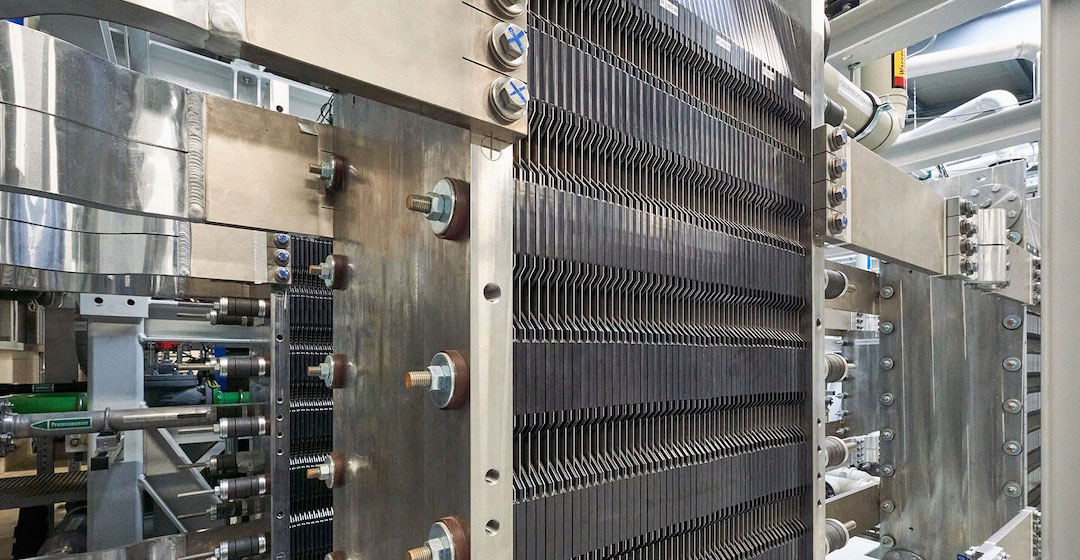
- Proton exchange membrane electrolysis (Proton Exchange Membrane, PEM): The electrolysis of water to hydrogen (and oxygen) is established in the lower megawatt range. Assessment: There was a lack of long-term experience with large-scale plants. R&D needs: medium.
- High-temperature electrolysis (HTEL): In this process, water vapor is split into hydrogen and oxygen at high temperatures. The efficiency is high and attractive when coupled with processes that generate waste heat. Assessment: HTEL is still in the development stage. The biggest challenge lies in the long-term stability of the stacks in an industrial environment. R&D needs: medium.
- Alkaline membrane electrolysis (AEM): requires no precious metals and combines the advantages of alkaline and PEM electrolysis. Assessment: The technology is still not yet ready for market, and long-term experience is lacking; it requires upscaling and multiple scaling of the currently relatively small stacks as well as endurance tests of larger systems in an industrial environment. R&D needs: medium.
- Ammonia: is being discussed as an energy carrier, both for direct use (fuel) and for conversion (cracking) to hydrogen as a storage medium. The process for its production using gray hydrogen and nitrogen is known and has so far been used primarily in the fertilizer sector. Assessment: The switch to renewable hydrogen is possible without any problems. R&D needs: medium.
- Liquid hydrogen: Hydrogen is liquefied to achieve higher energy density and thus reduce transportation costs. There have already been successful pilot tests with gray hydrogen shipped between Australia and Japan. Assessment: The import of liquid hydrogen by ship requires research and development to optimize and upscale liquefaction plants, as well as the development of storage tanks and handling systems for large volumes on land. R&D needs: medium.
- Direct Air Capture (DAC): CO2 is filtered from the ambient air and used for the production of hydrogen derivatives such as methanol and synthetic fuels or for the chemical industry. Assessment: The technical development is still in its early stages and is not expected to make a significant contribution to hydrogen derivatives until 2030. Currently, only initial demonstration plants exist, which present significant technical challenges. R&D needs: high.
- Liquid organic hydrogen carriers (LOHC): Hydrogen becomes easier to transport by binding to hydrogen carriers and is released at the point of use via a dehydrogenation process. Assessment: There is a lack of industrial dehydration facilities. Furthermore, there is a need for development regarding the technical properties and cost-effectiveness of the carrier materials. R&D needs: high.
Explicitly not listed is the longest-established method of energy production, alkaline electrolysis (AEL), whose functionality and successful application have been proven. Any development needs for solid oxide fuel cells (SOECs) are not mentioned.
The National Hydrogen Council was appointed by the German Federal Government in June 2022 as part of the National Hydrogen Strategy and consists of 26 members with expertise in the areas of generation, research and innovation, decarbonization of industry, transport and buildings/heat, infrastructure, international partnerships, and climate and sustainability. Its task is to support the implementation and further development of the hydrogen strategy.
The now published background paper “Research and development needs – provision pathways for renewable and low-carbon hydrogen and its derivatives” is available free of charge as a PDF (7 pages).
Photo above
Stack of a PEM electrolyzer: The National Hydrogen Council identifies the need for research in hydrogen production and transport in a basic paper. © Gas- und Wasserstoffwirtschaft eV / Swen Gottschall



