
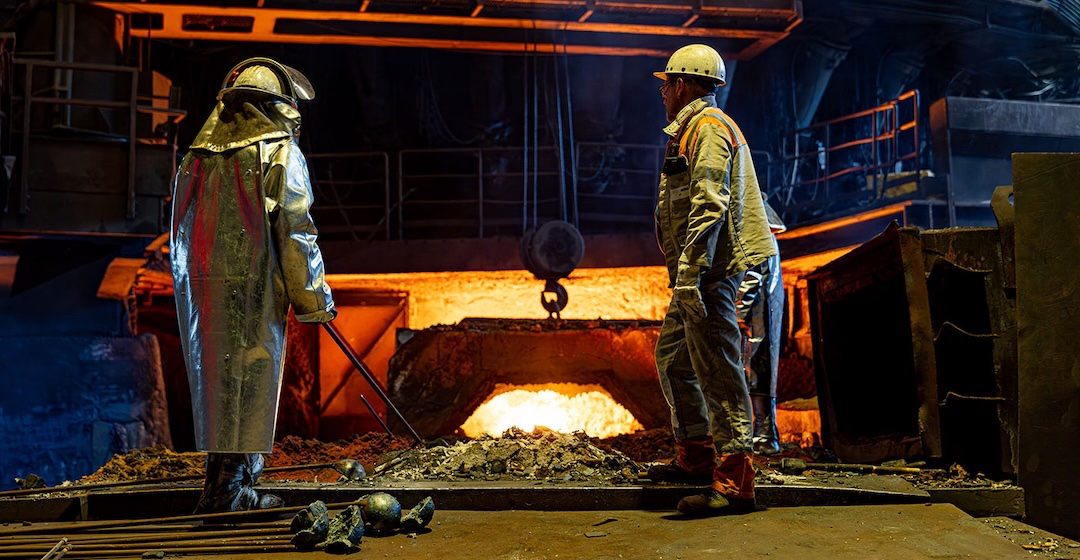
(Duisburg, Germany) – At the Krupp Mannesmann steelworks (HKM) in Duisburg, blast furnace A has been permanently decommissioned after 53 years of operation. The owner, Salzgitter AG, intends to produce CO2-neutral steel there as well. At its main plant in Lower Saxony, it is advancing plans within the framework of the "Salcos" project to replace coal with hydrogen in iron production ( more information here ).
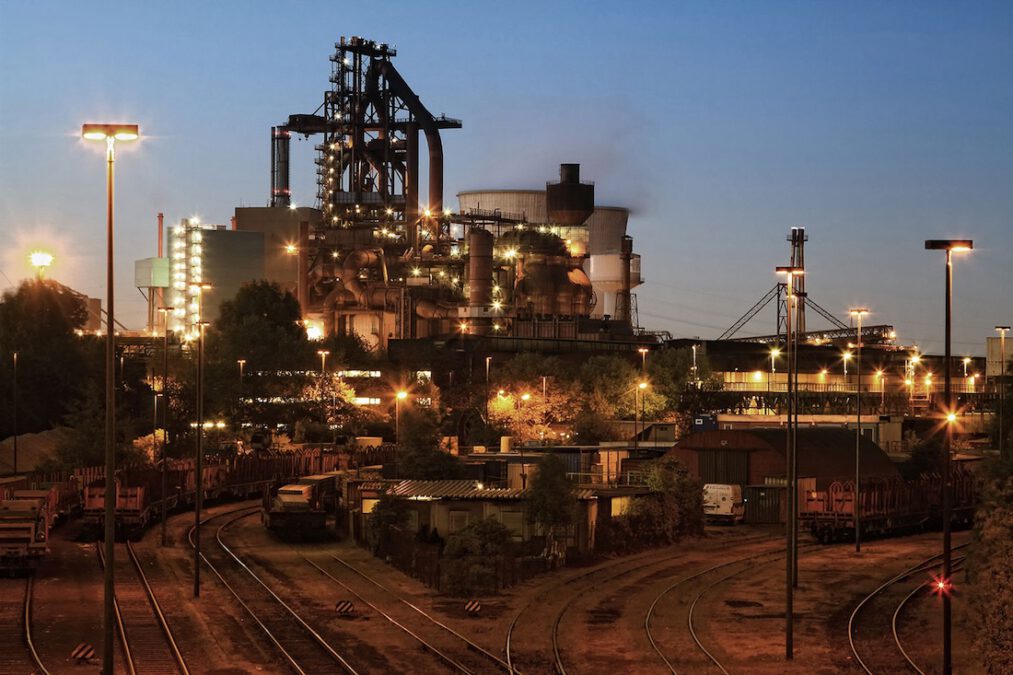
HKM's Blast furnace A is being decommissioned. Construction of the electric arc furnace is now beginning. © Salzgitter AG
HKM will produce CO2-reduced steel using an electric arc furnace. The installation will be carried out by the Italian plant engineering company Tenova SpA. With a tapping weight of 285 tons and a capacity of 2,5 million tons per year, this will be "the largest electric arc furnace in Germany and the second largest within the European Union." Completion is planned for 2029.
Until then, production will continue with blast furnace B. Last year, HKM's two blast furnaces together produced approximately four million tons of pig iron. This year, three million tons are planned due to the reduced volume resulting from the conversion work. The project is being funded with 200 million euros by the federal government and the state of North Rhine-Westphalia.
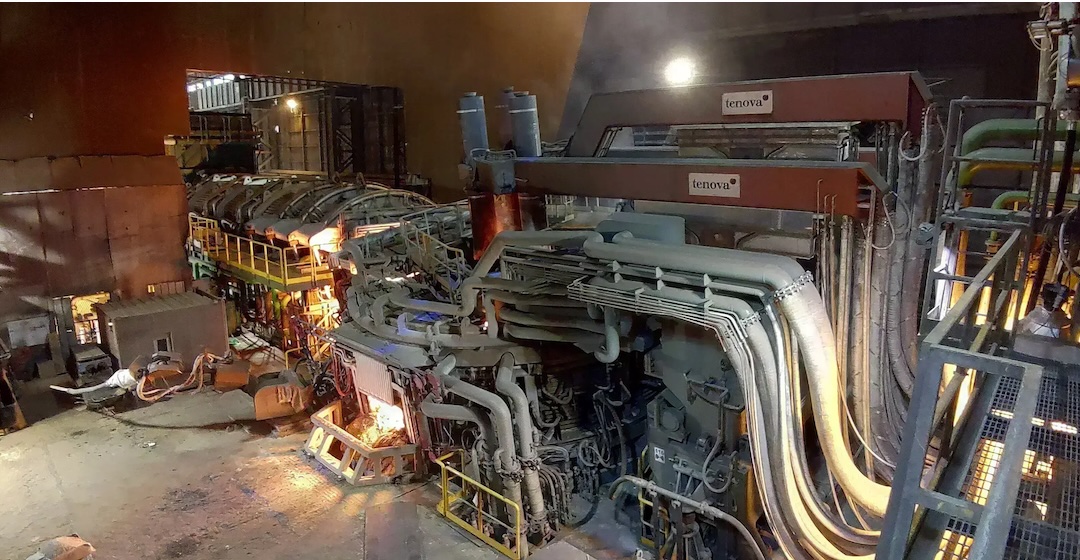
HKM is receiving a "Consteel" electric arc furnace (EAF) from Tenova for steel production. In this process, raw materials such as scrap metal or sponge iron are continuously heated and melted using electricity, and the exhaust gases are combusted with low emissions via an exhaust gas cleaning system. © Tenova SpA
“As Salzgitter AG, we aim to complete the transformation to virtually CO2-neutral steel production by the mid-2030s,” says Gunnar Groebler, CEO of Salzgitter AG. “With the construction of the electric arc furnace, we are also implementing the Salzgitter Group’s strategy in Duisburg and strengthening our position as a leading supplier of green steel for industrial value chains.”
HKM has been a wholly owned subsidiary of the Salzgitter Group since July of this year, following the withdrawal of the two other partners from the former joint venture. Until then, Thyssenkrupp Steel AG held 50 percent, Salzgitter AG 30 percent, and the French pipe manufacturer Vallourec 20 percent. HKM will continue to supply slabs from its southern Duisburg site to Thyssenkrupp Steel, whose headquarters and steelworks are located in northern Duisburg, until the end of 2028.
Photo above
The last tapping of blast furnace A took place in September at the HKM plant site in Duisburg. © Salzgitter AG



