
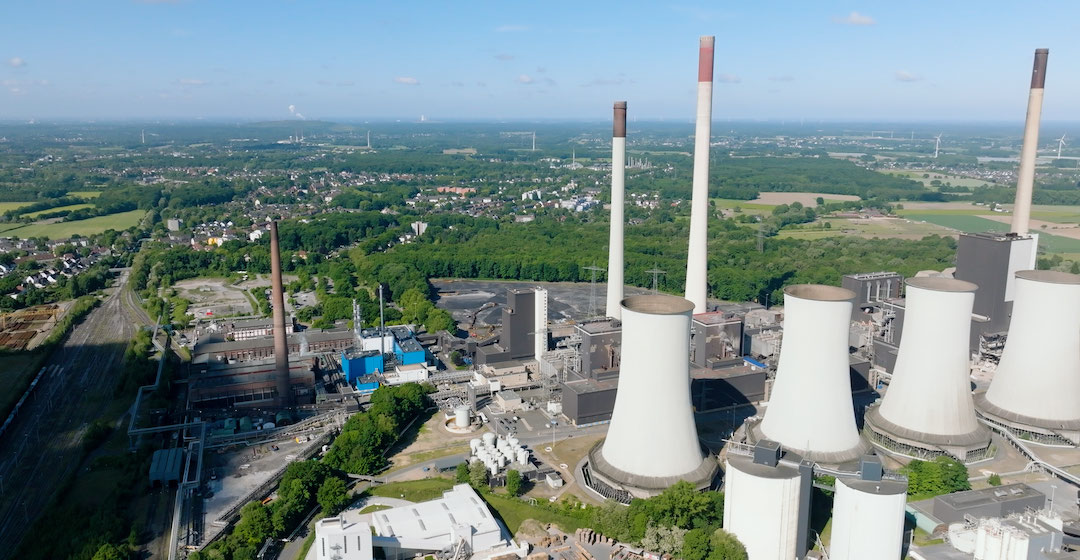
(Gelsenkirchen, Germany) – Thyssenkrupp Uhde GmbH and the energy company Uniper SE plan to jointly develop a large-scale ammonia cracker to industrial maturity. The companies describe it as a key technology for global hydrogen trading. The Uniper power plant in Gelsenkirchen-Scholven is the planned site. In addition to electricity, the plant produces district heating and steam for industry and households.
Ammonia for hydrogen production
Through cracking, ammonia (NH3) is catalytically broken down into its components, hydrogen and nitrogen, at high temperatures. If it was previously produced using renewable electricity, the resulting energy source can be used in a climate-friendly manner. The demonstration plant will be designed to produce 28 tons of ammonia per day. It is the "first of its kind worldwide" and will serve to gain insights for the eventual construction of a large-scale commercial plant.

Uniper and Thyssenkrupp Uhde plan to use the cracker on a large-scale industrial scale in Wilhelmshaven to produce green hydrogen from green ammonia. As reported, the energy supplier announced the project in April 2021; they wanted to build a "national hydrogen hub" there, including an import terminal and electrolysis facility, it said at the time. © Federal Institute for Waterways Engineering and Research
This is intended to lay the foundation for the planned hydrogen import terminal in Wilhelmshaven. After the testing phase, the technology will be deployed there and the ammonia imported by tanker will then be converted into hydrogen on an industrial scale for use in industries such as energy, steel, and chemicals – or fed into the hydrogen core network.
Ammonia as a transport and storage medium makes it possible to cost-effectively supply green or low-carbon hydrogen in large quantities from production sites worldwide. Because ammonia has a significantly higher energy density per unit volume and is easier to transport than pure hydrogen, it is ideally suited as a carrier medium. Ammonia has been traded worldwide in large quantities as a raw material for fertilizers for decades.
Following successful development and laboratory-scale testing, the construction and operation of the "demo cracker" are now important steps toward large-scale implementation. Commissioning is planned for the end of 2026. Funding of an undisclosed amount is provided by the state of North Rhine-Westphalia.
Photo above
A demo plant of the ammonia cracker will be installed on Uniper's power plant site in Gelsenkirchen-Scholven. All regulatory approvals required for construction and operation have already been obtained. The main plant is to be built in Wilhelmshaven following successful testing. © Uniper SE



