
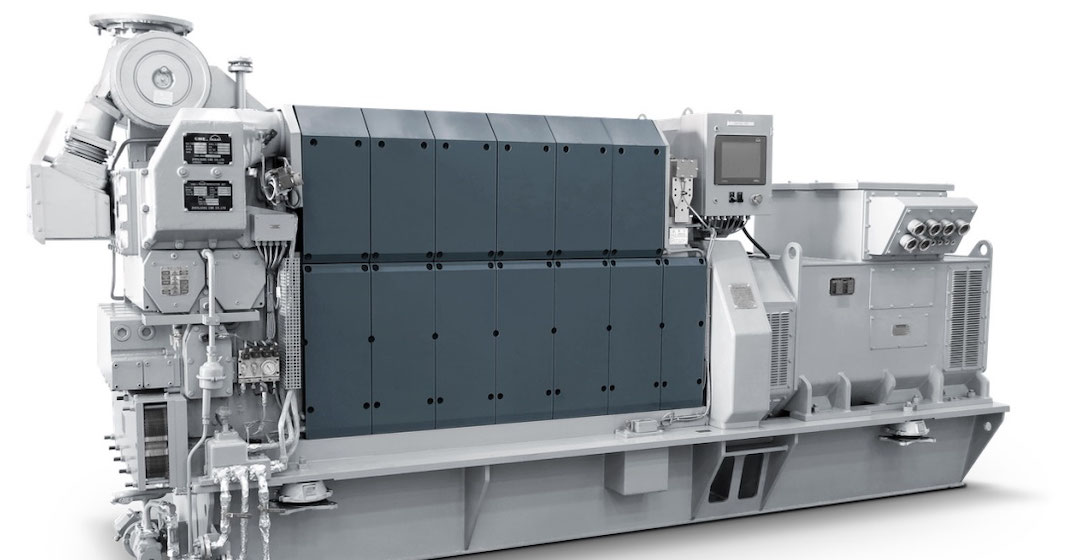
(Holeby / Denmark) – The Danish government initiative EUDP (Energy Technology Development and Demonstration Programme) aims to develop a dual-fuel capable four-stroke engine as part of a new project entitled "NH3 Spark – FutureFlex". This engine will also be able to run exclusively on ammonia and will not require the pilot fuel typically used for starting.
First project phase starts in the third quarter
The consortium partners, led by MAN Energy Solutions, are planning four project phases at the Holeby site, the first of which is scheduled to begin in the third quarter of 2025. Initial testing will be conducted on a single-cylinder engine (the model MAN calls "Genset") in the engine laboratory of the Technical University of Denmark (DTU Construct). This will be followed by "full engine tests" under real-world conditions at the green ammonia production facility of the energy supplier Skovgaard Energy A/S.
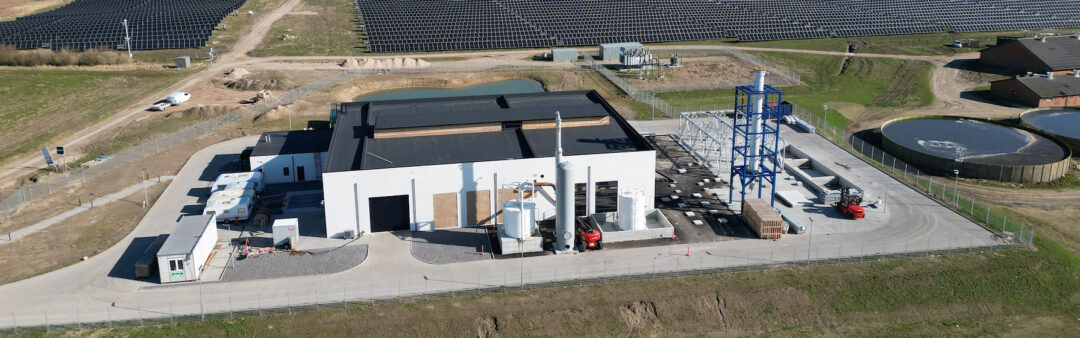
In August of last year, Skovgaard Energy A/S, together with Vestas and Topsoe, inaugurated a green ammonia production plant near Lemvig (Northwest Jutland, Denmark). The green electricity for electrolysis and ammonia synthesis comes from PV and wind power plants. © Topsoe
In August of last year, the company inaugurated a green ammonia production plant near Lemvig (Northwest Jutland, Denmark) together with Vestas and Topsoe. This plant, too, received financial support from EUPD. The dynamically designed system uses (as reported) an alkaline electrolyzer from Nel Hydrogen Electrolyser AS, which operates with directly fed wind and solar power in fluctuating conditions. The green electricity for electrolysis and ammonia synthesis comes from a new PV power plant with an installed capacity of 50 megawatts and existing Vestas wind turbines with a combined capacity of XNUMX megawatts.
MAN Energy Solutions says it is now developing a small-displacement engine for the NH3 project. The focus is on "simple design, price, and suitability for retrofitting." This is "particularly relevant for the more than 20.000 MAN gensets currently in operation" and developed in Holeby. The suitability of the concept for other low-emission fuels is also being evaluated, hence the "FutureFlex" designation.
Low-emission solution for retrofitting
"This project has the potential to create a niche for the proven conventional fuel-powered engine, as engines can be quickly retrofitted or installed in new vessels or power plants," says Warley Thomsen, Senior R&D Specialist at MAN Energy Solutions. "The goal is to offer an attractive solution for retrofitting existing engines, with priority given to fuel flexibility." Pure ammonia or conventional biofuels could be considered as fuels to meet the diverse needs of shipowners, including environmental considerations.
The project is supported by the Mærsk Mc-Kinney Møller Center for Zero Carbon Shipping, part of the world's second-largest shipping company, the international shipping and logistics company DFDS, and the Singapore-registered shipping company Hafnia, an operator of chemical tankers. A classification society will also be involved at a later date.
Methanol engine ready in June
Just a few days earlier, MAN Energy Solutions had announced that the world's most powerful two-stroke methanol engine would be ready by June 2025. It is an LGIM (Liquid Gas Injection Methanol) engine with an output of 82.440 kilowatts, currently being built by the Chinese licensee CSSC-MES Diesel Co., Ltd. (CMD). It is the first of a total of twelve engines for twelve container ships, each with a capacity of 24.000 TEU (Twenty-Foot Equivalent Units, 20-foot standard containers).
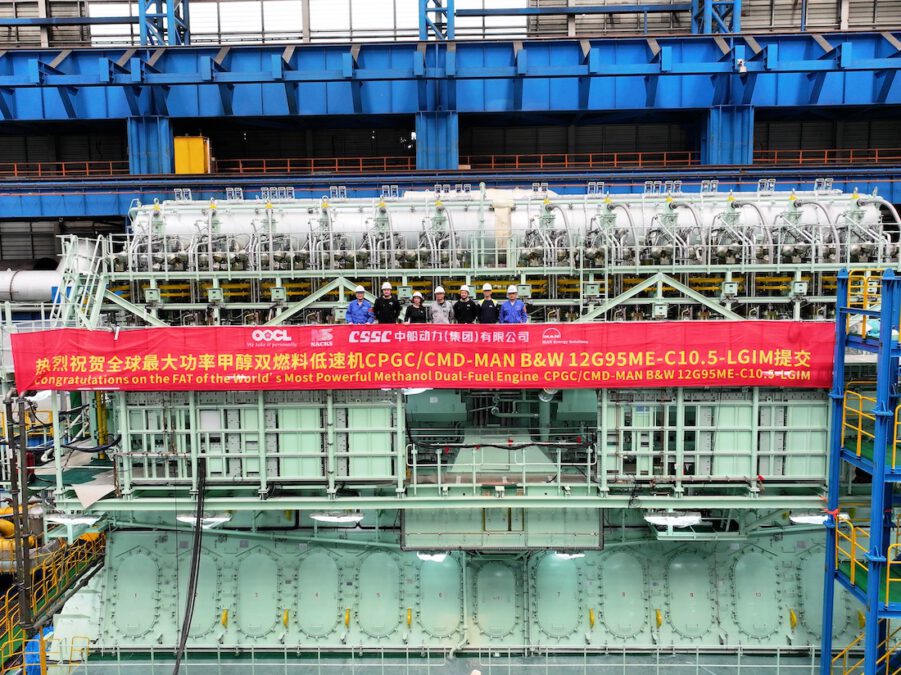
Factory acceptance of a new dual-fuel ME-LGIM at CSSC-MES Diesel Co., Ltd. in China. © MAN Energy Solutions
Currently, seven are being built at Nantong Cosco KHI Ship Engineering Co., Ltd. (NACKS) for shipowner Orient Overseas Container Line Ltd. (OOCL), and five at Dalian Cosco KHI Ship Engineering Co., Ltd. (DACKS) for shipowner Cosco Shipping Lines Co., Ltd. "As we move toward a multi-fuel future, interest in methanol has steadily increased," says Christian Ludwig of MAN Energy Solutions. ME-LGIM technology has been on the market for ten years. "To date, we have recorded over 230 new and retrofitted ME-LGIM engines that have been operated exclusively on methanol for over 600.000 hours." An engine powered by green methanol is a carbon-neutral drive, which reinforces the advantages of ME-LGIM technology.
Photo above
The first phase of the "NH3 – FutureFlex" project involves ammonia testing on a single-cylinder MAN genset at the Technical University of Denmark. © MAN Energy Solutions



