
(Münster, Germany) – Wholesale electricity prices in Germany fell to an average of 7,95 cents per kilowatt-hour (ct/kWh) in 2024 – a decrease of 16,8 percent compared to 2023 (9,55 ct/kWh). This marks the second consecutive price decline, according to the International Economic Forum for Renewable Energies (IWR), following an analysis of data from the EPEX Spot electricity exchange.
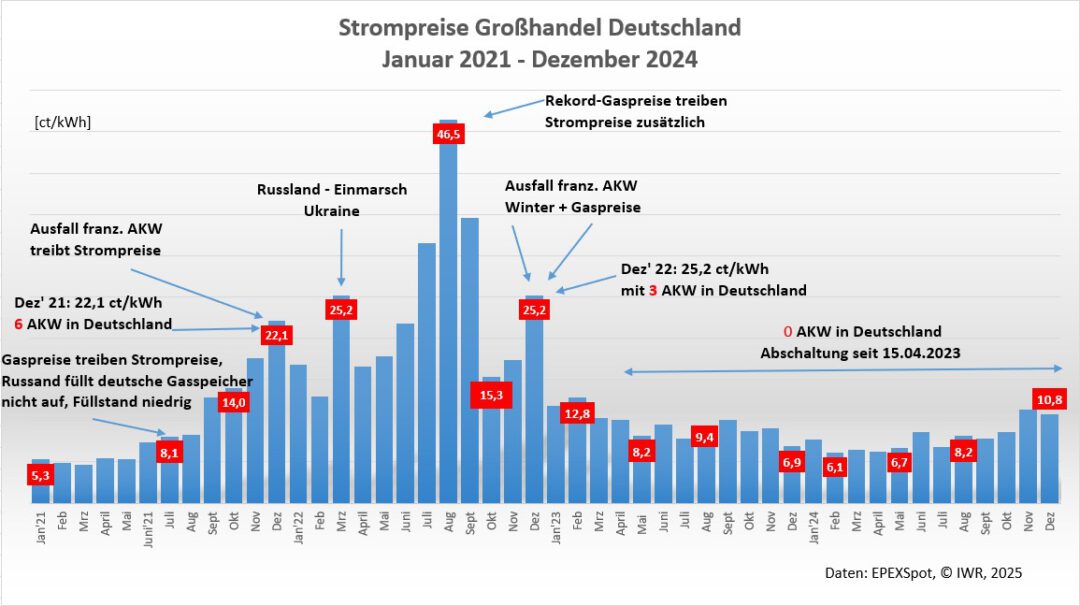
Development of wholesale electricity prices 2021 to 2024 in Germany © IWR
"Despite the complete phase-out of nuclear power, the electricity price in 2024 will even be below the level of 2021 (9,66 ct/kWh), when six nuclear power plants were still in operation in Germany." The rapid increase in wholesale electricity prices between mid-2021 and the end of 2022 was "the result of a historic combination of factors": the dramatic increase in gas prices following the Russian invasion of Ukraine and the massive outage of French nuclear power plants due to maintenance delays in the wake of Covid-19 and stress corrosion. From mid-2021, wholesale prices rose almost threefold due to increased gas prices and low gas storage levels, from 5,3 ct/kWh (May 2021) to 14,0 ct/kWh (October 2021), the analysis says.
Low prices do not reach consumers
The fact that the lower prices hardly have any impact on end consumers is due to the daily price formation on the electricity exchanges. This is based on a "marginal cost model" (merit order), in which the most expensive energy source determines the overall electricity price for everyone, even if cheaper sources are also used. So: If a lot of electricity is generated using gas and fed into the grid, this (high) price determines the overall price and cancels out the (low) electricity generation costs for solar and wind.
This served as an incentive for corporations to build and maintain gas-fired power plants in the first place, and thus generate returns. "High gas prices due to empty gas storage facilities and the failure of French nuclear power plants have meant that wholesale prices in December 2021, at 22,1 cents/kWh, were more than twice as high as in December 2024 at 10,8 cents/kWh, despite six nuclear power plants being in operation in Germany, when no German nuclear power plants were in operation anymore," said IWR boss Norbert Allnoch.
The dramatic increase in wholesale electricity prices in August 2022 to a record level of 46,5 cents/kWh was also mainly due to the explosion in gas prices following the shutdown of the Nord Stream 1 gas pipeline.
60 percent green electricity in the grid
According to a survey by the Fraunhofer Institute for Solar Energy Systems (ISE), the share of renewable energies in Germany's electricity mix was 56,1 percent in 2024. This is almost one percentage point higher than in 2023 (55,3 percent). This figure represents the share of the load, meaning the electricity mix that actually comes out of the socket. Wind power was the most important source of electricity nationwide in 2024, with a share of just over 33 percent ( as we reported ).
The share of renewable energies in total net electricity generation, including power plants in industry and commerce with self-generation, was around 58,4 percent (2023: 54,6 percent). In total, more than 2024 terawatt hours (TWh) of electricity were generated in 438. This also includes industrial power plant electricity for companies' own consumption. The share of onshore wind power was 110 TWh (26,8 percent), followed by a wide margin by lignite (17,2 percent) and solar power remunerated under the Renewable Energy Sources Act (EEG) (14,2 percent).
Photo above
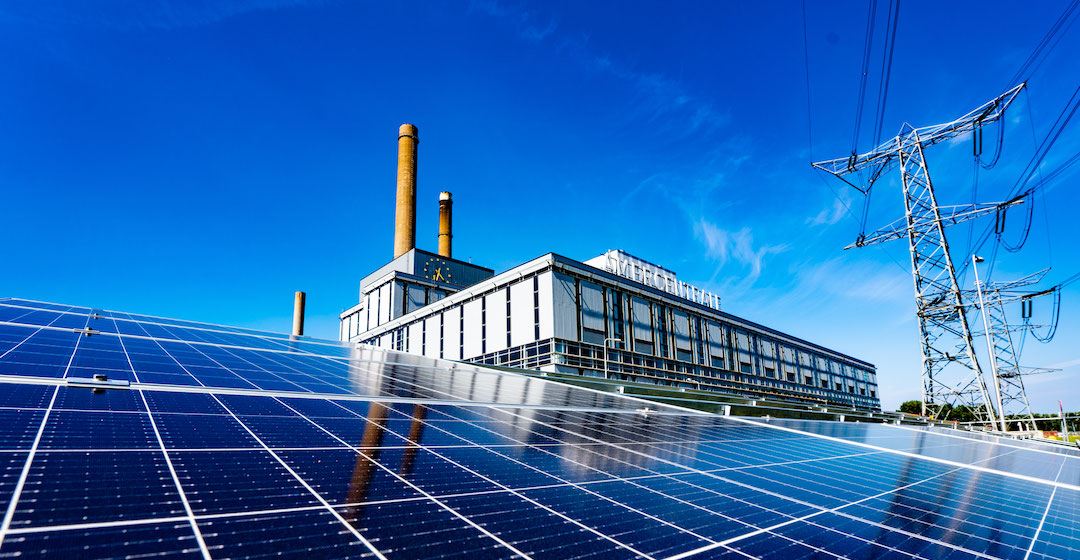
Electricity prices in the German wholesale market fell by almost 2024 percent in 17 compared to the previous year. © RWE AG



