
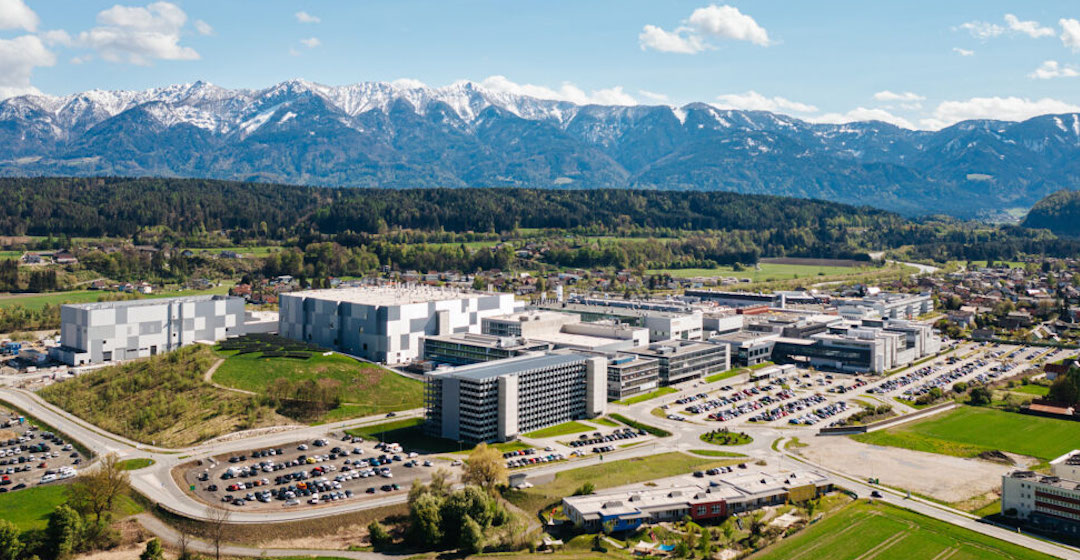
(Villach, Austria) – Semiconductor manufacturer Infineon Technologies Austria AG has commissioned a two-megawatt electrolysis plant at its Villach site. The electricity required for the plant comes from renewable sources. The system, based on proton exchange membrane (PEM) technology, is designed for a capacity of 290 tons of hydrogen per year. It was built by industrial gas supplier Linde GmbH, which is also responsible for its operation.
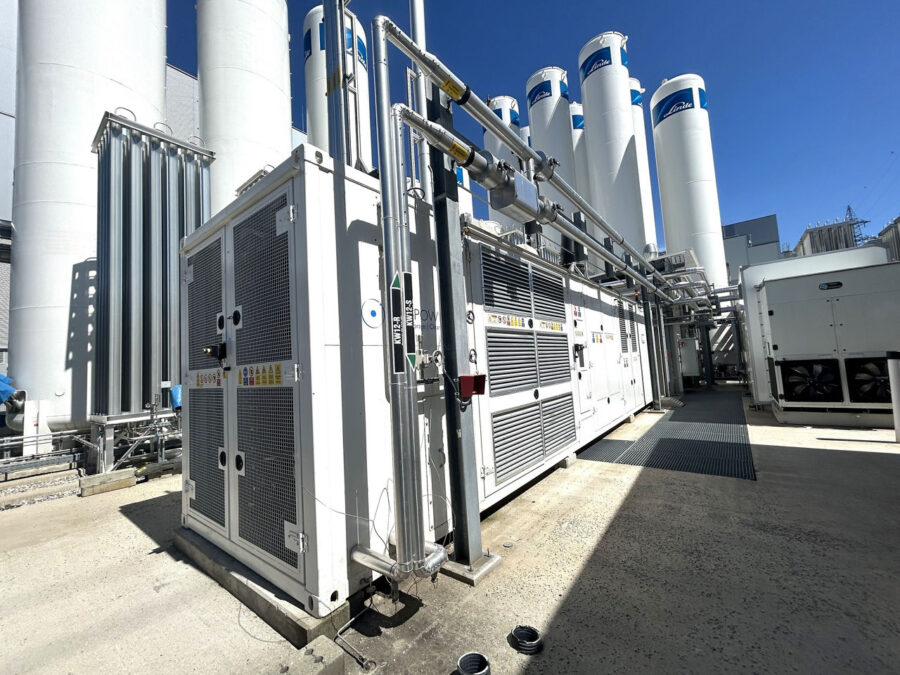
The PEM plant in Villach has a capacity of 290 tons of green hydrogen per year. © Infineon Technologies Austria AG
In the semiconductor industry, hydrogen is required "as a process gas with a purity of 99,999999 percent" for the controlled processing of material layers and the production of microchips. Until now, liquefied gray hydrogen based on natural gas was delivered by truck trailer from the Linde plant in Leuna (Germany) to Villach. With the new electrolysis plant, the demand for hydrogen will now be fully met. Not only will CO2 emissions in the supply chain be reduced, but "we will also secure supplies for the future and minimize supply dependencies," says Thomas Reisinger, Chief Operations Officer of Infineon Technologies Austria.
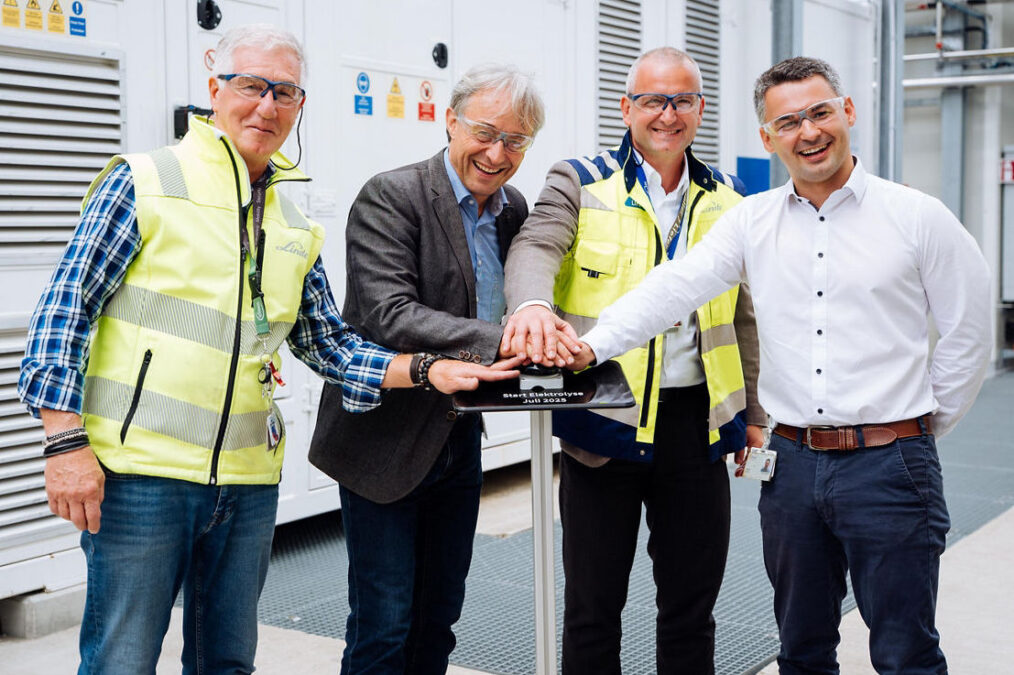
Commissioning of hydrogen production (from left): Robert Schmid (Project Manager Linde), Thomas Reisinger (Head of Operations Infineon Austria), Botond Tordai (Director of Operations Linde), Stefan Walder (Project Manager Infineon Austria). © Infineon Technologies Austria AG
The Austrian Climate and Energy Fund, financed by the Federal Ministry for Climate Protection (BMK), has provided undisclosed funding for the project. It is designated as an "H2Pioneer" demonstration plant. Participating in the project, in addition to Linde and Infineon, are Austria's largest electricity utility, Verbund AG, through its subsidiary Verbund Energy4Business GmbH (coordination), HyCentA Research GmbH (researching both the implementation of the plant and the recycling of hydrogen used in the semiconductor industry), the Energy Institute at Johannes Kepler University Linz (scientific analysis, scenarios for similar industrial processes), and the research association "Hydrogen Initiative Model Region Austria Power & Gas" (WIVA P&G; scientific support and monitoring).
The Austrian research project "H2Pioneer – Green Hydrogen for the Semiconductor Industry" was founded in August 2021. At that time, Infineon Austria and Linde signed the contract to build the plant. That year, WIVA P&G announced in a press release that the plant would be commissioned in Villach "in early 2022." The reason for such a long delay until 2025 has not been disclosed at this time.
Photo above
The Infineon site in Villach now uses green hydrogen for chip production. According to Infineon Austria, it has almost 6.000 employees at six locations in the country (including around 2.500 in R&D). With research expenditures of €686 million, Infineon Austria is "the most research-intensive company in Austria." © Infineon Technologies Austria AG



