

Germany: Lanxess replaces natural gas with hydrogen in chemical process +++ Australia: Sparc Hydrogen and Sun Hydrogen test production of hydrogen from sunlight +++ Germany: Construction progress on BP's 100 MW project in Lingen +++ USA: University of Illinois and GenH2 advance research on liquid hydrogen for aviation +++ Colombia: Certification of green hydrogen +++ Netherlands: EU approves €780 million for the production of renewable hydrogen +++ Germany: PTJ continues to coordinate the German government's H2 project funding
A selection of PtX topics summarized at the end of the week
+ + + + +
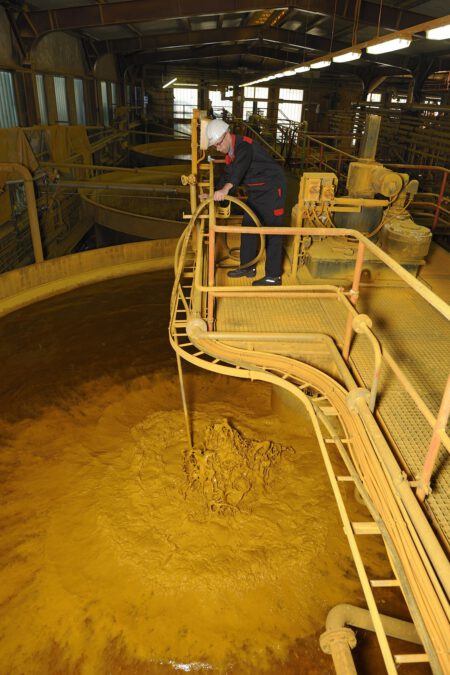
Lanxess yellow pigment production in Krefeld. © Lanxess Deutschland GmbH
(Germany) Specialty chemicals company Lanxess Deutschland GmbH will use hydrogen instead of natural gas for drying iron oxide pigments at its Krefeld-Uerdingen site. The spray dryer is "one of the first large-scale industrial plants in Germany" to use hydrogen as a fuel in continuous operation, according to the company, which will reduce its CO2 footprint by around 6.000 tons per year. The hydrogen is a byproduct of chlorine electrolysis at the neighboring plant of materials manufacturer Covestro AG, which emerged from the former plastics division of Bayer AG, and is transported directly to Lanxess via a pipeline. Lanxess installed the hydrogen burner at the end of 2025 and has been gradually commissioning it since then. The plant is designed to operate entirely on hydrogen. The technical integration includes adapted burner and measurement control technology as well as additional safety and control systems. With its Inorganic Pigments business unit, Lanxess is one of the world's leading manufacturers of inorganic color pigments, for example for the construction industry, for paints and coatings, for plastics and for various special applications.
+ + + + +
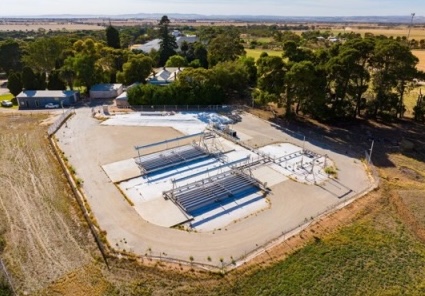
Sparc Hydrogen's SHARP pilot plant in Roseworthy, South Australia. © Sparc Hydrogen Pty. Ltd.
(Australia) Sparc Hydrogen Pty Ltd. and Sun Hydrogen Inc., a US-based developer of solar-powered green hydrogen production systems, plan to test hydrogen production in a pilot plant. The aim is to assess the technical and economic feasibility of integrating Sun Hydrogen's photoelectrochemical (PEC) and integrated photovoltaic (IPV-E) electrolysis modules into Sparc Hydrogen's concentrated sunlight reactors. The 24-month collaboration will initially include laboratory tests, followed by field tests in Roseworthy, South Australia. Subject to successful completion, Sparc Hydrogen will receive a time-limited option to negotiate either a long-term commercial supply agreement or a manufacturing license for Sun Hydrogen's modules for integration into its reactors. The signing follows tests in which Sparc Hydrogen achieved efficiencies of more than ten percent using hydrogen produced from sunlight. Sparc Hydrogen is a joint venture between Sparc Technologies, Fortescue Ltd., and Adelaide University.
+ + + + +
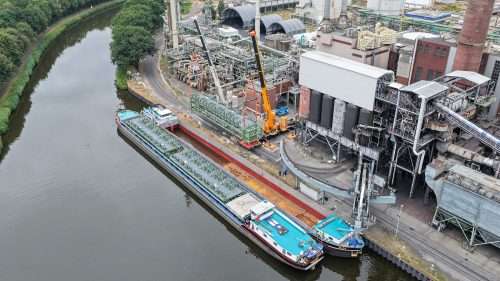
Delivery of the pipe bridge modules in Lingen. © BP Europa SE
(Germany) The pre-assembled pipe bridge modules have arrived by ship from Spain at the BP site in Lingen. In the "Lingen Green Hydrogen" project, they will connect various areas and components of the 100-megawatt electrolyzer. Each module is approximately 30 meters long and weighs 100 tons. The company stated that the delivery marks the beginning of "a particularly visible phase of construction." In the coming months, further large components will be delivered, assembled, and installed using heavy-duty cranes. Currently, buildings and infrastructure are being erected on the 34.000-square-meter construction site. The company plans to begin producing green hydrogen in Lingen for the first time in the second half of next year. The plant's capacity is 11.000 tons per year.
+ + + + +
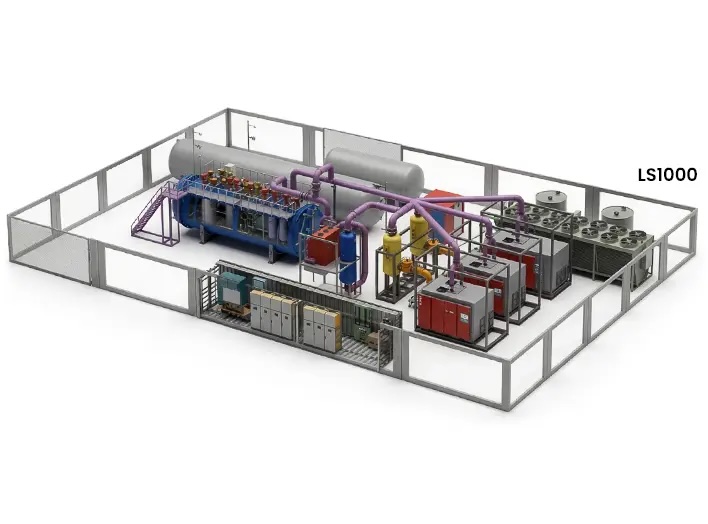
Graphic representation of a GenH2 hydrogen liquefaction plant. © GenH2 Corp.
(USA) The University of Illinois Urbana-Champaign and GenH2 Corp. aim to advance research into liquid hydrogen for aviation. GenH2 will provide a hydrogen liquefier to test storage, transport, and propulsion technologies for zero-emission aircraft. The further development of cryogenic fuel system technologies for decarbonizing aviation is a key focus of the university's Center for Sustainable Aviation. However, the researchers—like many at other universities—have limited access to liquid hydrogen and the means to store it, which hinders research progress. Munich-based Path2 Hydrogen AG acquired the US provider of hydrogen infrastructure solutions, GenH2, in early 2025. The University of Illinois Urbana-Champaign is the main campus of the state university. Its Department of Aerospace Engineering is an international leader in aerospace science and engineering.
+ + + + +
(Germany) The German Federal Government, through the German Agency for International Cooperation (GIZ), is supporting the development of the framework for the certification of green hydrogen in Colombia. Partners include, in particular, the Colombian Ministry of Mines and Energy, the Ministry of the Environment, and the grid operator XM, according to the response ( 21/7218 ) to a parliamentary inquiry from the Left Party. Furthermore, other public and private actors in the hydrogen sector are being involved. GIZ is supporting the development of certification approaches primarily through technical consulting, studies, and training. In addition to environmental aspects, social standards are also being considered. These include requirements in the areas of working and employment conditions, participation and information of affected stakeholders, protection of indigenous communities, management of resettlement, and social impact assessments.
+ + + + +

EU approves Dutch aid scheme of €780 million for hydrogen projects. © European Commission
(Netherlands) The European Commission has approved €780 million in funding from the Dutch government to promote the production of renewable hydrogen. The aid will be granted through a tender process, which is expected to be completed by the first quarter of 2027. It provides an investment grant of up to 80 percent of the investment costs, combined with a variable premium over a period of five to ten years. The Netherlands anticipates that the scheme will lead to the construction of around 400 megawatts of electrolysis capacity and incentivize the production of up to 40 kilotons of renewable hydrogen per year. The EU had already approved schemes in July 2023 and July 2024 aimed at supporting the expansion of electrolysis capacity in the Netherlands.
+ + + + +
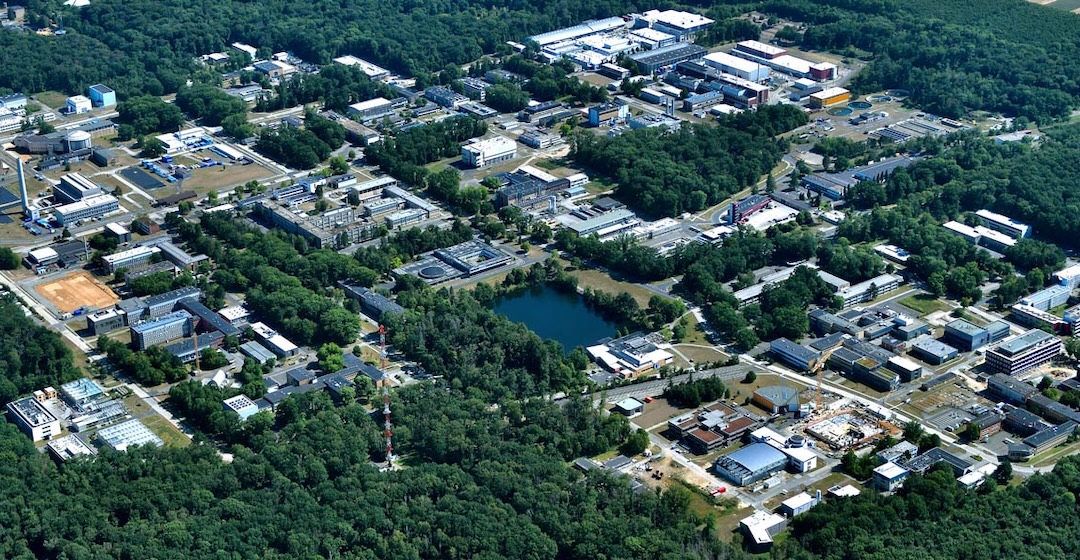
The Jülich Research Centre campus covers 1,7 square kilometers. © Forschungszentrum Jülich GmbH
(Germany) Forschungszentrum Jülich GmbH (“Projektträger Jülich,” PTJ) will continue to manage project funding in the energy and hydrogen research sector for the Federal Ministry for Research, Technology and Space (BMFTR). According to the company, the contract was recently renewed by the Federal Government. This also includes the agenda of the National Hydrogen Strategy. PTJ oversees the entire funding process, from drafting funding announcements and advising prospective applicants to project management and performance monitoring. Furthermore, PTJ supports the BMFTR with scientific monitoring, strategic consulting, and science communication.
+ + + + +
Photo above
iStock / © Danil Melekhin



