

South Korea: Researchers find intelligent cooling strategy for cryogenic hydrogen tanks +++ France: HRS cooperates with Baker Hughes on H2 refueling station expansion +++ Germany: Bavaria launches funding program for hydrogen-powered commercial vehicles +++ Netherlands: EU approves Dutch aid scheme of €290 million for sustainable aviation fuels +++ USA: Hyroad Energy installs another hydrogen refueling station for trucks in California +++ Sweden: Power Cell supplies fuel cells for ECL data centers +++ Saudi Arabia: Acwa gets exclusive rights to export hydrogen +++ Germany: Messer acquires stake in Lhyfe sites for hydrogen production +++ England: ITM Power receives £46 million in funding for Chronos production +++ Germany: THWS receives further funding for the development of a hydrogen-powered light aircraft +++ England: NGN plans underground hydrogen pipelines to supply industry on the east coast +++ Germany: Aqua Ductus starts seabed investigations in the North Sea for hydrogen pipeline +++ Sweden: DLR orders integrated "fuel-to-power" system from Power Cell
A selection of PtX topics summarized at the end of the week
+ + + + +
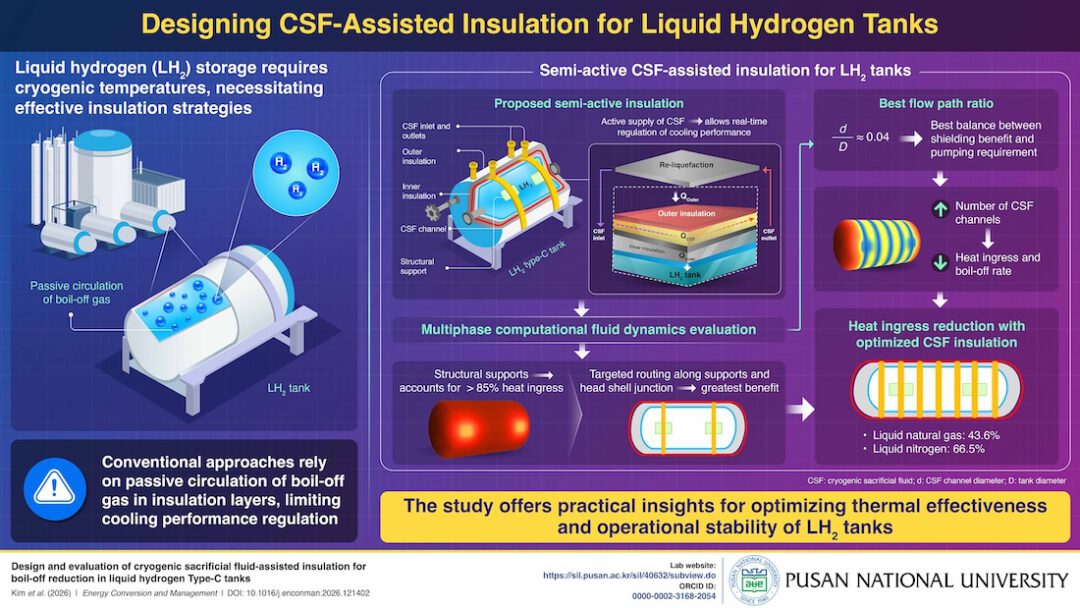
Scientists at Busan National University have discovered a new way to cool liquid hydrogen more efficiently using a secondary insulation circuit. © Busan National University
(South Korea) Scientists at Busan National University have explored a new way to cool liquid hydrogen (LH2) more efficiently. To convert the energy carrier from a gaseous to a liquid state, temperatures of approximately -253 degrees Celsius are required. Liquid hydrogen has about 800 times the volumetric energy density of its gaseous counterpart. Even small heat leaks can lead to evaporation, which increases tank pressure and reduces storage efficiency. The idea: A secondary coolant absorbs the heat before it reaches the hydrogen. "The key is to capture heat before it reaches the liquid hydrogen vessel," says research leader Jong-Chun Park from the Department of Naval Architecture and Ocean Engineering. "By controlling the flow and the placement of the channels, we can direct more of the incoming heat into the secondary coolant." The concept, supported by the Korea Research Institute of Ships and Ocean Engineering (KRISO), uses an externally supplied liquid – such as liquefied natural gas (LNG) or nitrogen (LN2) – as an insulation system. The simulation reduced heat absorption by 43,6 percent with LNG and by 66,5 percent with LN2. Although LN2 offered better cooling due to its lower temperature, it was more prone to steam formation, while LNG provided a smaller but more stable cooling effect. Park: “Our results show that effective LH2 storage is not simply a matter of adding thicker insulation or more cooling channels.” The greatest gains were achieved by identifying the tank's thermal bridges and placing the cooling system precisely where heat was entering. “Design and evaluation of cryogenic sacrificial fluid-assisted insulation for boil-off reduction in liquid hydrogen Type-C tanks ,” in: Energy Conversion and Management.
+ + + + +

Hydrogen refueling station built by HRS in Champagnier, France. © Hydrogen Refueling Solutions SA
(France) French hydrogen refueling station manufacturer Hydrogen Refueling Solutions SA (HRS) has signed a three-year cooperation agreement with Baker Hughes. According to the company, the partnership aims to develop hydrogen infrastructure for the mobility and industrial markets with the US technology firm. As part of the collaboration, HRS will contribute its expertise in integration, storage, distribution, and refueling. Baker Hughes will contribute its compression technologies, particularly the vertical piston compressor (VerHy550) for high-performance hydrogen applications. The agreement is based on a non-exclusive cooperation model, allowing both companies to collaborate on a project basis. It covers, in particular, hydrogen production centers, filling and distribution centers, logistics platforms, refueling stations, storage facilities, as well as installation, commissioning, and maintenance.
+ + + + +
(Germany) Bavaria is launching its first funding program for hydrogen-powered commercial vehicles. A total of €15 million is available. The "BayH2N" program will subsidize the purchase and leasing of fuel cell and hydrogen combustion engine vehicles with up to 80 percent of the eligible additional investment costs. Applications can be submitted to the project management agency Bayern Innovativ GmbH until October 28, 2026 .
+ + + + +

EU approves Dutch aid scheme of €290 million for sustainable aviation fuels. © European Commission
(Netherlands) The European Commission has approved €290 million in funding from the Dutch government to promote sustainable aviation fuels (SAF). This funding aims, among other things, to increase the supply and demand for sustainable aviation fuels and accelerate the transition to climate-neutral air transport. One of two schemes provides investment aid for the production of SAF, while the other covers the costs of preparatory work for SAF projects, including technical development studies. The funding supports bio-SAF and synthetic fuels (eSAF). The projects are expected to produce 285 kilotons per year, equivalent to approximately 3.500 intercontinental flights and about 350 million liters of kerosene.
+ + + + +
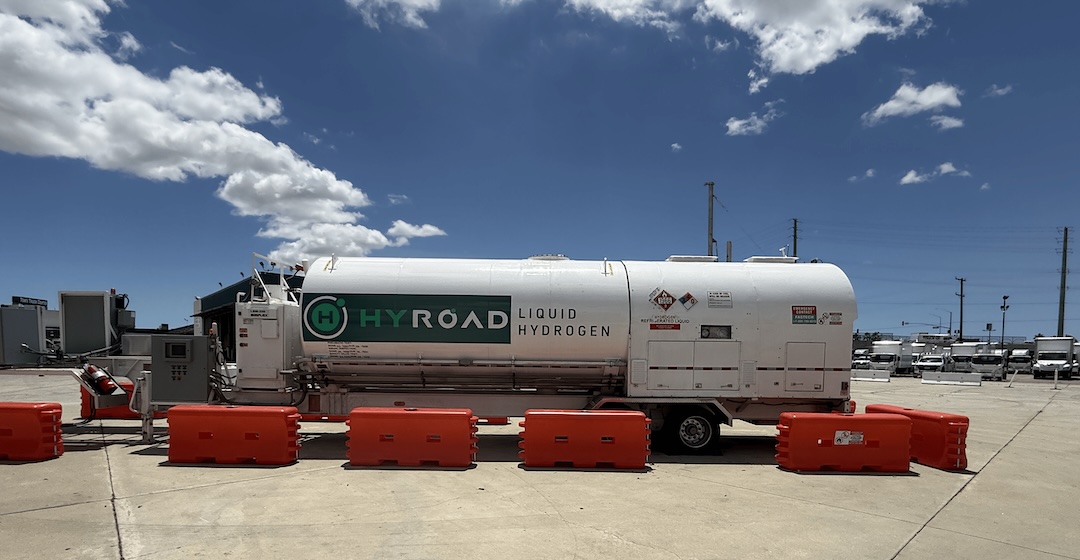
The mobile refueling station, complete with tank, pump, dispenser, controls, and safety systems, enables Hyroad to install temporary refueling facilities. © Hyroad Energy
(USA) Hyroad Energy has opened another liquid hydrogen refueling station in Santa Fe Springs, California. The station was developed in partnership with Taylor-Wharton, a subsidiary of Air Water America and a provider of cryogenic tanks, and truck dealer Tom's Truck Center. The mobile unit consists of a 1.000-kilogram tank, pump, dispenser, controls, and safety systems. This allows Hyroad to establish temporary refueling capacity while permanent stations are being developed and installed. Since its commissioning, the station has completed 45 refueling operations in its first full week of operation, with consistent refueling times of under 25 minutes, comparable to refueling with diesel. Hyroad Energy is a marketing platform for zero-emission Class 8 (over 15 tons) fuel cell trucks and leases the vehicles as a "Truck-as-a-Service" model. Billing is based on kilometers driven, eliminating upfront costs and infrastructure investments for customers. It is a trademark of Simoneta Ltd., based in Austin, Texas. In August 2025, Hyroad Energy purchased 113 fuel cell trucks from the bankruptcy estate of Nikola Corp. ( more information here ).
+ + + + +

ECL develops modular data centers in 1 MW blocks, called "ECL-MV1". © Edge Cloud Link Inc.
(Sweden) Power Cell Group AB has signed an agreement with California-based Edge Cloud Link Inc. (ECL) for the purchase of PowerCell PS190 fuel cell systems. These systems will generate electricity for ECL's AI data centers. The order is valued at 30 million Swedish kronor (2,7 million euros), with delivery scheduled for later this year. The order also includes a non-binding letter of intent for the purchase of additional systems with a total capacity of 300 megawatts. The first installation will reportedly be at ECL's CSC-1 campus in Santa Clara, California, with its 35-megawatt data center, where containerized Power Cell fuel cell systems will be integrated into a microgrid that combines grid power, natural gas, and battery storage. ECL already operates a similar Power Cell installation in Mountain View, California, where hydrogen has served as the primary energy source for more than two years. Bosch, PowerCell's largest shareholder, is providing industrial manufacturing and local service in North America to support ECL's implementations. In October 2024, ECL announced plans to install a hydrogen-powered data center in Texas, which is expected to have a final capacity of one gigawatt ( more information here ).
+ + + + +

Acwa Power headquarters in Riyadh. © Acwa Power
(Saudi Arabia) The Saudi government has officially and exclusively awarded energy and water supplier ACWA Power a contract to export green hydrogen and its derivatives. As part of this agreement, ACWA has also been tasked with developing projects for the generation, transmission, and export of electricity from renewable energy sources to European and Arab markets. This aims to strengthen regional energy security while enabling the export of clean electricity from the Kingdom at competitive prices. As previously reported, ACWA Power has already signed several international agreements for the production and supply of green hydrogen in recent years, including agreements with the German energy company SEFE , a consortium led by the port operator Rostock Port GmbH , the Italian gas transmission system operator Snam , the Tunisian government , the Indonesian electricity provider PLN , and the Ministry of Energy of Uzbekistan.
+ + + + +
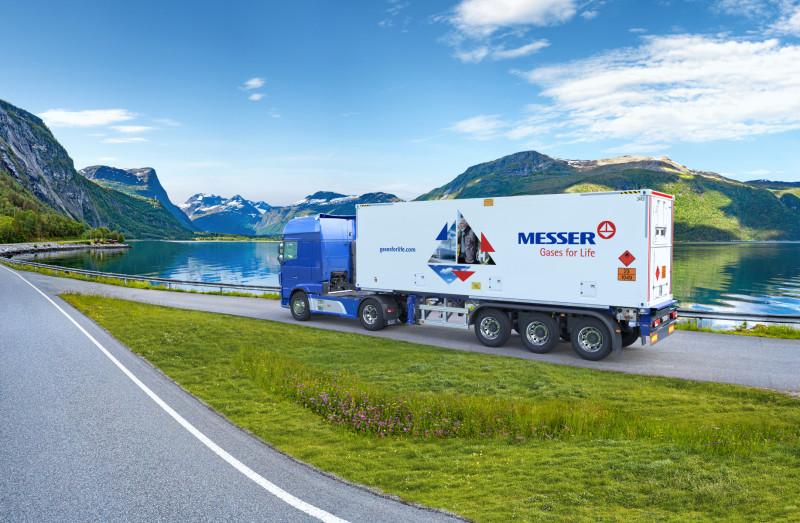
Messer secures green hydrogen quotas and invests in Lhyfe. © Messer SE & CO. KGaA
(Germany) French hydrogen producer Lhyfe and German industrial gas specialist Messer SE & Co. KGaA have signed a supply agreement and agreed on Messer acquiring a 30 percent stake in four renewable hydrogen production sites. The ten-year supply agreement covers three Lhyfe sites in France and one in Germany. Messer commits to a minimum purchase volume starting in 2026, which is expected to increase gradually and reach several hundred tons per year. Beyond this commitment, Messer aims to purchase half of the production from the three French sites. Furthermore, Messer will acquire a 30 percent stake in Lhyfe.
+ + + + +

ITM Power has received a total of £86,5 million in funding from the British government to build a factory for its one-gigawatt "Chronos" electrolyzer. The announcement was made in April, and the funds have now been received. © ITM Power plc
(England) British electrolyzer manufacturer ITM Power plc has received a grant of £46,5 million (€54,25 million) from the Department for Energy Security and Net Zero (DESNZ). The funds, announced in April, will, according to the company, be used, together with the £40 million investment already received from Great British Energy, to build capacity for the production of the "Chronos" electrolyzer, the successor to the "Trident," which will continue to be manufactured. The production line will be built at the existing plant in Sheffield, utilizing the manufacturing expertise and infrastructure that have been gradually integrated into the "Trident" production line in recent years. The company is now focusing on customized, automated production facilities with an annual capacity of one gigawatt.
+ + + + +
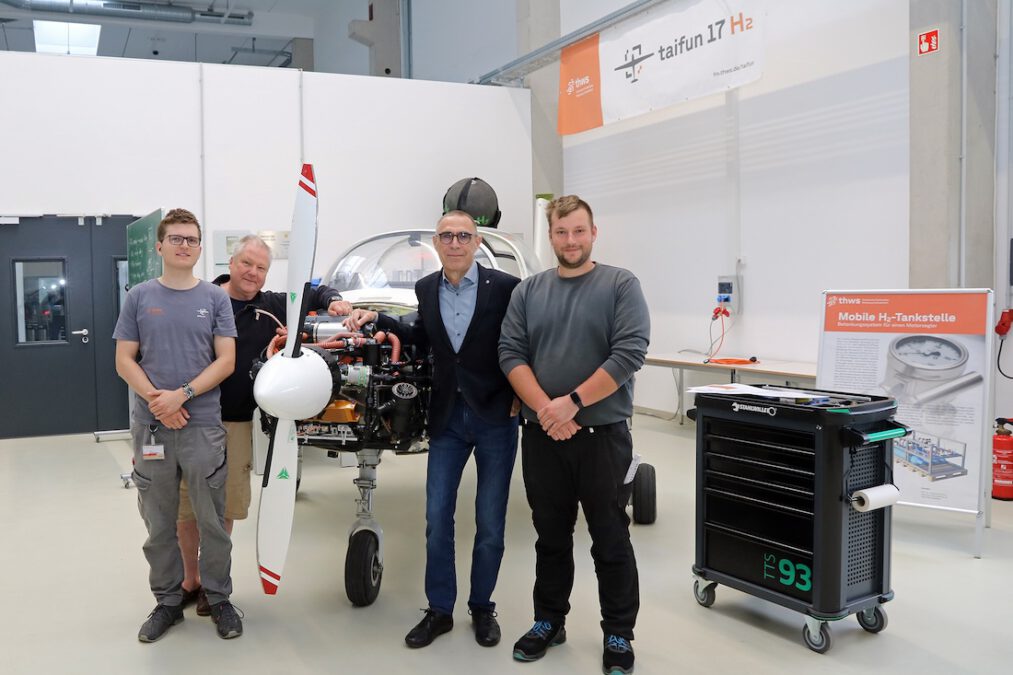
Developing the "Taifun 17 H2" touring motor glider with fuel cell (from left): Jan Hußlein, Tom Wollin, Johannes Paulus and Sebastian Stenger. © THWS / Eva Kaupp
(Germany) The Faculty of Mechanical Engineering at the Würzburg-Schweinfurt University of Applied Sciences (THWS) has received further funding for the development of a touring motor glider, the "Taifun 17 H2." Together with the engineering firm Kasaero, the THWS team is developing a modular electric fuel cell propulsion system, which could also be used to convert existing ultralight aircraft to climate-neutral propulsion. The light aircraft has a dual propulsion system – both directly electric with a battery and with hydrogen via a fuel cell. The fuel cell can be used to increase the range (range extender) or boost the propulsion power. The electricity for hydrogen production comes from an on-site photovoltaic system. The "Taifun" is already airworthy in its current state. The team has already conducted taxi tests up to takeoff speed at the Haßfurt-Haßberge airfield. Once the "provisional type certification" from the German Federal Aviation Office is granted, the "Taifun" could take off for the first time later this year. The Federal Ministry for Economic Affairs and Energy is funding the project with a total of almost two million euros.
+ + + + +
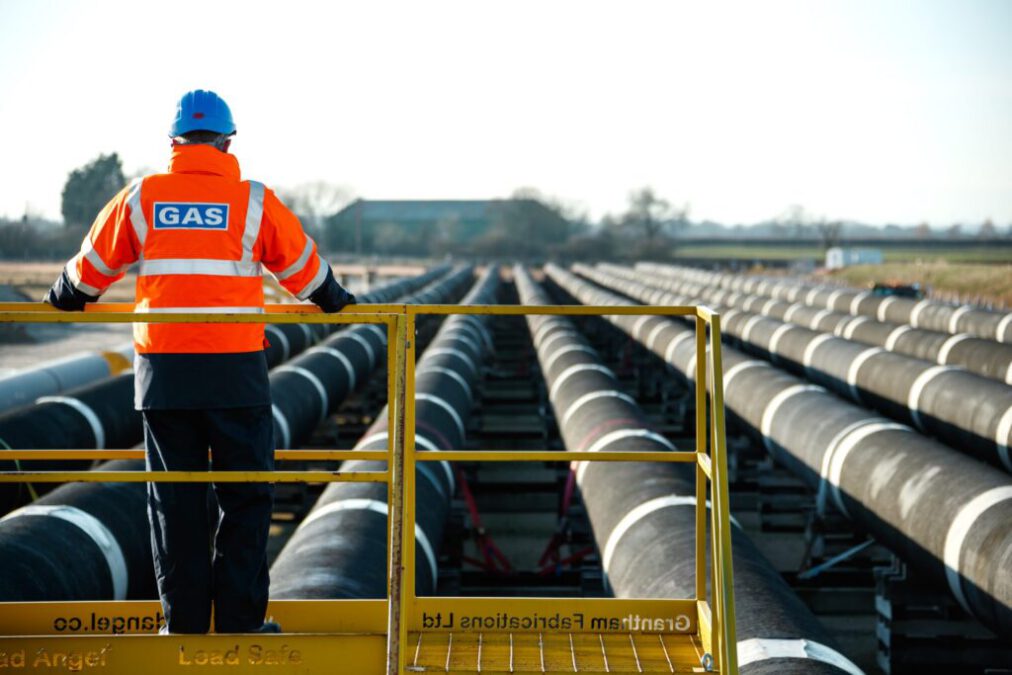
Gas network operator Northern Gas Networks is planning underground pipelines to supply hydrogen to industry in the Humber and Teesside regions on the east coast of England. © Northern Gas Networks
(England) British gas network operator Northern Gas Networks (NGN) has presented proposals for two underground pipelines that would link hydrogen production with heavy industry and power generation on England's east coast. Under the "East Coast Hydrogen" project, manufacturers in sectors such as steel, chemicals, bricks, and glass in the Teesside and Humber regions would be supplied with low-carbon hydrogen. Many of these industries rely on large quantities of natural gas for high-temperature processes, which complicates decarbonization through electrification. NGN's proposals are classified as Nationally Significant Infrastructure Projects (NSIPs). They are currently in the first stage of the development process, focusing on design, planning, and cost analysis. The 39-mile Teesside pipeline would run through the industrial cluster from Newton Aycliffe to Skinningrove. A 68-mile section would run under the Humber from Saltend towards Ferrybridge, West Yorkshire. If approved, construction and connection could begin in the 2030s. 1.200 jobs could be created locally.
+ + + + +
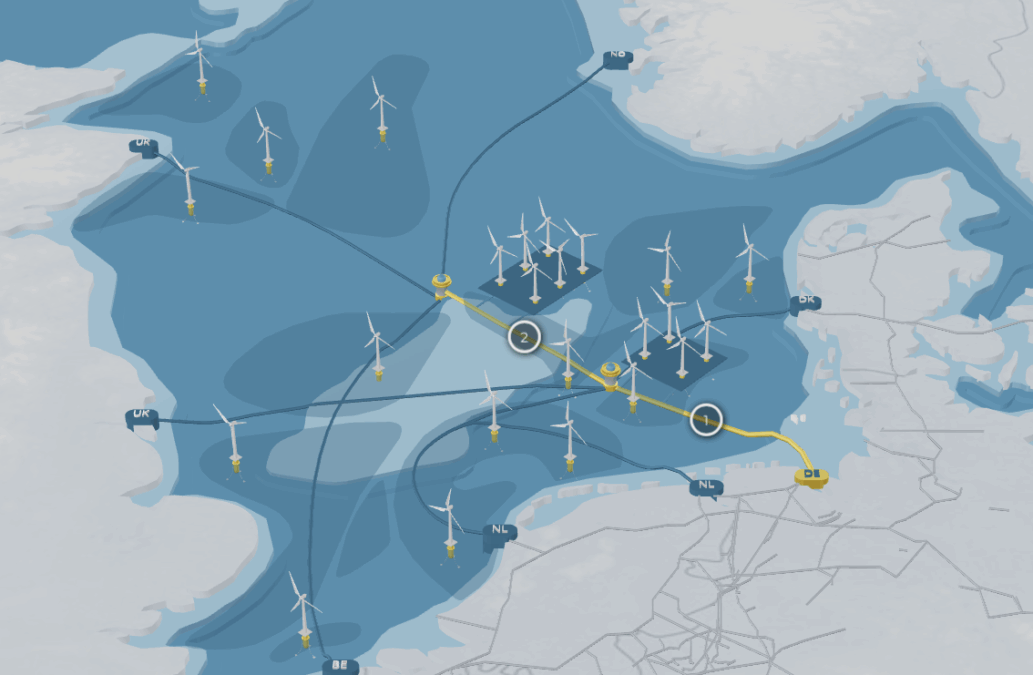
The pipeline is intended to serve as a central import corridor to connect offshore hydrogen production projects to the mainland. © Aqua Ductus Pipeline GmbH / Screenshot
(Germany) Aqua Ductus Pipeline GmbH is commencing geotechnical investigations for the planned Aqua Ductus hydrogen import pipeline. The investigations, taking place off and on the island of Norderney and near Hilgenriedersiel, include geotechnical and geophysical analyses to determine soil and subsurface conditions along the planned route, both offshore and in coastal areas. The company states that the data obtained will be essential for determining the pipeline route, selecting suitable construction methods, and ensuring the safe and environmentally sound implementation of the pipeline project. Phase 1 of the offshore hydrogen pipeline (see graphic) will connect the SEN-1 hydrogen wind farm to the German mainland by 2030 and extend to the German-Dutch border. The pipeline will run approximately 200 kilometers offshore and 100 kilometers onshore. The second project phase covers 200 kilometers offshore and extends the pipeline from site SEN-1 to the outermost edge of the German Exclusive Economic Zone to connect further hydrogen wind farm sites.
+ + + + +
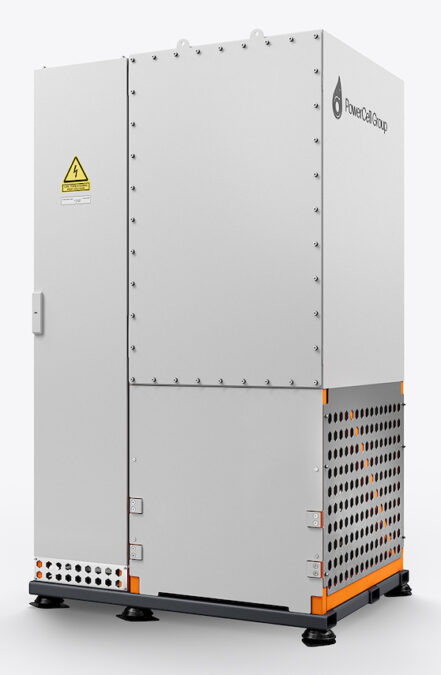
The German Aerospace Center (DLR) is receiving two "Marine System 225" fuel cell systems from Power Cell. © Power Cell AB
(Sweden) The Power Cell Group has received an order worth approximately 21 million Swedish kronor (1,9 million euros) from the German Aerospace Center (DLR) for an integrated fuel-to-power system to be installed at DLR's maritime test facilities in Kiel. The Swedish company will deliver two Marine System 225 fuel cell systems, two methanol reformers, a storage unit, a gas mixing system, and the system control unit this year. Commissioning is planned for the first half of 2027. Using Power Cell's M2 Power platform, methanol will be reformed into hydrogen in a modified configuration before the fuel cell systems generate electricity. DLR intends to use the system to simulate operating profiles for various ship types and to gather operational experience for the use of fuel cells in maritime applications.
+ + + + +
Photo above
iStock / © Danil Melekhin



