

Germany: Friedrich Vorwerk is building the H2Coastlink 1 hydrogen pipeline +++ Spain: H2med consortium announces FEED phase for the BarMar pipeline +++ Austria: OMV receives a €450 million loan for a 140 MW electrolyzer +++ Germany: Saxony-Anhalt updates its state hydrogen strategy +++ Austria: RAG Austria and Andritz expand the electrolysis plant in Gampern to 15 MW +++ Poland: BMWE offers a hydrogen business trip for German SMEs at the end of October +++ Austria: Bosch commissions new methanol infrastructure in Hallein +++ Korea: Jera and Samsung C&T strengthen the value chain for hydrogen and ammonia
A selection of PtX topics summarized at the end of the week
+ + + + +
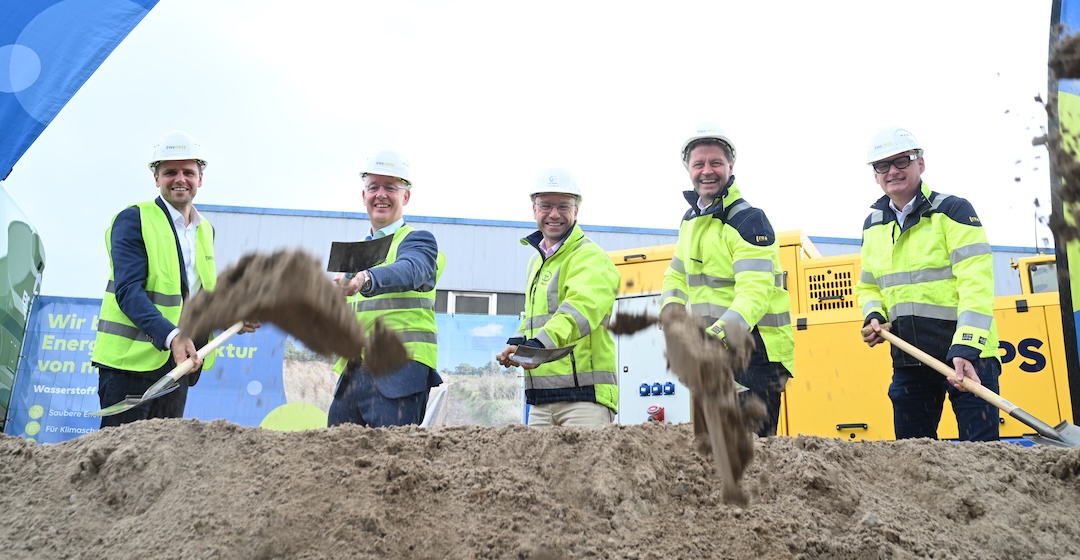
The symbolic groundbreaking ceremony for the pipeline took place on June 30 – it has now been announced that the Friedrich Vorwerk Group will be building the pipeline. © EWE Netz
(Germany) The Friedrich Vorwerk Group SE, a pipeline and plant construction company for natural gas, electricity, and hydrogen infrastructure, has been awarded the contract, as part of a joint venture, for the construction of the new "H2Coastlink 1" hydrogen pipeline in northern Germany between Emden and Leer. The client is EWE Netz GmbH, acting as general contractor, while the project is being carried out by the long-distance pipeline operator GTG Nord GmbH. Both companies are subsidiaries of the EWE Group. The core of the new pipeline is an approximately 24-kilometer-long high-pressure hydrogen pipeline with a diameter of DN 400 (40 centimeters); this includes the connection from the future electrolyzer to the hydrogen injection plant in Emden, as well as the connecting lines to the supra-regional hydrogen network in Leer. The contract value is in the tens of millions of euros. The handover of the pipeline to GTG Nord GmbH is scheduled for autumn 2027. The groundbreaking ceremony took place on June 30 and was performed by EWE and GTG ( more information here ).
+ + + + +
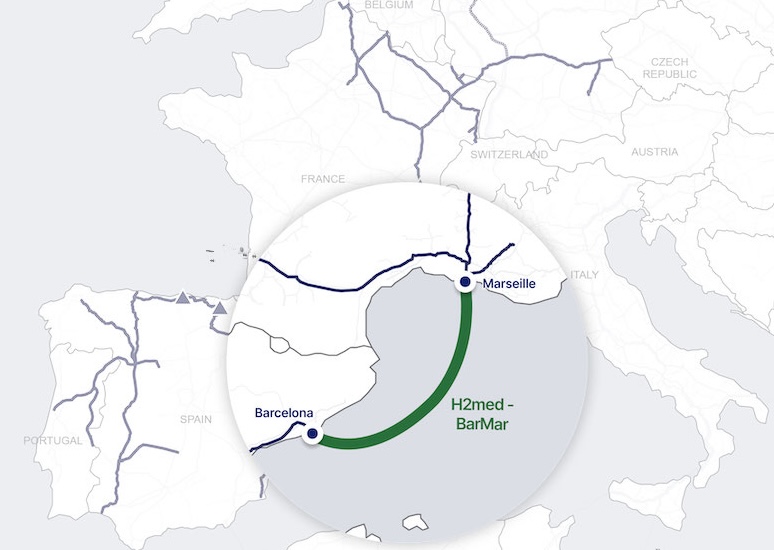
The H2med consortium announces the FEED phase for the BarMar pipeline. The 450-kilometer pipeline will transport hydrogen from Barcelona to Marseille. © H2med
(Spain) The consortium behind the EU green hydrogen corridor "H2med" has announced the start of detailed Front-End Engineering and Design (FEED) planning for the "BarMar" sub-project, an underwater pipeline between Spain and France (Barcelona/Marseille) with a capacity of two million tons. The completion of BarMed's pre-FEED phase confirms the project's technical feasibility. During this preliminary phase, a preliminary route for the corridor was established. The next steps include awarding the FEED technical design contract and conducting a detailed maritime study. H2med aims to connect the hydrogen markets of Southern and Northern Europe via Portugal, Spain, France, and Germany in the 2030s. The corridor encompasses BarMar as well as pipelines between Portugal and Spain ("CelZa," Celorico da Beira/Zamora) with a capacity of 0,75 million tons, and a connection to the German core hydrogen network. The consortium includes the gas transmission system operators Enagás SA (Spain), GRTgaz SA (Spain), Redes Gasodutos SA (REN, Portugal), Teréga SAS (Spain) and Open Grid Europe GmbH (OGE, Germany).
+ + + + +

OMV Schwechat Refinery. © OMV AG
(Austria) The oil and gas company OMV AG is receiving a €450 million loan from the European Investment Bank for the construction of a 140-megawatt electrolyzer currently under construction in Lower Austria. Once completed, the plant in Bruck an der Leitha will produce 23.000 tons of green hydrogen annually to decarbonize the OMV refinery in Schwechat ( more information here ). The total investment amounts to €600 million. Back in January of this year, OMV had already announced €123 million in funding from the state-owned Austria Wirtschaftsservice GmbH (AWS) ( more information here ). Commissioning is scheduled for the end of 2027. OMV expects this to reduce CO2 emissions by approximately 150.000 tons – equivalent to around ten percent of current direct emissions in Schwechat. A 10-megawatt plant is already in operation there.
+ + + + +
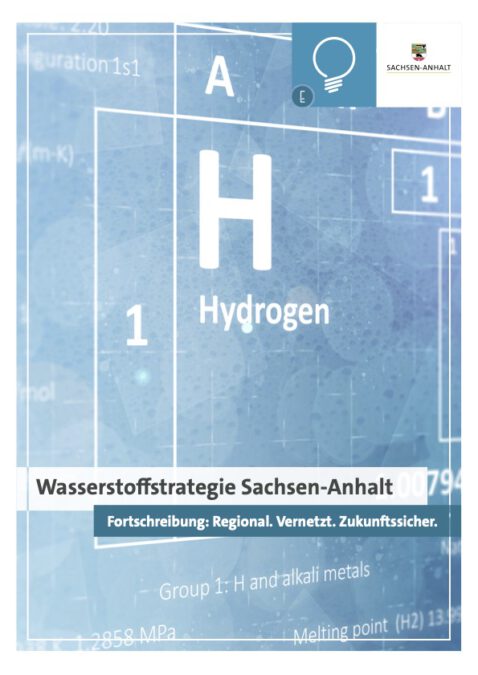
Saxony-Anhalt has updated its hydrogen strategy. © State Government of Saxony-Anhalt
(Germany) Armin Willingmann, Energy Minister of Saxony-Anhalt, has presented a revised hydrogen strategy for the state. In addition to "clear goals for the further development of the hydrogen economy," there are "high expectations for the EU to reduce bureaucratic hurdles so that green hydrogen becomes cheaper and more attractive for businesses." Saxony-Anhalt could "develop into a leading hydrogen region in the coming years," but Germany is "only making sluggish progress in developing its hydrogen economy," Willingmann said. Currently, according to EU regulations, companies may only sell their produced hydrogen as "green" if it can be proven that it is produced simultaneously with electricity from specially constructed wind or solar power plants. "This is hardly feasible in practice and makes hydrogen unnecessarily expensive." As part of the hydrogen strategy, the Energy Minister proposes, among other things, a quota model under which energy-intensive industries such as the chemical, fertilizer, steel, and metal industries could gradually switch to hydrogen via a phased approach. As part of a "7-point plan," the state government intends to support key projects, systematically integrate hydrogen with renewable energy sources, and develop the statewide distribution network and storage infrastructure, along with lead markets. The "Hydrogen Strategy Saxony-Anhalt. Update: Regional. Networked. Future-proof" is available free of charge as a 62-page PDF on the website of the Ministry of Energy.
+ + + + +
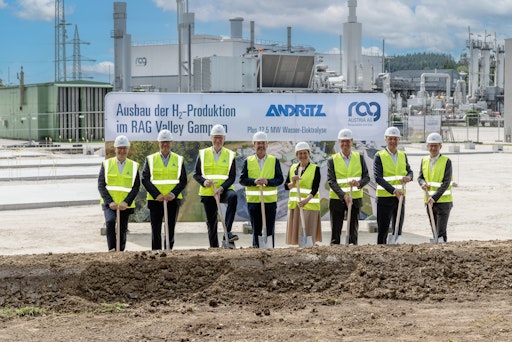
Groundbreaking ceremony in Upper Austria: RAG Austria and Andritz expand the electrolyzer in Gampern from 2,5 to 15 megawatts. © RAG Austria AG
(Austria) The gas storage company RAG Austria AG and the mechanical engineering firm Andritz AG are expanding the electrolysis plant in Gampern (Upper Austria) from 2,5 to 15 megawatts (MW). Contractor Andritz is building the system on an EPC (Engineering, Procurement, Construction) basis. The investment amount has not been disclosed. Commissioning is planned for the end of 2026. The plant is then expected to produce around 17 million cubic meters (1.500 tons) of green hydrogen annually, using solar power as the primary renewable energy source. Energy suppliers such as EVN AG, Energie AG, Kelag, Linz AG, and Salzburg AG have already booked electrolysis capacity. In Gampern, the green hydrogen will be stored underground. During periods of low renewable electricity generation, it is intended to be used in large volumes for electricity and heat production, gradually replacing natural gas. The 2,5 MW plant has been in operation since April 2023 ( more information here ).
+ + + + +
(Poland) The German Export Initiative Energy of the Federal Ministry for Economic Affairs and Energy, through the Polish Chamber of Commerce, is offering a five-day "Energy Business Trip" from October 26 to 30, focusing on the production of green gases such as biomethane and hydrogen. The aim is to provide German companies with structured access to the Polish growth market. Poland possesses considerable potential, but many projects are still in the early stages of development, approval, or pilot phases. This presents concrete opportunities for German technology providers, plant manufacturers, component producers, and engineering service providers. Further information is available on the Export Initiative Energy website .
+ + + + +
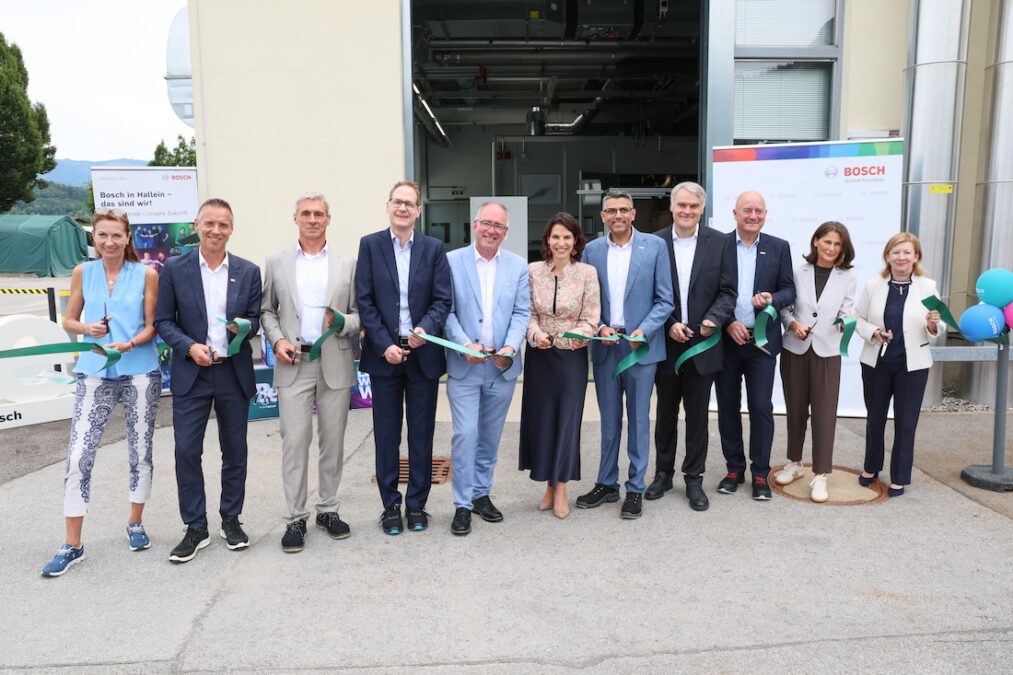
Robert Bosch AG, in the presence of representatives from politics and industry, has commissioned its new methanol infrastructure in Hallein to further develop and test large engine injection systems for alternative fuels. © Robert Bosch AG / APA-Fotoservice / Franz Neumayr
(Austria) Robert Bosch AG has commissioned a new methanol infrastructure at its Hallein site in the state of Salzburg. This will enable the company to further develop and test injection systems for alternative fuels. Bosch is investing a total of €52 million there to expand the development and production of modern technologies. The Hallein site is the Bosch Group's global center of excellence for large engine injection systems. The common-rail systems developed there enable the use of alternative fuels such as methanol, hydrogen, or ammonia in large-scale applications, for example, in shipping, rail transport, or stationary power plants. Technological diversity is needed for the decarbonization of the heavy-duty sector – especially where electrification reaches its limits. "With the new methanol infrastructure, we are creating the conditions to further develop these technologies and bring them to series production readiness for use by our customers," says Stefan Schenk, head of Bosch's global business for large engine injection systems.
+ + + + +
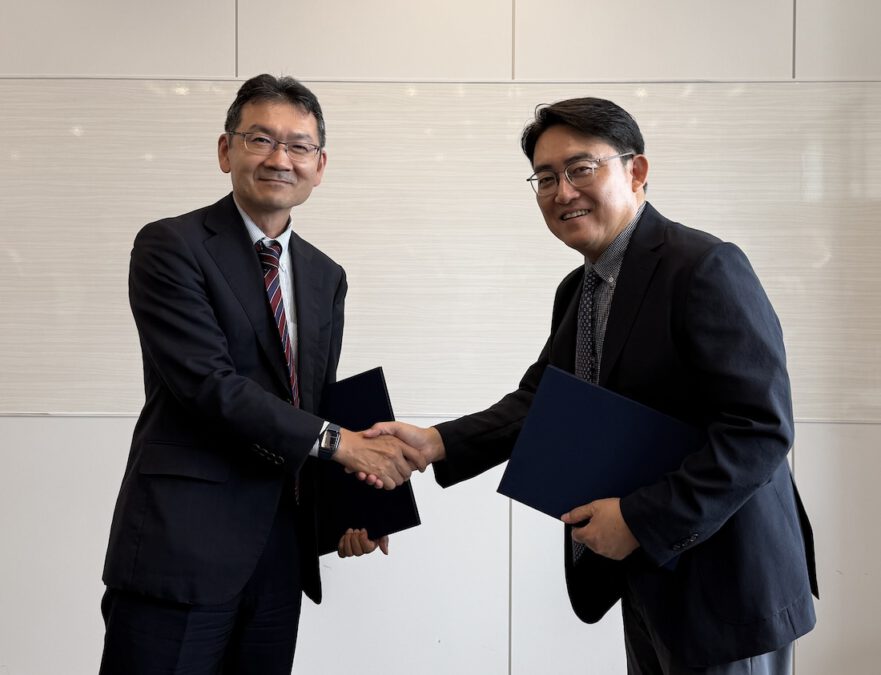
Jera and Samsung C&T aim to strengthen the hydrogen and ammonia markets together (from left): Yuichiro Kato, Executive Officer of Jera, Head of the Low Carbon Fuel Value Chain Division, and Edward Cho, Executive Vice President of Samsung C&T. © Jera Co., Inc.
(Korea) Japan's largest power producer, Jera Co., Inc., and the Korean trading company Samsung C&T Corp. have signed an agreement to strengthen hydrogen and ammonia value chains to improve security of supply. The aim is to "support the development of robust and commercially viable low-carbon hydrogen and ammonia markets across the region," said Irtiza Sayyed, CEO of Jera Global Energy Solutions. With limited domestic energy resources, Japan and South Korea are heavily reliant on imported energy. As hydrogen and ammonia become increasingly important for both countries, resilient and economically viable value chains are essential to enable the wider, large-scale deployment of these fuels.
+ + + + +
Photo above
iStock / © Danil Melekhin



