

Germany: High-temperature electrolyzer also serves as a fuel cell +++ Oman: ACME aims to begin commercial operation of its green hydrogen and ammonia project by 2030 +++ Spain: Wärtsilä tests hydrogen combustion engine to support the Spanish power grid +++ Spain: Consortium tests SOEC system in real-world application +++ Canada: Ballard receives order for 15-megawatt fuel cell systems
A selection of PtX topics summarized at the end of the week
+ + + + +
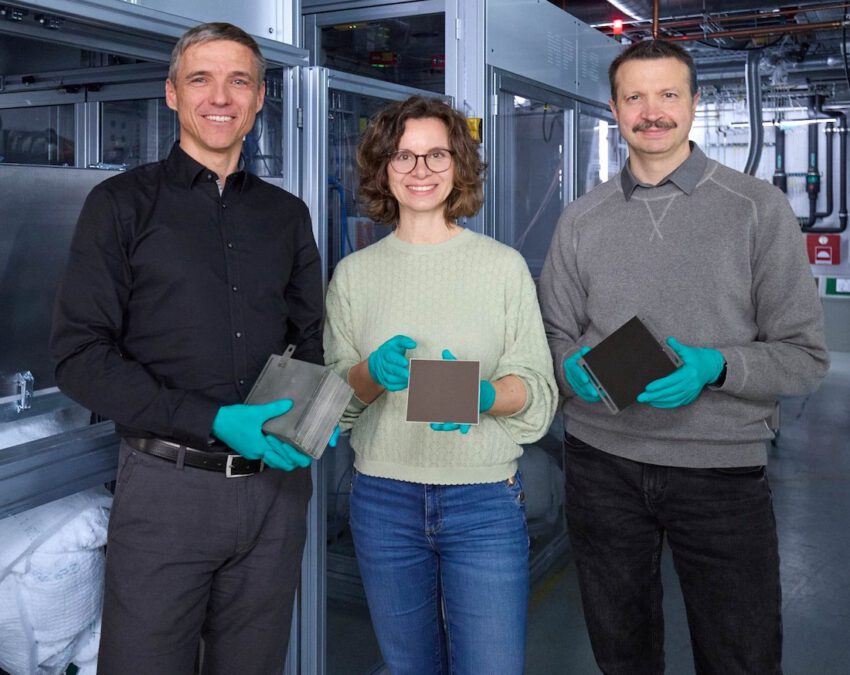
The high-temperature electrolyzer also serves as a fuel cell. It was awarded the Joseph von Fraunhofer Prize 2026 (from left): Stefan Megel, Sindy Mosch, and Mihails Kusnezoff. © Fraunhofer IKTS / Piotr Banczerowski
(Germany) Researchers at the Fraunhofer Institute for Ceramic Technologies and Systems IKTS in Dresden have developed a high-temperature electrolysis stack that can both produce hydrogen and function as a fuel cell. In high-temperature electrolysis, water vapor is split into hydrogen and oxygen in an electrolysis cell, the scientists explain. Thanks to the high temperatures, industrial waste heat can be used directly as energy for this process. This saves on expensive electricity, accelerates the electrochemical reactions, and optimizes efficiency. The scientists involved, Mihails Kusnezoff, Stefan Megel, and Sindy Mosch, have now been awarded the 2026 Joseph von Fraunhofer Prize for this achievement. "Our goal from the outset was to create a bridge between electrons and molecules," says Mihails Kusnezoff, Head of the Materials and Components Department and Head of the Energy Business Unit at Fraunhofer IKTS. The approach: Instead of pursuing separate concepts for electrolyzers and fuel cells, the researchers developed a system that covers both operating environments equally well, which they consider a "major challenge." Kusnezoff: “While fuel cells require low resistance and high voltages, electrolysis demands long-term stable, virtually thermoneutral operation with minimal temperature gradients.” The IKTS stack operates within an extended temperature range of 750 to 850 degrees Celsius. Within this range, not only can water vapor and CO2 be converted into synthesis gas, but various fuels such as natural gas, biogas, methanol, ethanol, or even green ammonia can be used in fuel cell mode for power generation. Thyssenkrupp Nucera has already expressed interest in scaling up the technology for industrial-scale production.
+ + + + +
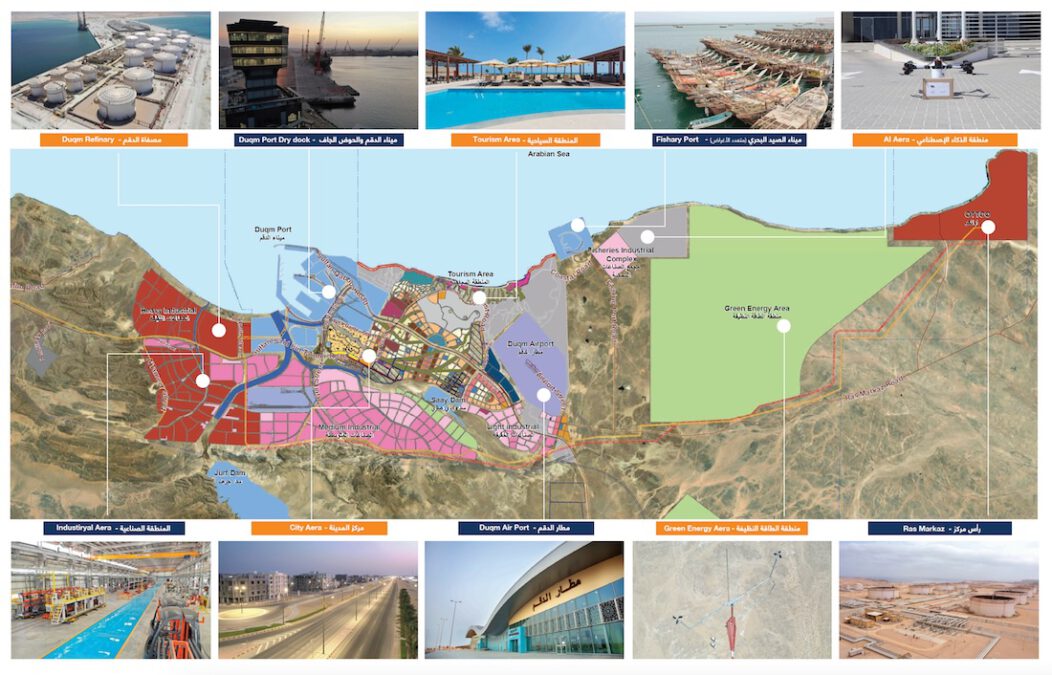
The areas of the special economic zones in the port city of Duqm, Oman. © Special Economic Zone at Duqm
(Oman) According to media reports, the Indian ACME Group is developing a further hydrogen and ammonia production facility in the Duqm Special Economic Zone (SEZAD) on a ten-square-kilometer area in two phases. The company estimates the investment at $4,2 billion (€3,6 billion). Upon completion, the facility is expected to produce 800.000 tons of green ammonia and 142.000 tons of green hydrogen annually, starting in 2030 and 2033 respectively, according to the Muscat Daily portal . ACME signed project development and land-use agreements in May 2025 between the state development agency Hydrom and the Special Economic Zones and Free Zones Authority (OPAZ). Phase 1 is already under construction and designed for 100.000 tons of green ammonia per year. The article states that the expansion of the ACME project is one of several investment and cooperation agreements worth a total of $7,5 billion that OPAZ recently signed in Duqm.
+ + + + +
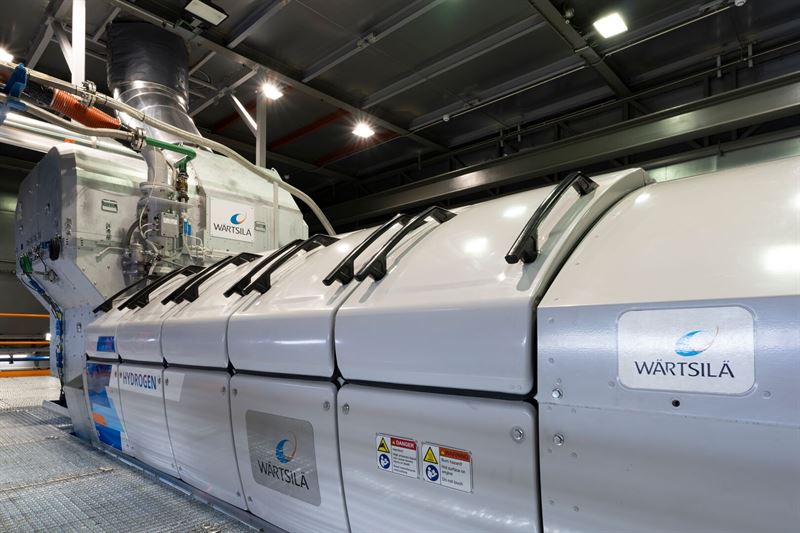
Hydrogen-powered Wärtsilä 31 generators can support energy-intensive sectors such as AI data centers and industry. © Wärtsilä
(Spain) Finnish power plant manufacturer Wärtsilä Energy has tested a 100% hydrogen-powered engine capable of supplying electricity to Spain's national grid in Bermeo, Spain. The company stated that this demonstrates the feasibility of engine-based power generation using green hydrogen under real-world grid conditions. The generator, dubbed "31H2," is part of the "Wärtsilä 31" platform, a four-stroke engine suitable for multiple fuel types, and shows that hydrogen can find a place in the energy infrastructure through this approach. Spain boasts some of the lowest electricity costs in Europe due to its high share of renewable energy.
+ + + + +
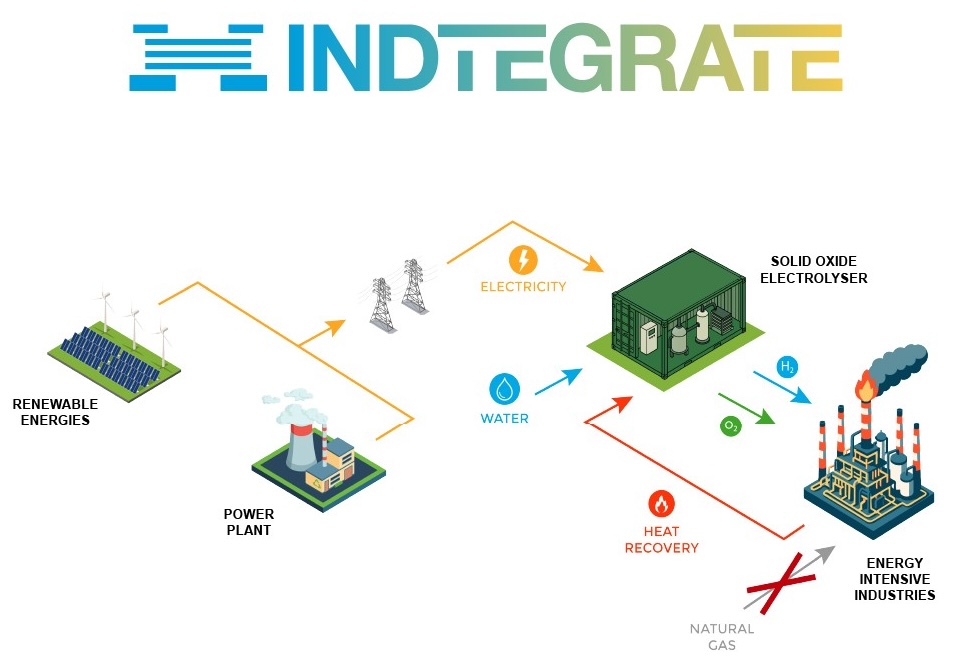
A research consortium aims to develop a SOEC system for real-world industrial application with "Indtegrate". © Center for Applied Energy Research eV
(Spain) Kerionics SL has launched the "Indtegrate" project. A consortium of twelve organizations aims to advance the integration of solid oxide electrolyzer (SOEC) technology into energy-intensive industries. The project focuses not only on hydrogen production itself, but also on the interplay of renewable electricity, industrial waste heat, steam generation, and digital operations management. Specifically, a modular 220-kilowatt system is planned. In addition to economic viability, the project will examine its technical functionality and operational flexibility. Furthermore, "the broader adoption of hydrogen technologies will be promoted through the involvement of stakeholders and a roadmap for replication," according to the Center for Applied Energy Research eV (CAE), a consortium partner from Germany. In addition to the lead company Kerionics SL (Spain), companies and research institutions from Slovenia, Finland, Romania, and Ireland are also involved, as well as the Spanish National Research Council (CSIC), the Universitat Politècnica de València, Steklarna Hrastnik, and Torrecid. The project is funded by the EU for a period of three years with approximately €7,7 million, of which around €1,2 million is allocated to the CAE.
+ + + + +
(Canada) Ballard Power Systems Inc. has received an order to supply "FCmove-HD" fuel cell systems with a cumulative output of 15 megawatts. The systems will be used for stationary applications by an unnamed customer specializing in off-grid power generation from renewable energy sources. The hydrogen generators will be used for applications such as live events, construction sites, and film sets. This is the customer's second order of this size. Deliveries are scheduled to begin in the second half of 2026.
+ + + + +
Photo above
iStock / © Danil Melekhin



