

Germany: DSV will use hydrogen-powered forklifts for the Cologne trade fair +++ France: STRABAG and Lhyfe are jointly planning hydrogen projects in Germany +++ Germany: Uniper launches open season for the Wilhelmshaven hydrogen import terminal +++ Finland: Finland's first hydrogen filling station goes into regular operation
A selection of PtX topics summarized at the end of the week
+ + + + +
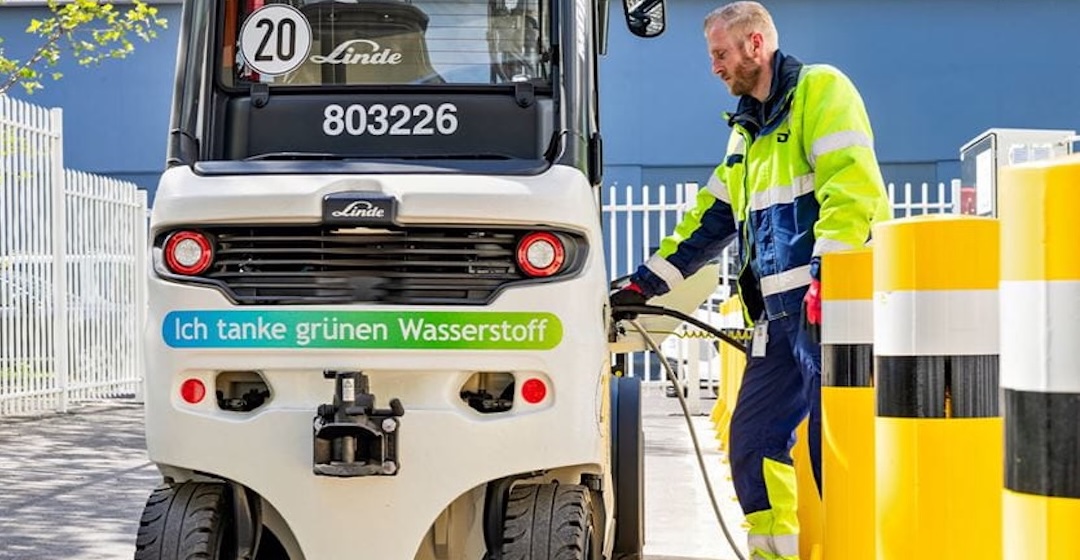
DSV will be using hydrogen-powered forklifts for Koelnmesse in the future. © Koelnmesse GmbH / Hanne Engwald
(Germany) Logistics provider DSV will be using forklifts powered exclusively by green hydrogen at its Cologne trade fair venue. Together with Koelnmesse GmbH and JA-Gastechnology GmbH (JAG), a Lower Saxony-based provider of hydrogen refueling stations and infrastructure, DSV has also installed its own hydrogen refueling station directly on the premises. The hydrogen supply is provided by Tyczka Hydrogen using bundled high-pressure storage tanks ("MaxiPacks"). According to Jörg Pries, Managing Director and Head of Cluster DACH at DSV Fairs & Events, this is "the first DSV trade fair location in Germany with a hydrogen-based forklift fleet and corresponding refueling infrastructure."
+ + + + +
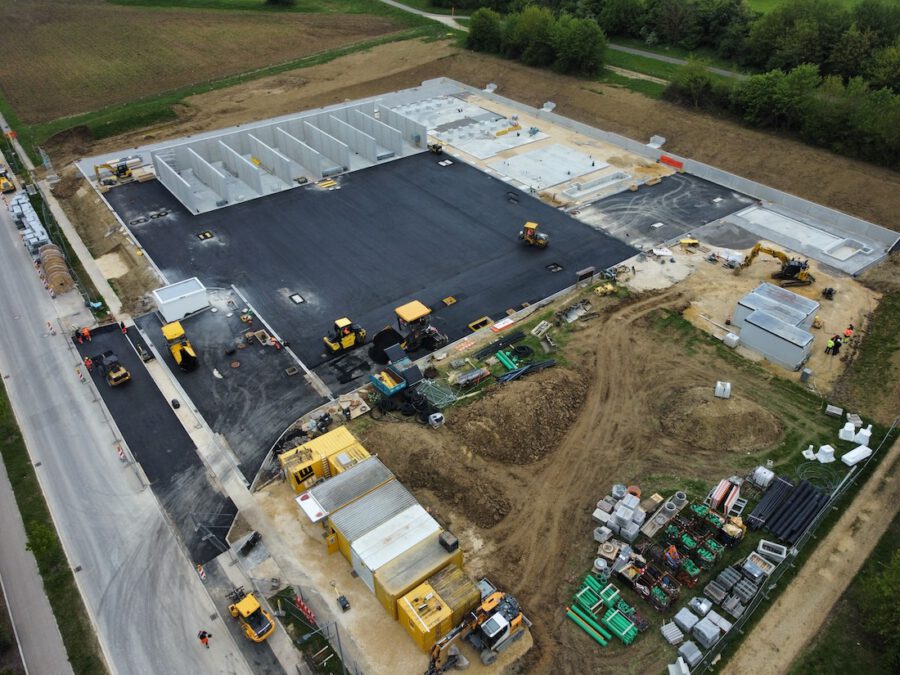
The Lhyfe green hydrogen production plant currently under construction in Schwäbisch Gmünd (Baden-Württemberg). © Lhyfe
(France) Lhyfe, a French producer of green hydrogen, and STRABAG SE, one of Europe's largest construction companies with its core markets in Austria and Germany, plan to collaborate more closely in the future. A cooperation agreement aims to accelerate the development and implementation of green hydrogen projects in Germany. Lhyfe has four RFNBO-certified production sites, with two more under construction, as well as a fleet of more than 80 hydrogen containers for transport and fifteen storage sites. Strabag covers the entire life cycle of construction projects, has extensive experience in financing and investment, and is driving modern infrastructure solutions and the expansion of more sustainable energy systems. The companies expect the partnership to lead to faster planning and implementation of projects, as well as a reduction in development and realization risks. Details of any joint projects were not disclosed.
+ + + + +

Uniper's Wilhelmshaven import terminal is designed to enable the import of hydrogen via ammonia. © Uniper Hydrogen GmbH
(Germany) Uniper Hydrogen GmbH is conducting an open season to assess market capacity requirements at the Wilhelmshaven hydrogen import terminal. In the first phase, market participants are invited to submit an expression of interest, specifying their desired capacity and paying an undisclosed participation fee. The capacity reservation will then be confirmed in the subsequent allocation process. In the second phase, key points will be issued as the basis for the usage agreement. A binding capacity booking will only be established upon signing of the agreement. The terminal is designed to facilitate the import of hydrogen via ammonia. After unloading, the ammonia will be cracked on-site in a large-scale cracker, and the hydrogen will be fed into the German core hydrogen network. There is also capacity available for rail transport. The annual import capacity is 2,6 million tons of ammonia, which corresponds to approximately 350.000 tons of hydrogen. Interested parties can request documents for creditworthiness and identity verification from Uniper via email until June 15, 2026 (h2-terminal-whv@uniper.energy).
+ + + + +
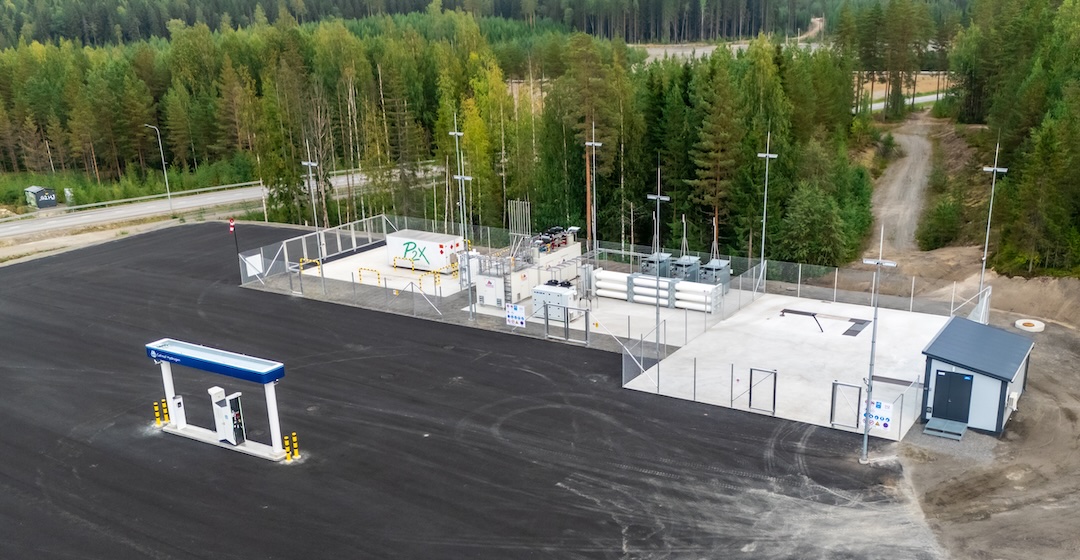
Cefmof Hydrogen launches Finland's first hydrogen filling station into commercial operation. © Cefmof Hydrogen Oy
(Finland) The Central Finland Mobility Foundation (Cefmof) has launched Finland's first commercial hydrogen refueling station in Jyväskylä. It is operated by its subsidiary, Cefmof Hydrogen Oy. The station was developed as part of Cefmof's hydrogen initiatives and serves as a platform for testing and implementing hydrogen solutions in practice. During the preceding pilot phase, the focus was on testing the station under real-world conditions, including cold winter environments, and gathering practical experience to support the transition to commercial operation. In parallel, the Japanese company Asahi Kasei KK began installing a one-megawatt Aqualyzer-C3 electrolyzer, which now produces 400 kilograms of hydrogen daily; enough to refuel three fuel cell vehicles per hour (as previously reported). Cefmof Hydrogen is "among the first operators in Finland to use a containerized alkaline electrolysis system of this size," says Deputy CEO Lauri Perämäki. Previously, since summer 2025, the hydrogen producer P2X Solutions Oy had supplied the filling station by trailer. Cefmof is a non-profit foundation established by the city of Jyväskylä, the Toyota Gazoo Racing World Rally Team, and the Toyota Mobility Foundation. The foundation focuses on development, pilot projects, and partnerships for hydrogen solutions, while Cefmof Hydrogen focuses on operation and scaling.
+ + + + +
Photo above
iStock / © Danil Melekhin



