

Germany: StromVKG's planned power plant expansion significantly oversized +++ Netherlands: Gasunie, OGE, and Thyssengas connect the Dutch and German hydrogen networks +++ USA: Vivyfy Technology presents off-grid, hydrogen-powered generator +++ Germany: Hof University of Applied Sciences launches knowledge transfer project +++ Great Britain: Protium acquires "Cromarty" hydrogen project from Storegga +++ Taiwan: Sinbon and Nexcellent plan to offer hydrogen generators for urban needs
A selection of PtX topics summarized at the end of the week
+ + + + +
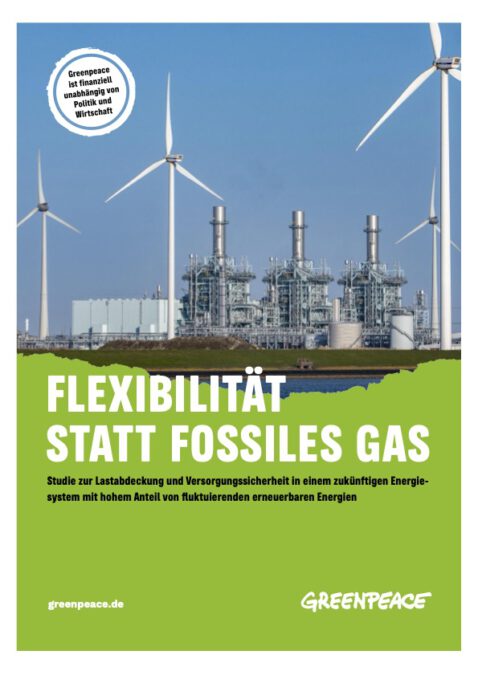
Study: It is uncertain whether the new capacities planned by the German government will even be needed by 2032. © Wuppertal Institute
(Germany) The expansion of new natural gas power plants in Germany, as envisioned by the federal government in its power plant strategy (StromVKG), is significantly oversized. New dispatchable capacities are only rarely needed as backup during periods of low wind and solar power generation. Flexible, climate-friendly options such as electricity and heat storage, energy efficiency, and flexible biogas plants could "compensate for energy supply bottlenecks cost-effectively and reliably"—and thus significantly reduce the need for new power plants. This is the conclusion of a study by the Wuppertal Institute commissioned by Greenpeace Germany. According to the study, "a combination of various flexibility options can reliably compensate for fluctuations in wind and solar power, at least in the medium term." The researchers analyzed alternatives to dispatchable backup natural gas power plants, including battery storage, flexible electrolysis, geothermal energy, dispatchable heat pumps, power-to-heat plants, increased capacity at biogas plants, and improved energy efficiency. The options could also bridge periods of low wind and solar output (dark doldrums), meaning times when neither wind blows nor the sun shines and which occur less than once a year, for up to five days. This would reduce the need for new gas-fired power plants and lower costs. Additional gas backup power plants should only be built if they are fully converted to green hydrogen in the future. "It is uncertain whether new capacities on the scale currently planned by the German government as part of its power plant strategy will even be needed by 2032," says Stefan Thomas, Head of the Energy, Transport and Climate Policy Department at the Wuppertal Institute. The "Study on Load Coverage and Security of Supply in a Future Energy System with a High Share of Fluctuating Renewable Energies" is available free of charge as a PDF (147 pages).
+ + + + +
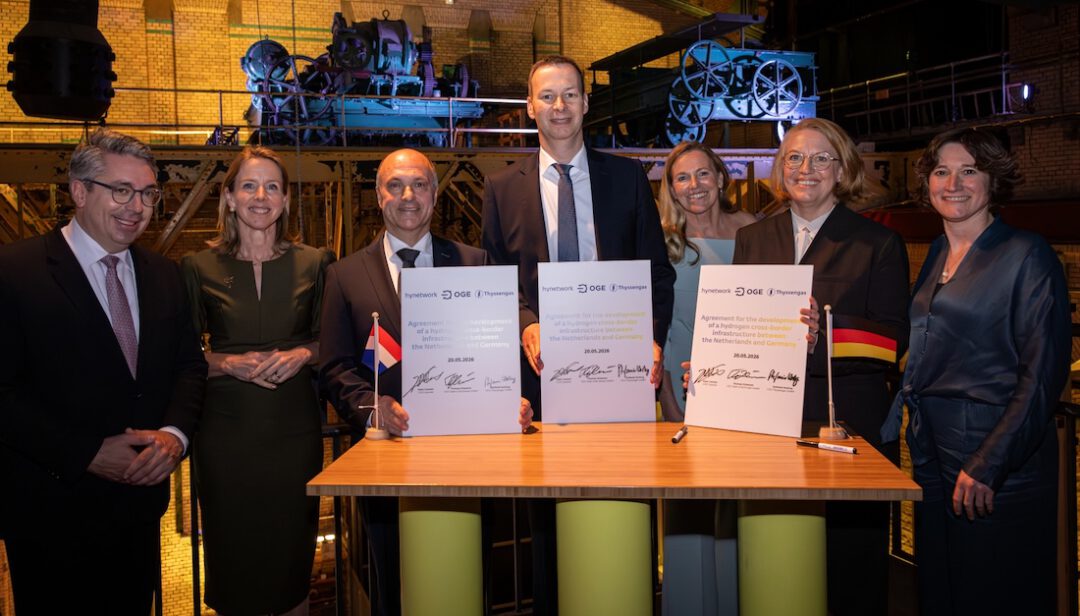
Gasunie, OGE and Thyssengas are connecting the Dutch and German hydrogen networks via the Zevenaar-Elten pipeline (from left): Stefan Rouenhoff (State Secretary at the Federal Ministry for Economic Affairs and Energy), Stientje van Veldhoven (Dutch Minister for Climate and Green Growth), Hans Coenen (COO Gasunie), Thomas Hüwener (CEO Open Grid Europe), Willemien Terpstra (CEO Gasunie), Stefanie Kesting (CEO Thyssengas), Britta van Boven (Managing Director Gasunie Germany) © Anne Reitsma / Thyssengas
(Netherlands) The transmission system operators Gasunie (Netherlands), Open Grid Europe (OGE, Germany), and Thyssengas (Germany) have signed an agreement to develop a hydrogen corridor between the Netherlands and Germany by 2031. The two national hydrogen networks will be connected at the shared border crossing point of Zevenaar (Netherlands) / Elten (North Rhine-Westphalia). Where possible, existing natural gas pipelines converted to hydrogen will be used, thus linking the German industrial and chemical sectors with hydrogen production, storage, and import facilities in the Netherlands. The focus of the first phase will be connecting the Rhine-Ruhr region, followed by southern locations such as Ludwigshafen. On the Dutch side, the Rhine Delta Corridor plays a central role as connecting infrastructure between the Port of Rotterdam and the German hydrogen network.
+ + + + +
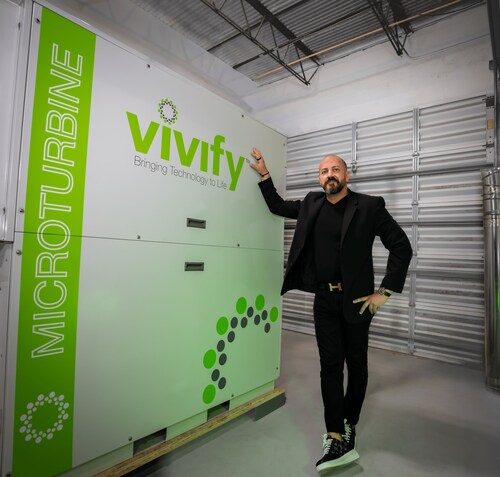
Vivyfy Technology founder and CEO Jason Herring with the generator called the "Flying Pig". © Vivyfy Technology Inc.
(USA) Vivyfy Technology Inc. has unveiled a containerized, off-grid, hydrogen-powered electricity generation system. The basic unit, dubbed the "Flying Pig," has a capacity of one megawatt and, according to the company, can provide scalable energy for applications such as data centers, remote construction sites, disaster areas, and military operations. The technological platform is the company's "Hydrogen Oxygen Generator" (HOG). The system is designed to operate at a fraction of the long-term costs of conventional grid-connected power supplies, says Jason Herring, founder and CEO of Vivyfy Technology. The company aims to reduce dependence on legacy grid infrastructure, centralized supply chains, and monopoly pricing.
+ + + + +
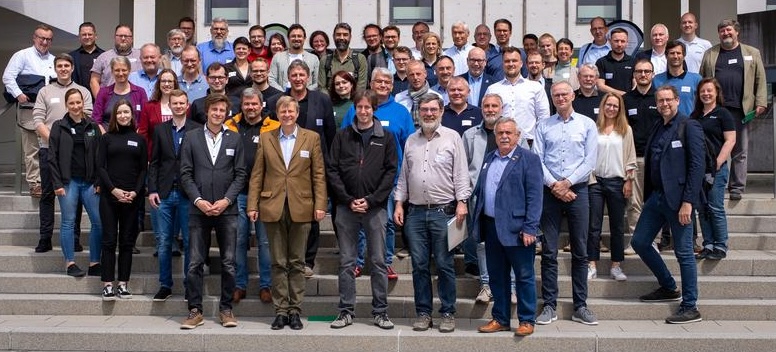
The kick-off event for Enertech+, focusing on hydrogen, energy storage, and energy efficiency, took place at Hof University of Applied Sciences. © Hof University of Applied Sciences
(Germany) A new project, "Enertech+ – Knowledge Transfer for Future Technologies," is launching at Hof University of Applied Sciences. The project focuses on security of supply, system stability, and resource efficiency, with a particular emphasis on decentralized hydrogen production, energy storage technologies, and energy system-related energy efficiency technologies. The goal is to transfer current research knowledge to small and medium-sized enterprises (SMEs) and support them in implementing key technologies for the energy transition. A central component is the development of an active network between research and industry. Companies will have access to free training and information services, as well as continuous professional exchange. Through workshops, events, and practical formats, new technologies will be implemented more quickly, thus making a concrete contribution to the transformation of the energy system. As part of the Bavarian Energy Days, the Institute for Hydrogen and Energy Technology at Hof University of Applied Sciences will present the Enertech+ project to the public on Saturday, July 18 (10 a.m. to 16 p.m.).
+ + + + +
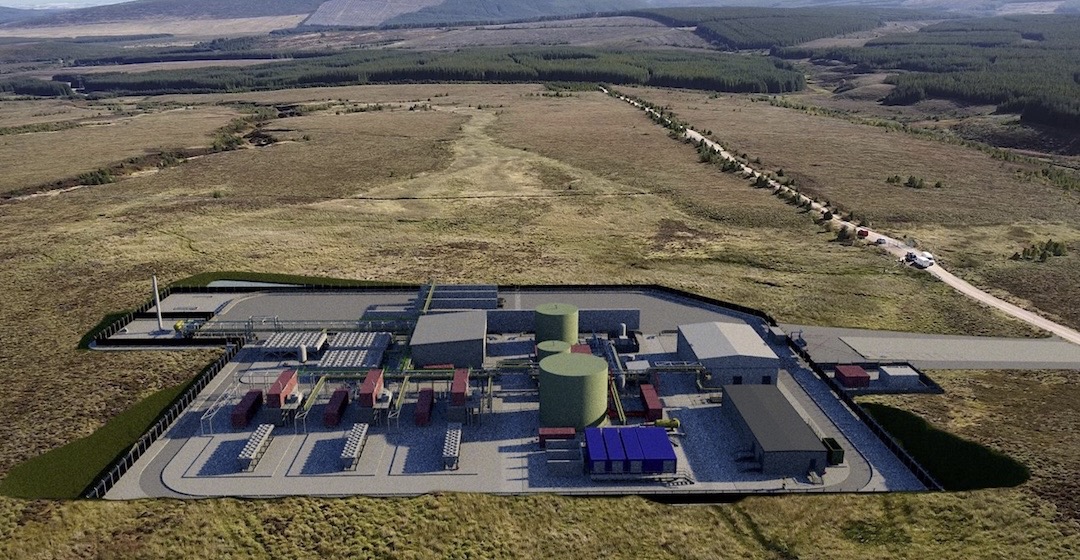
Rendering of the planned Cromarty hydrogen project in Scotland. © Protium Ltd.
(Great Britain) Project developer Storegga Ltd. has sold its 15-megawatt (MW) Cromarty hydrogen project and other green hydrogen assets in Scotland to Brighton-based Protium Ltd. The announced Cromarty Hydrogen Project, a joint venture between Scottish Power and Storegga, will utilize a 3,5-megawatt electrolyzer in Caithness, Sutherland, and Easter Ross in northeast Scotland to produce hydrogen for local industry and whiskey distilleries. It will receive funding from the government's Hydrogen Allocation Round (HAR1). Protium recently began producing hydrogen for the first time at its 2,5 MW Pioneer 2 plant in Wales. Once fully operational in June 2026, Pioneer 2 will scale up production to one tonne of low-carbon hydrogen per day. Beyond Wales and Scotland, Protium is also advancing projects in South Tees on England's east coast, supporting industrial decarbonization in one of the UK's most strategically important energy and manufacturing clusters. Two further projects were recently shortlisted by the UK government under the Hydrogen Allocation Round 2 (HAR2).
+ + + + +
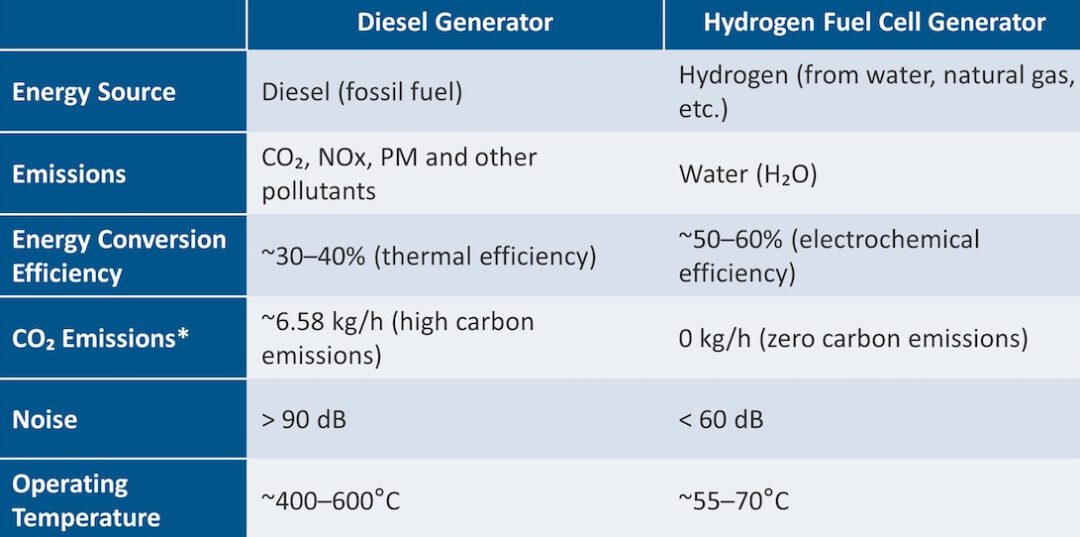
Sinbon and Nexcellent aim to develop hydrogen generators for urban use to reduce noise and environmental pollution. © Sinbon Electronics
(Taiwan) Sinbon Electronics has announced a collaboration with fellow Taiwanese company Nexcellent Energy to advance the development of urban hydrogen solutions. The companies aim to explore market opportunities in a range of applications, including electric micro-vehicles, commercial drones, mobile hydrogen microgrids, and on-site power supply systems for AI data centers. For example, in busy neighborhoods of New York City, thousands of food trucks use gasoline-powered generators to run cooking equipment, refrigeration units, and lighting – “for hours on end, causing continuous noise and emissions in densely populated urban streets.” There is a growing need for cleaner and quieter mobile energy solutions that can better support urban sustainability. Sinbon, together with its US partner Swobbee and now with Nexcellent, is therefore exploring the use of modular hydrogen-powered energy systems as a cleaner alternative. These systems could provide a stable power supply for mobile businesses like food trucks while significantly reducing emissions and noise.
+ + + + +
Photo above
iStock / © Danil Melekhin



