

Sweden: Volvo Trucks focuses on hydrogen combustion engines and e-mobility +++ Germany: Cellcentric presents new fuel cell system for heavy trucks +++ Germany: Impact of PtX certification on the ramp-up of the hydrogen export market in southern Africa +++ South Korea: Seoul supplements public transport with 400 hydrogen buses +++ Germany: eFarm in North Frisia receives €1,6 million in funding +++ Germany: Cottbus puts four hydrogen buses into operation +++ Germany: Universities from Augsburg and Inverness conduct joint hydrogen research
A selection of PtX topics summarized at the end of the week
+ + + + +
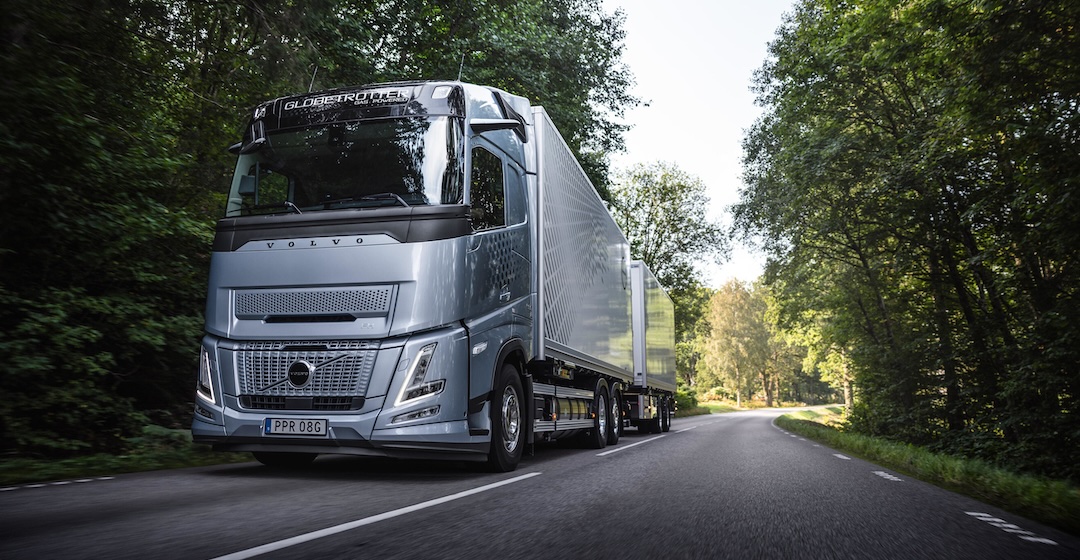
Volvo Trucks is focusing on both hydrogen combustion engines and electric mobility. © Volvo Truck
(Sweden) Volvo Trucks is focusing on both combustion engines for multiple renewable fuels, including hydrogen, and electric powertrains. The combustion engine continues to play a key role in Volvo's net-zero ambitions. The company is introducing a new 13-liter engine platform designed for diesel and gasoline, and also capable of running on renewable fuels such as biodiesel and biogas. The next step in the gas fuel sector will be hydrogen-powered combustion engines, which Volvo aims to launch before 2030. Volvo has also unveiled a new heavy-duty electric truck with a range of up to 700 kilometers. It can charge its batteries from 20 to 80 percent in 50 minutes. The rollout will begin in 2026. Sales of the new combustion engines will commence in the third quarter of 2026.
+ + + + +
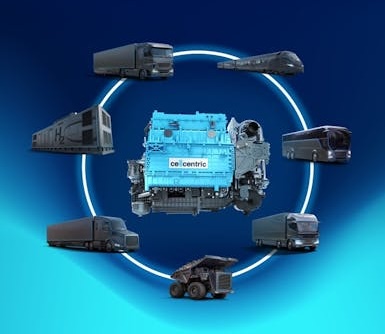
Cellcentric's new BZA375 fuel cell system is suitable not only for trucks, but also for a range of other applications. © Cellcentric GmbH & Co. KG
(Germany) Cellcentric GmbH & Co. KG has unveiled a new fuel cell system, the "BZA375," for heavy-duty trucks. It delivers up to 375 kilowatts (500 hp) of continuous power. Fuel consumption is 20 percent lower compared to the previous BZA150 system, meaning a fully loaded 40-ton truck can travel under real-world driving conditions with less than six kilograms of hydrogen per 100 kilometers. A reduction in components and interfaces results in 40 percent less complexity. The system weighs 500 kilograms and has a lifespan of 25.000 hours (approximately ten years), comparable to conventional diesel technology. Initial prototypes are available to Cellcentric customers for their own testing. Series production is being prepared for the end of the decade. Designed for long-haul transport, the system is also suitable for other applications such as coaches, stationary power generation, rail transport, and mining. Cellcentric is a joint venture between Daimler Truck AG and Volvo Group. Toyota is expected to join soon.
+ + + + +

This white paper was produced in collaboration with nine Fraunhofer Institutes. © Fraunhofer IEE
(Germany) Developers of PtX production plants installed in Southern Africa should identify a target export market early on to ensure the plants are economically viable. This directly impacts system design as well as investment and operating costs. This is the conclusion of a research consortium of nine Fraunhofer Institutes that examined the political, legal, and economic framework for PtX exports from the SADC region. The Southern African Development Community (SADC) is a regional economic community in Southern Africa comprised of 16 states and headquartered in Gaborone, Botswana. The study analyzed, among other things, the influence of Power-to-X certification requirements on the market ramp-up of hydrogen and synthetic energy carriers. These requirements significantly influence whether and under what conditions PtX products gain access to international markets. Four potential import regions – the European Union, the United Kingdom, South Korea, and Japan – are analyzed with regard to their respective certification schemes, legal requirements, and market incentive mechanisms. A key finding of the analysis is that the sustainability criteria differ significantly across the examined import regions and are the strictest and most detailed in the EU. The white paper, "Navigating PtX Certification Challenges: Qualitative Assessment of Sustainability Requirements and Cost Dynamics for Exports from the SADC Region," is available free of charge as a PDF (48 pages).
+ + + + +
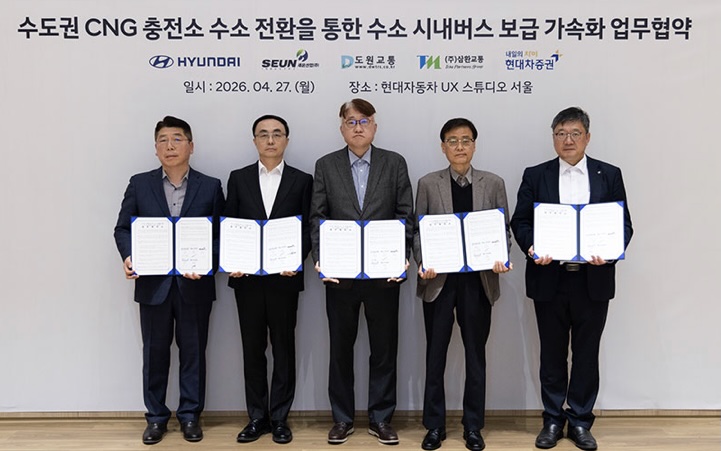
The top executives of five corporations agreed to deploy an initial 400 hydrogen buses on Seoul's public transport network. © Hyundai Motor Company
(South Korea) Hyundai Motor Company, Dowon Transportation, Samhwan Transportation, Sewoon Industry, and Hyundai Motor Securities plan to accelerate the deployment of hydrogen-powered city buses in the Seoul metropolitan area. The agreement calls for expanding hydrogen refueling infrastructure, deploying 400 hydrogen buses in urban public transport within five years, and converting existing CNG refueling stations to hydrogen. Hyundai Motor will supply the buses, which will be equipped with a 180-kilowatt fuel cell system and supported by 78,4 kilowatt-hour lithium-ion batteries. The buses will have a range of 751 kilometers.
+ + + + +
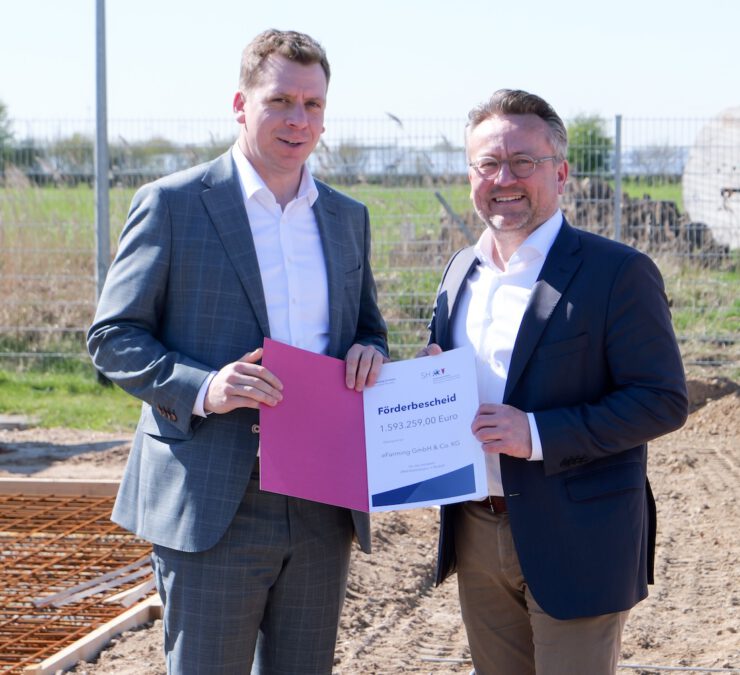
The electrolyzer in Bosbüll is being expanded to two megawatts with the help of subsidies (from left): State Secretary Joschka Knuth presents the state funding notification to André Steinau, Managing Director of eFarming GmbH & Co. KG. © GP Joule
(Germany) The operating company of the eFarm Nordfriesland hydrogen ecosystem, initiated by GP Joule, will receive approximately €1,6 million in funding for the expansion of its electrolysis plant in Bosbüll. eFarm uses regionally generated electricity from renewable energy plants to produce and store green hydrogen on-site, which is then delivered to two filling stations in Husum and Niebüll. The funding will support the expansion of the eFarm production site to two megawatts. The electrolyzer is supplied by the Spanish manufacturer H2B2. The waste heat will be used for the municipality's district heating network. From summer 2026, over one ton of green hydrogen could be produced per day, enough for more than 30 bus refuelings. This would also increase the number of buses currently used in local public transport in Schleswig-Holstein from two to twelve. The operators are DB subsidiary Autokraft GmbH and Transdev subsidiary Rohde Verkehrsbetriebe GmbH. eFarming GmbH & Co. KG has 18 companies and shareholders involved.
+ + + + +
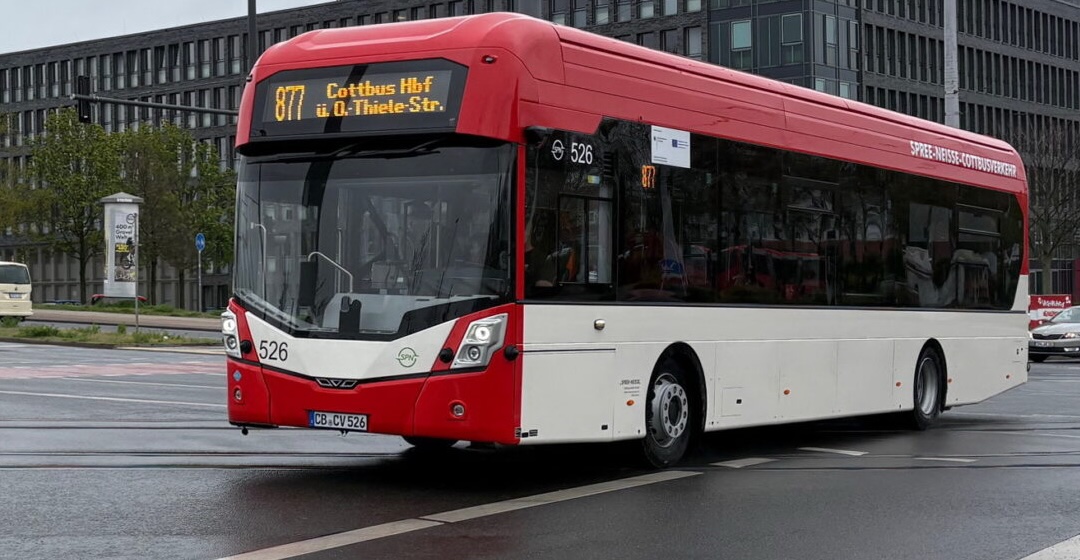
Cottbus puts four hydrogen buses into regular service. © Cottbusverkehr GmbH
(Germany) Cottbusverkehr GmbH has put four hydrogen buses into regular service. The aim is to gain insights into the vehicles' performance in everyday operation and into operational processes. The focus is particularly on range, refueling procedures, scheduling, and the interaction between the vehicle, infrastructure, and drivers. A prerequisite for the start of the trial operation was the commissioning of a mobile hydrogen refueling station at the beginning of April on Cottbusverkehr's premises. This interim solution ensures the vehicles' fuel supply until the stationary hydrogen refueling station, currently under construction, can be put into operation towards the end of this year, the company stated. Comprehensive familiarization and training sessions with the drivers were conducted in advance.
+ + + + +
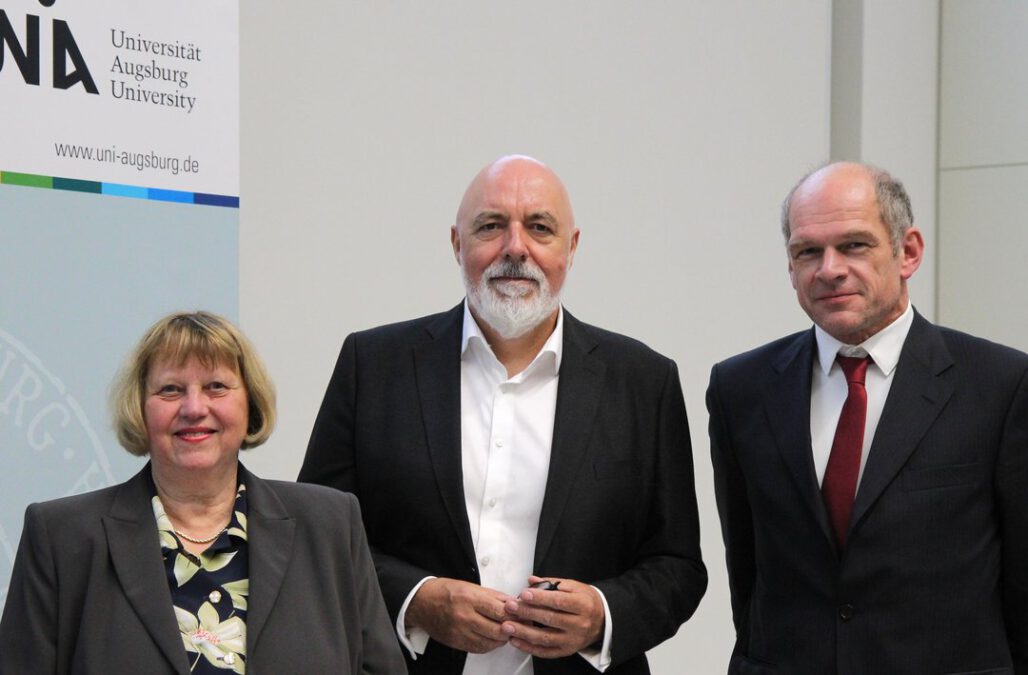
From left: Sabine Doering-Manteuffel (President of the University of Augsburg), Christopher O'Neil (President of the University of the Highlands and the Islands), Richard Weihrich (MRM, University of Augsburg) © University of Augsburg
(Germany) Augsburg University of Applied Sciences, the University of Augsburg, and the University of the Highlands and Islands in Inverness, Scotland (UHI) are collaborating to build resilient European energy systems using surplus energy and hydrogen. The focus is on renewable energies, hydrogen technologies, sustainable material systems, and life cycle assessments. "Inverness and Augsburg are an excellent fit for this project," says Richard Weihrich, spokesperson for the hydrogen working group. "Scotland has a surplus of green energy, and consequently, wind and tidal energy are being rapidly expanded there. We, in turn, have the technology and expertise for the production, storage, use, and system integration of hydrogen."
+ + + + +
Photo above
iStock / © Danil Melekhin



