

Ivory Coast: AfDB announces funding for green hydrogen projects in Africa +++ Netherlands: Gasunie and Fluxys develop hydrogen link between the Netherlands and Belgium +++ Belgium: Seven new members join the Hydrogen Council +++ Germany: Bavaria has great geological potential for hydrogen storage +++ Austria: Villach to get electrolyzer for public transport +++ Spain: Enagás launches public participation in the Hydrogen Backbone project in Aragon +++ Germany: Freudenberg dissolves its fuel cell business unit +++ Austria: Hydrogen partnership with Algeria +++ Germany: ZSW presents concept for 500 kW PEM fuel cell stack for ships
A selection of PtX topics summarized at the end of the week
+ + + + +
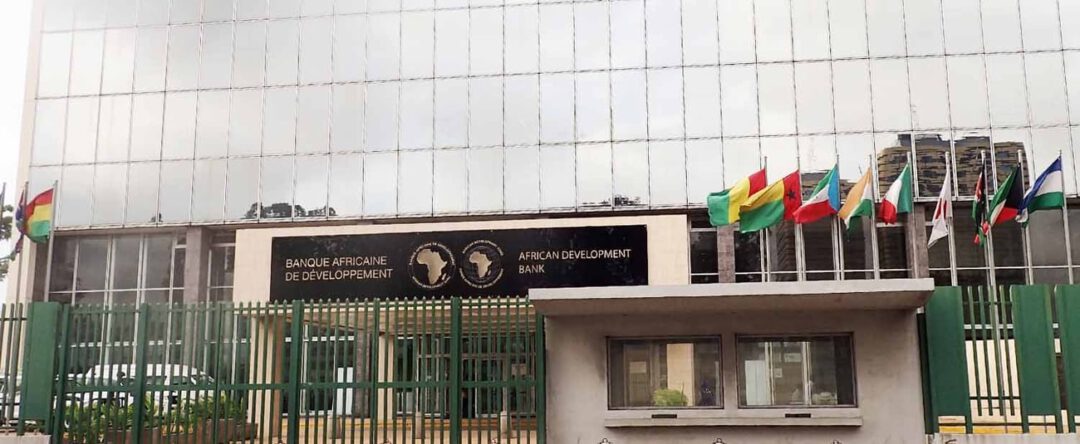
Headquarters of the African Development Bank (AfDB) in Abidjan, Ivory Coast. © AfDB
(Ivory Coast) The African Development Bank (AfDB) has launched a call for proposals for companies developing green hydrogen and related projects on the continent. Funding is provided by the AfDB Sustainable Energy Africa Fund (SEFA), which is backed by more than a dozen countries. The SEFA Africa Green Hydrogen Programme (AGHP) offers financing of up to $20 million for three to five projects. Support is typically provided through repayable grants for consultancy services that help advance the final investment decision, such as feasibility studies, engineering design, procurement preparation, and construction and consulting services. The application deadline is May 11, 2026. Applications can be submitted via the SEFA website.
+ + + + +
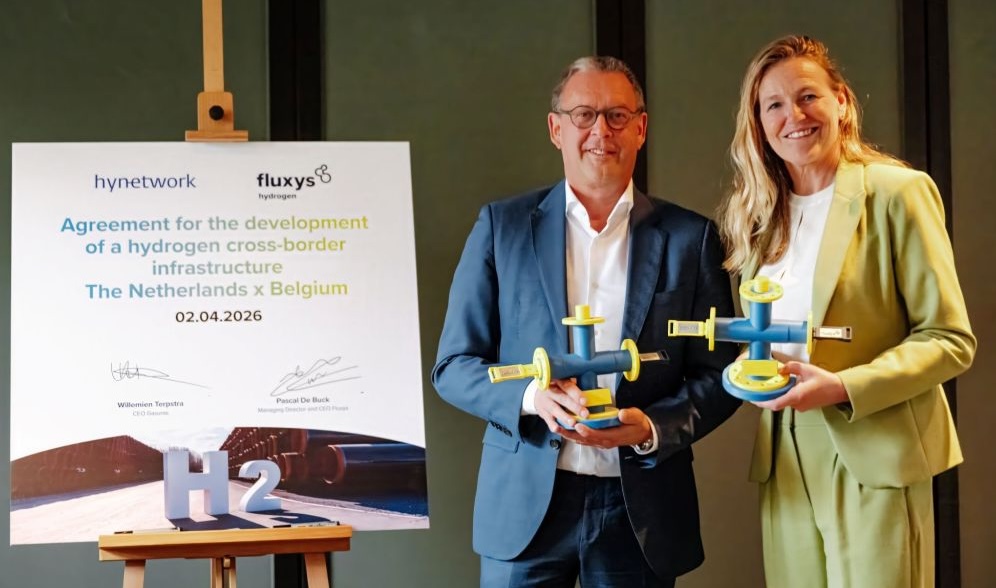
Ben De Waele (Director of Fluxys Hydrogen) and Helmie Botter (Director of Hydrogen Transport at Gasunie). © Gasunie
(Netherlands) Hynetwork, a Dutch subsidiary of Gasunie, and Fluxys Hydrogen, a Belgian network operator, have signed an agreement to jointly develop a cross-border hydrogen pipeline between the Netherlands and Belgium. This pipeline is to be built "where possible" using existing natural gas pipelines converted for hydrogen transport and is expected to be operational by 2030. The border crossing at Zandvliet, between the Dutch province of Zeeland and the Belgian province of Antwerp, is being considered as the first strategic bidirectional hub, connecting key import and production sites with industrial clusters, including the Port of Rotterdam in the Netherlands and the ports of Antwerp and Ghent in Belgium.
+ + + + +
The International Hydrogen Council has seven new members. © Hydrogen Council (Screenshot)
(Belgium) The Hydrogen Council, a CEO-led global alliance, announces the addition of seven new members. Andritz AG (Austria) offers integrated P2X solutions for the production of renewable hydrogen, e-methanol, and e-ammonia. Long-distance gas network operator Enagás SA (Spain) is currently focused on developing a hydrogen infrastructure in Spain and Europe with its H2Med pipeline, as well as the Iberian Hydrogen Backbone. HD Korea Shipbuilding & Offshore Engineering (Korea) manages a broad portfolio encompassing shipbuilding, offshore engineering, marine engines, and decarbonization technologies, including, through its subsidiary HD Hydrogen, the commercialization of technologies such as SOFC (Solid Oxide Fuel Cell) and SOEC (Solid Oxide Electrolysis Cell). Intelligent Energy Ltd. (UK) builds fuel cell power units for sectors including automotive, aerospace, power generation, telecommunications, shipping, and rail. ITM Power plc (UK) specializes in the development, manufacturing, and integration of electrolyzers. The Infrastructure Division of the Keppel Group (Singapore) provides and operates decarbonization solutions in the field of hydrogen and its derivatives, and is developing, among other things, Singapore's hydrogen-compatible combined heat and power plant on Jurong Island. The chemical company Lotte Chemical Ltd. (Korea) builds and invests in infrastructure for the production, distribution, and use of clean hydrogen. The Hydrogen Council thus has approximately 150 members.
+ + + + +
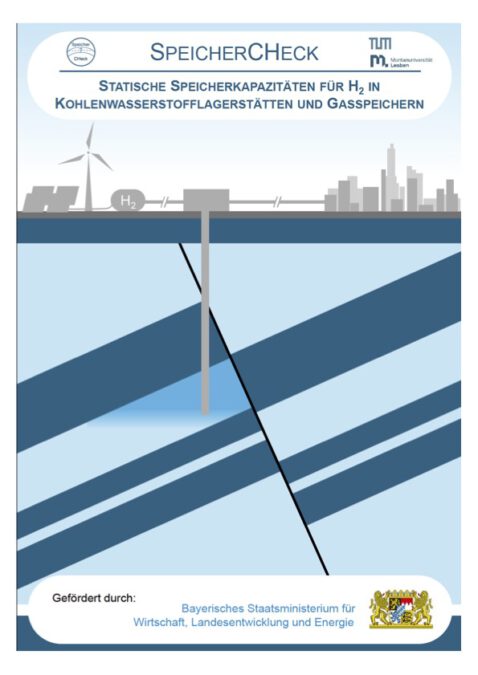
The Technical University of Munich (TU Munich) is investigating Bavaria's potential for hydrogen storage. © TU Munich
(Germany) Bavaria could have a geological storage potential of 12,6 to 25,2 terawatt-hours (TWh). This is according to an interim report from the Technical University of Munich (TUM) on the "SpeicherCHeck" study. The report indicates that existing natural gas porous storage facilities in the Alpine foothills are particularly suitable. These underground storage facilities, located in naturally porous rock formations, have been used to temporarily store surplus natural gas and feed it back into the grid as needed. This would supplement the existing storage potential of approximately 33 TWh in salt caverns in northern Germany. The study, commissioned by the Bavarian Ministry of Economic Affairs and conducted by the Technical University of Munich (TUM) in cooperation with the University of Leoben (MUL), aims to determine whether there are potential geological formations in Bavaria suitable for safe storage. The focus is on former oil and gas reservoirs as well as active natural gas porous storage facilities. The project runs until 2027. The "SpeicherCHeck" interim report is available free of charge as a 24-page PDF.
+ + + + +
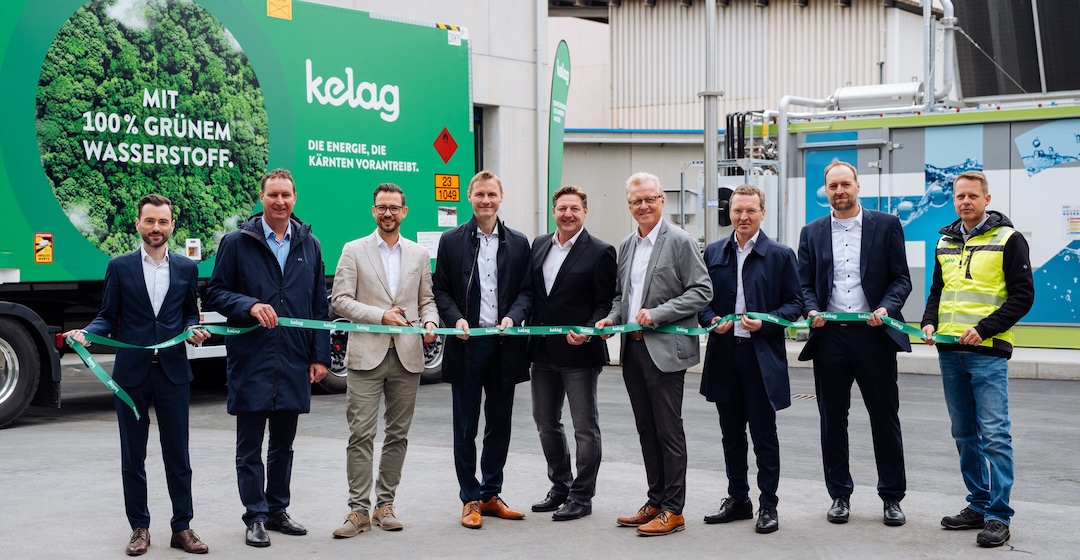
Opening of the Kelag hydrogen plant (right in the background) with representatives from politics and business at the site of Kärntner Restmüllverwertungs GmbH (KRV). © Kelag AG
(Austria) Energy supplier Kelag AG has opened an electrolysis plant for the production of green hydrogen in Arnoldstein. Ground was broken almost a year ago. The plant can produce 140 tons of hydrogen daily, enough to supply the 36 buses with a daily range of up to 500 kilometers in the Villach regional transport network. An expansion to 400 tons is planned. With a capacity of up to three megawatts, the plant will produce emission-free hydrogen starting in May 2026. Of this total available capacity, one megawatt will be used directly to supply the new Postbus fleet, while the remaining two megawatts will be available for security of supply and for future applications in the mobility and industrial sectors. Kelag has invested around 16 million euros in the construction of the plant and the associated infrastructure. "Two parallel production lines ensure continuous production and guarantee a reliable supply," says Kelag CEO Reinhard Draxler.
+ + + + +
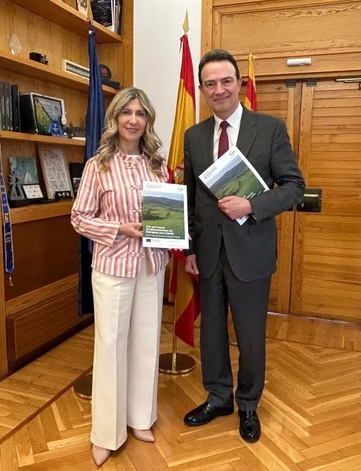
Enagás CEO Arturo Gonzalo and Energy Transition Manager Natalia Latorre presented the plans for the public consultation process for the Hydrogen Backbone to the government of the Autonomous Community of Aragon. © Enagás SA
(Spain) The long-distance gas network operator Enagás has launched the public consultation process (PCPP, Conceptual Public Participation Plan) for the Spanish hydrogen network "Hydrogen Backbone" in the northern Spanish autonomous region of Aragon. The infrastructure, part of the Ebrotal axis, will extend 191 kilometers through 28 municipalities in Zaragoza and Teruel. The majority of the network will run parallel to the natural gas network and will "significantly contribute to promoting the development of the hydrogen economy in these areas." The public, government agencies, organizations, and associations can submit their comments until May 14. A total of eight on-site workshops are planned until April 29 (details on the Enagás website ). A final report summarizing the results of the process will be prepared within 18 months. A similar process was launched in Rioja in February for a 117-kilometer pipeline. The first sections of the planned Spanish hydrogen network will encompass the development of approximately 2.600 kilometers of hydrogen infrastructure.
+ + + + +
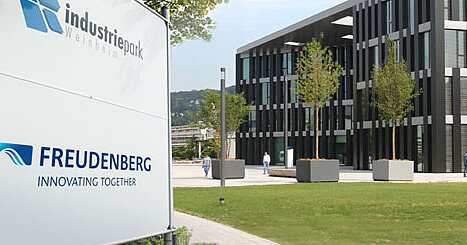
Freudenberg exits fuel cell business. © Freudenberg SE
(Germany) Freudenberg SE, based in Weinheim, has dissolved its e-Power Systems division. The business with battery cells, modules, and systems, as well as the fuel cell systems business, will not be continued. The "Hydrogen Components" business unit, however, will remain and has been integrated into Freudenberg Sealing Technologies. The measure affected approximately 600 employees, primarily in the USA. The market for batteries and fuel cells in the USA developed "significantly more slowly" than expected. "Reasons for this include weak demand in key applications, a lack of infrastructure – particularly in the hydrogen sector – high costs, and political and regulatory uncertainties," the company announced at the presentation of its annual report. According to the report, in 2025 the Freudenberg Group employed around 51.000 people in approximately 60 countries and generated sales of more than €11,7 billion (down 1,8 percent). Operating profit amounted to €1,09 billion (down 3,5 percent). Freudenberg is active in areas including seals, vibration control components, technical textiles, filters, cleaning solutions, specialty chemicals and medical technology products.
+ + + + +
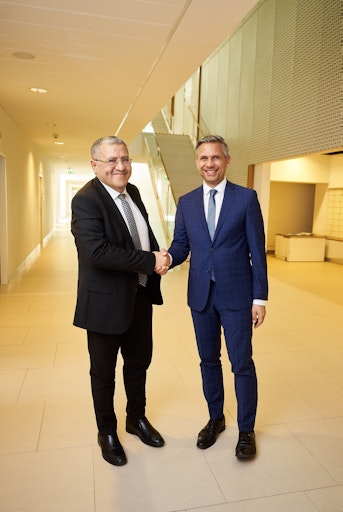
At the UNIDO conference in Vienna, Austrian Federal Minister for Economic Affairs and Energy Wolfgang Hattmannsdorfer and the Secretary General of the Algerian Ministry of Energy and Renewable Energies, Nabil Kafi, discussed opportunities for cooperation in the development of the Southern Hydrogen Corridor. © Federal Ministry for Economic Affairs, Energy and Tourism
(Austria) The recent United Nations Industrial Development Organization (UNIDO) hydrogen conference in Vienna focused on the development of international hydrogen corridors, investment models for production regions, infrastructure for transport and storage, and the use of green hydrogen in energy-intensive industries. Partnerships between Europe, Africa, and the Middle East to secure long-term supply chains and strengthen industrial competitiveness were also discussed. On the sidelines of the conference, Austria's Minister of Economic Affairs and Energy, Wolfgang Hattmannsdorfer, and the Secretary General of the Algerian Ministry of Energy and Renewable Energies, Nabil Kafi, explored potential cooperation opportunities between Austria and Algeria in the development of the Southern Hydrogen Corridor during a bilateral meeting. This corridor is intended to connect North Africa via Italy with Austria and Germany, transporting green hydrogen to Central Europe on an industrial scale. Austria will play a key role as a transit and distribution hub in the European hydrogen system and aims to "position itself as a hub for green hydrogen," said Hattmannsdorfer. Algeria is considered a key partner for future hydrogen imports to Europe due to its high potential for renewable energies and existing energy infrastructure. The minister could travel to Algeria "in the fall" to explore possible cooperation projects, it is said.
+ + + + +
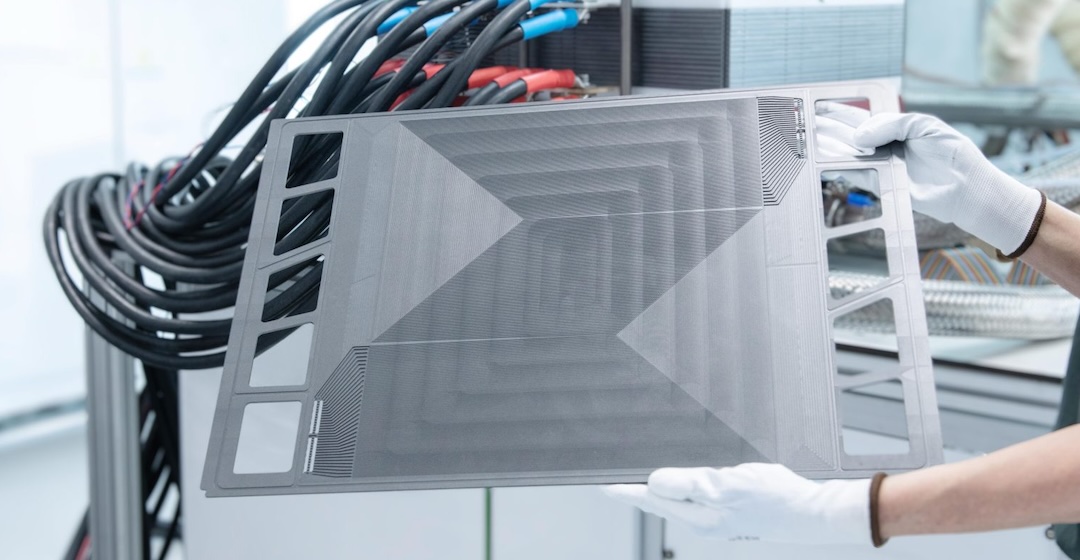
ZSW is developing a new design for PEM fuel cell stacks with a 1.300 square centimeter graphitic bipolar plate. © ZSW / Elvira Eberhardt
(Germany) The Center for Solar Energy and Hydrogen Research Baden-Württemberg (ZSW) has announced the development of a large-format PEM fuel cell stack specifically designed for shipping and stationary applications. The bipolar plates have an active area of over 1.300 square centimeters, enabling a total output of up to 500 kilowatts per stack. Current stack designs for cars and trucks typically deliver less than 200 kilowatts. For a multi-megawatt ship propulsion system, numerous stacks would need to be combined and complexly interconnected. The high-performance design developed by ZSW saves space and costs and significantly simplifies the integration and future maintenance of such fuel cell propulsion systems in ships, according to ZSW. "The tests confirm the performance of our stack, which sets standards for the entire fuel cell industry," says Markus Hölzle, ZSW board member and head of the Electrochemical Energy Technologies division in Ulm.
+ + + + +
Photo above
iStock / © Danil Melekhin



