

Sweden: Stegra installs final electrolysis module for green hydrogen +++ Netherlands: Air Products has completed two-thirds of its liquid hydrogen plant in Rotterdam +++ Bulgaria: Hydrogenera delivers a 2 MW alkaline electrolysis system to LE Power GmbH in Ukraine +++ Canada: Aurora Hydrogen secures $3 million from Oldendorff Overseas +++ UK: GeoPura and Forth Ports plan to produce green hydrogen in the Port of Tilbury +++ Germany: Energy lobby calls for hydrogen legislation +++ Canada: Plug Power receives FEED contract from Hy2gen for a 275 MW electrolysis system +++ Germany: Research consortium develops recyclable concepts for fuel cells +++ China: Price of hydrogen to fall to €1,90 +++ Germany: Fraunhofer FEP develops titanium coating for composite bipolar plates +++ China: Shanghai Electric delivers biomethanol on a large scale to a French container ship +++ Finland: Poland and Finland establish hydrogen cluster for the Baltic Sea region
A selection of PtX topics summarized at the end of the week
+ + + + +
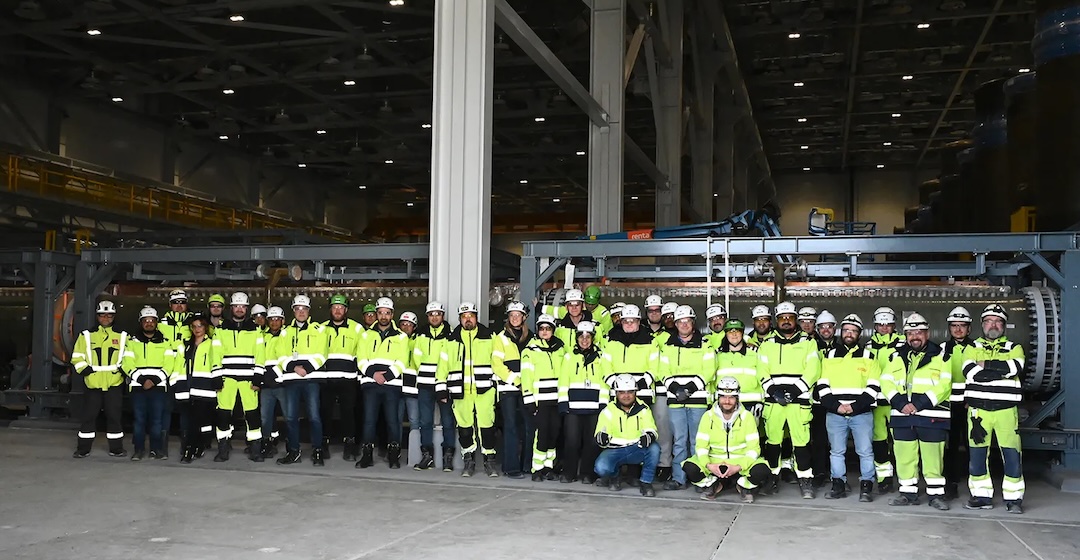
Stegra has installed all 37 electrolyzer modules and is now moving into the next phase leading up to commissioning. © Stegra AB
(Sweden) Stegra AB has completed the installation of the last of a total of 37 electrolyzer modules in Boden. These were delivered in more than 800 containers and have now been assembled to form "Europe's largest green hydrogen production plant." The plant is now entering the next phase of commissioning. Stegra (formerly "H2 Green Steel" until September 2024) is currently building a new plant in Sweden that will produce steel using green hydrogen generated from renewable electricity. The first production lines are scheduled to start in 2026 using recycled steel scrap as raw material. Shortly thereafter, iron and steel production based on DRI (digestible iron regeneration) will begin, and full production capacity will be reached in 2027, according to a previous announcement. The company aims for stable operation of the green hydrogen, green iron, and green steel plants by 2028. In January of this year, Stegra and Thyssenkrupp Materials Processing Europe agreed on an initial steel delivery starting in 2027. The total tonnage of the agreement is reportedly "in the high six-figure range."
+ + + + +
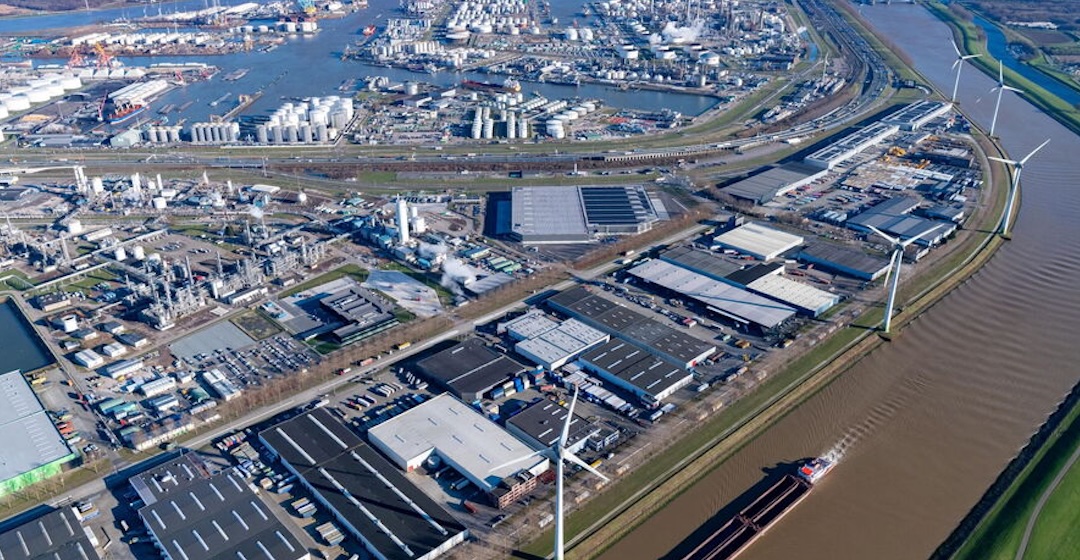
Air Products reports construction progress at its new liquid hydrogen plant in the Port of Rotterdam. © Port of Rotterdam / martensmultimedia
(Netherlands) Industrial gas producer Air Products has completed over 65 percent of the construction of a new liquid hydrogen plant in the Rotterdam port area. The plant will support growing demand from sectors such as electronics manufacturing, space applications, industrial processing, mobility, maritime applications, and aviation. It will be integrated into Air Products' existing hydrogen network in the Rotterdam industrial cluster and will supply customers in the Benelux countries, France, Germany, and the UK. Commissioning is scheduled for 2027.
+ + + + +
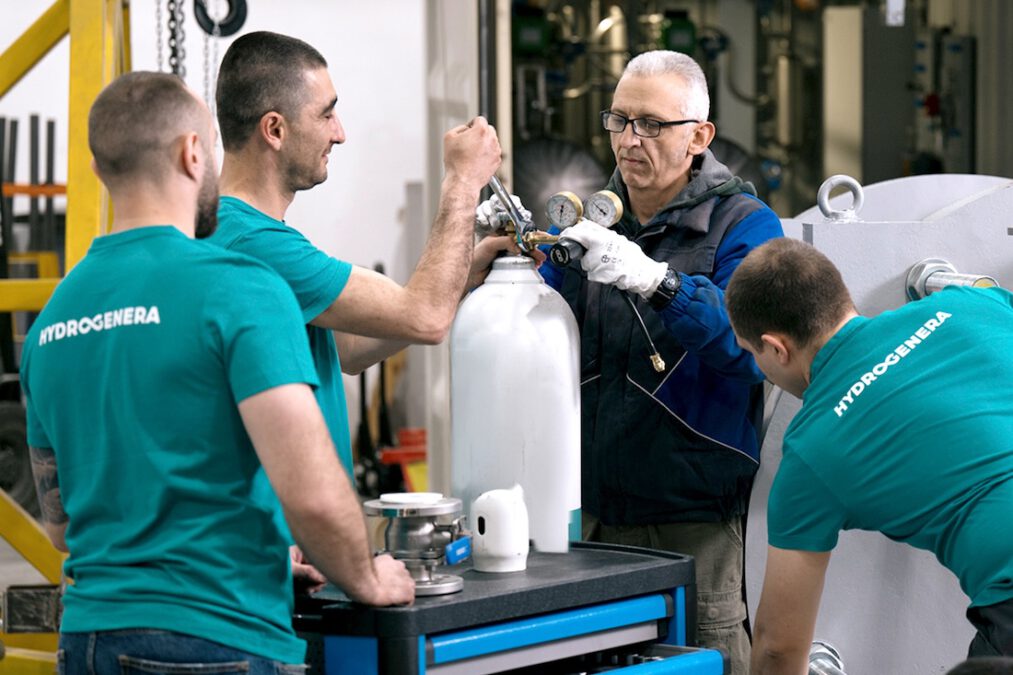
Hydrogenera is supplying a 2 MW alkaline electrolysis system to LE Power GmbH in Ukraine. © Hydrogenera
(Bulgaria) Hydrogenera is supplying a 2 MW alkaline electrolysis system for a green hydrogen project in Ukraine. Hydrogenera's general representative, Hydro Future GmbH, has reportedly signed a contract with LE Power GmbH for the project's implementation. The electrolyzer system will be commissioned in Ukraine and will produce hydrogen with a purity of 99,999 percent for industrial customers in Germany. The German government is supporting the project with an undisclosed grant. Commissioning is planned for June 2027.
+ + + + +
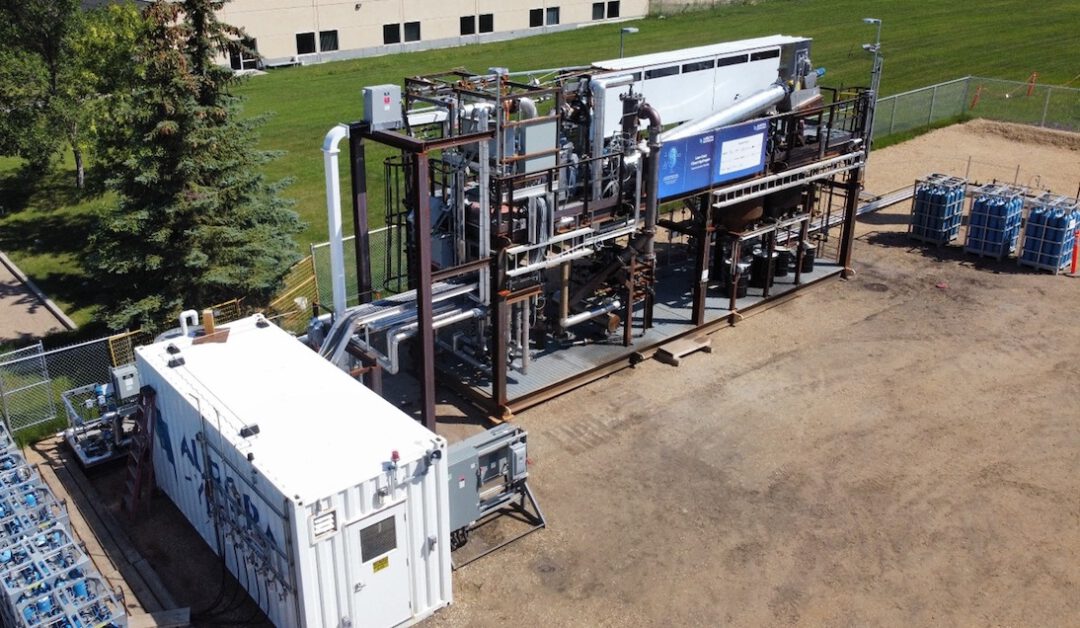
Aurora Hydrogen secures three million dollars from Oldendorff Overseas for its methane pyrolysis technology for producing hydrogen, for example on ships. © EIC Rose Rock
(Canada) Hydrogen specialist Aurora Hydrogen has acquired three million dollars (2,6 million euros) from Oldendorff Overseas Investments (OOI). The funds from the investment platform of the Hamburg-based, family-owned shipping company NORD Group will be used to accelerate the deployment of Aurora's technology on ships. According to reports, the agreement includes a long-term commitment from OOI to purchase Aurora systems to support the shipping company's decarbonization efforts. Aurora produces cost-effective hydrogen from natural gas and solid carbon as a byproduct, thus eliminating the need for carbon capture or storage. The scalable systems are designed for direct deployment in ports and on ships. Aurora, a portfolio company of venture capital firm EIC Rose Rock, is currently optimizing its demonstration plant. Continuous hydrogen production is planned for 2027. To date, Aurora has raised $14 million from investors such as OOI, EIC Rose Rock, Energy Innovation Capital, Williams, Chevron Technology Ventures and Shell Ventures, as well as around $2 million from the Canadian government and funding programs such as Natural Resources Canada, NGIF Accelerator, Alberta Innovates and Sustainable Development Technology Canada.
+ + + + +
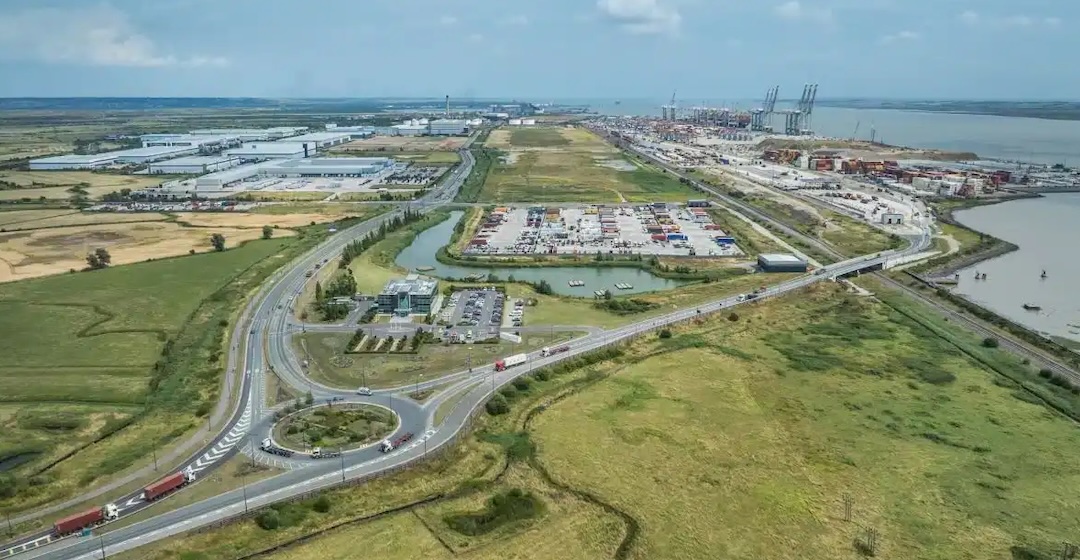
GeoPura and Forth Ports plan to produce green hydrogen in the port of Tilbury. © Thames Freeport Ltd.
(UK) GeoPura and Forth Ports Ltd. plan to produce green hydrogen at London's main port, Tilbury. The plant will support the decarbonization of the UK's logistics hubs and make Tilbury one of the first major British ports to begin commercial-scale hydrogen production for heavy industrial use. The project is being funded with £2 million (€2,3 million) from Thames Freeport. Under an initial ten-year agreement, GeoPura is developing a first 1 MW solar-powered plant. The decision was made after GeoPura was awarded a contract to supply 2.500 tonnes of hydrogen to Lower Thames Crossing, one of the UK's most significant infrastructure projects. GeoPura designs and manufactures hydrogen power units (HPUs) that provide zero-emission electricity and replace diesel generators in sectors such as construction, infrastructure, and events. The Thames Freeport industrial area stretches for 38 kilometers along the River Thames in East London and South Essex, where Forth Ports operates the ports of Port of Tilbury, DP World London Gateway and Ford Dagenham.
+ + + + +
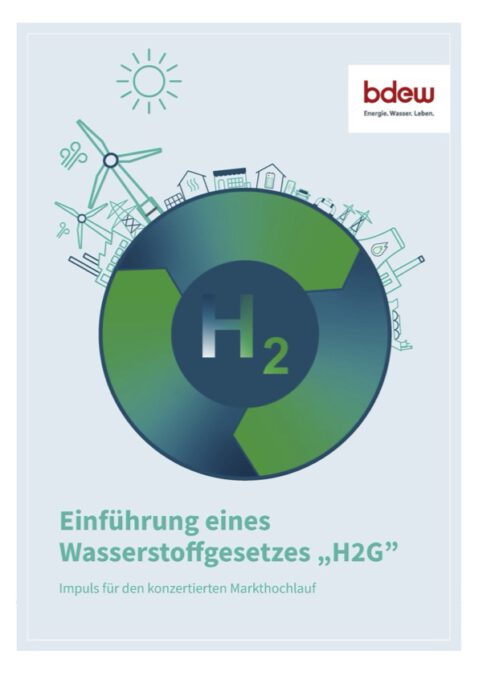
The German electricity and energy industry lobby is calling for a hydrogen law. © BDEW
(Germany) Following the passage of the Act to Accelerate the Availability of Hydrogen ( HydrogenBG ) by the Bundestag and Bundesrat, the German Association of Energy and Water Industries (BDEW) is calling for "more speed" in the approval processes for infrastructure and facilities. The energy industry would have liked to see "more courage from the legislature" in "some areas," according to the lobby group. "For example, preferential building regulations for production facilities and the overriding public interest in the core grid would have been sensible." As a next step, the association would like to see "a comprehensive hydrogen law that considers production, transport, storage, distribution, and demand together, creates planning certainty, and safeguards investments along the entire value chain." Legally and regulatory-related additional costs and uncertainties must be reduced or avoided entirely, and risks that are not economically viable must be mitigated. Furthermore, cooperation among EU member states in ramping up hydrogen production is crucial. Germany should take a leading role in this. A BDEW position paper on the "Introduction of a Hydrogen Law" is available online as a PDF (6 pages).
+ + + + +
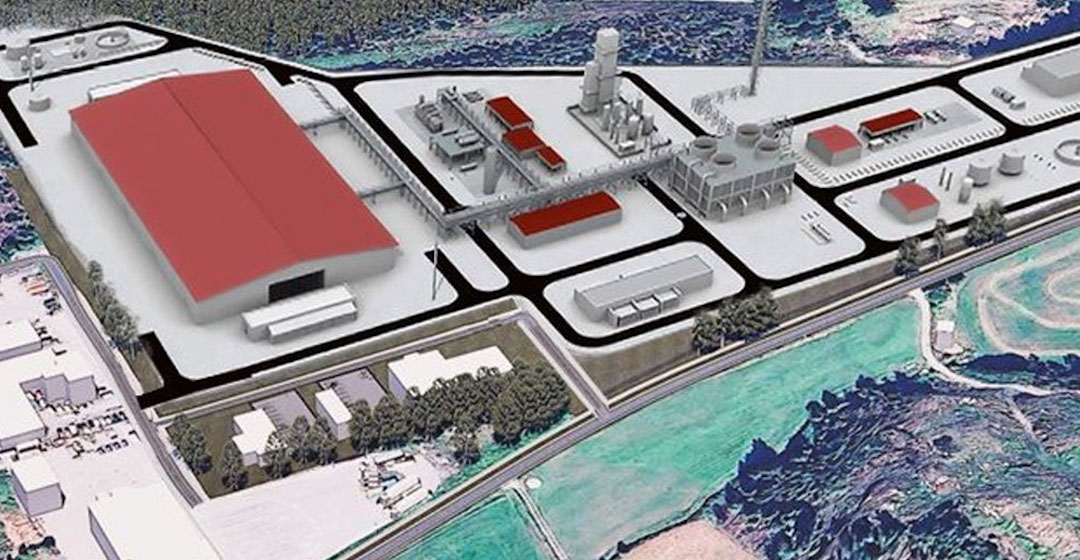
In September 2025, Hy2gen presented plans for a green ammonia plant in Sauda, Norway. Now, Plug Power is to design a large-scale production facility in Canada. © Hy2gen
(Canada) Plug Power Inc. has been awarded the contract for the front-end engineering design (FEED) for the delivery of its 275-megawatt "GenEco" PEM electrolysis system for Hy2gen Canada Inc.'s "Courant" project. According to the company, it is one of the largest decarbonized ammonium nitrate plants in North America. Plug's scope of work includes engineering and system design to support electrolysis integration, plant configuration, and performance optimization. The hydrogen plant in Baie-Comeau, Quebec, will support the production of low-carbon ammonia by supplying electricity from hydropower via the Hydro-Québec grid. The ammonia will then be processed into ammonium nitrate for use in the explosives industry.
+ + + + +
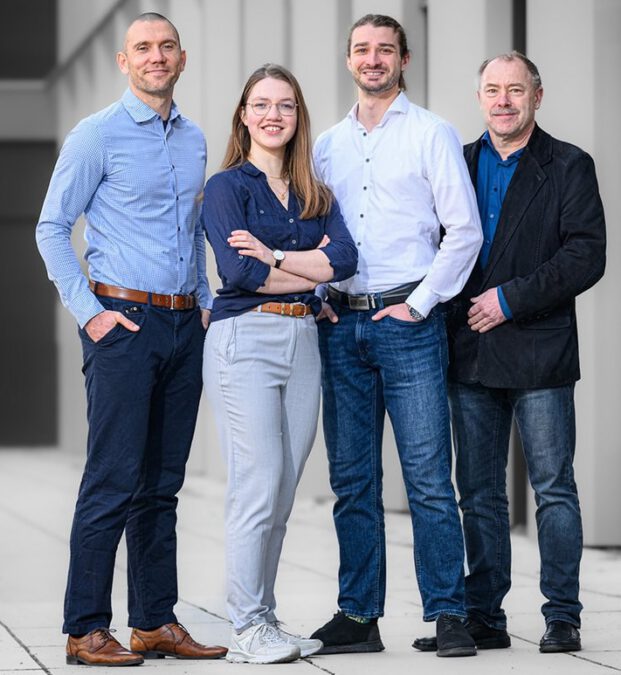
Hy2Cycle project team at HTWD: Mathias Jäckel, Paula Hanisch, Jannes Korneli and Uwe Kühsel. © HTWD / Peter Sebb
(Germany) A consortium consisting of the Dresden University of Applied Sciences (HTWD) and the Technical Universities in Dresden, Chemnitz, and Freiberg aims to develop recycling-friendly concepts for fuel cells and electrolysis along the entire value chain. Alkaline high-pressure electrolysis makes the energy-intensive production of hydrogen "more efficient, thus saving energy and costs," says Mathias Jäckel, project manager at HTWD. "Our role is the design and manufacture of a pressure alkaline electrolyzer in which as many components as possible are recyclable." The entire life cycle of the components is being considered. Suitable materials must meet very high requirements, which limits the selection. Availability also plays a role. To reduce dependence on scarce resources, rare raw materials should be replaced wherever possible. In parallel, the team is creating a digital twin that will allow them to simulate the solutions and analyze details. They also plan to use this to initially test the manufacturing process virtually. Subsequently, a prototype will be built and tested as a basis for further research. The joint project “Hy2Cycle” is being implemented within the framework of the Saxon Hydrogen Union.
+ + + + +
(China) By the end of 2025, cumulative sales of hydrogen fuel cell vehicles in China reached almost 40.000 units. According to the Chinese automotive industry portal Gasgoo, the country had installed 574 hydrogen refueling stations with a total capacity of over 360 tons per day. However, significant hurdles remain, such as limited application possibilities, an insufficient supply of green hydrogen, and bottlenecks in storage and transportation. In March 2026, the Ministry of Industry and Information Technology (MIIT) published a notice on piloting comprehensive hydrogen applications. According to this notice, urban clusters must enable widespread hydrogen use by 2030, thereby reducing the average final price to below 25 yuan (€3,15) per kilogram – and to 15 yuan (€1,90) in "leading regions." The goal is to reach 100.000 fuel cell vehicles nationwide by then. The focus is on medium and heavy-duty trucks and other long-range commercial vehicles.
+ + + + +
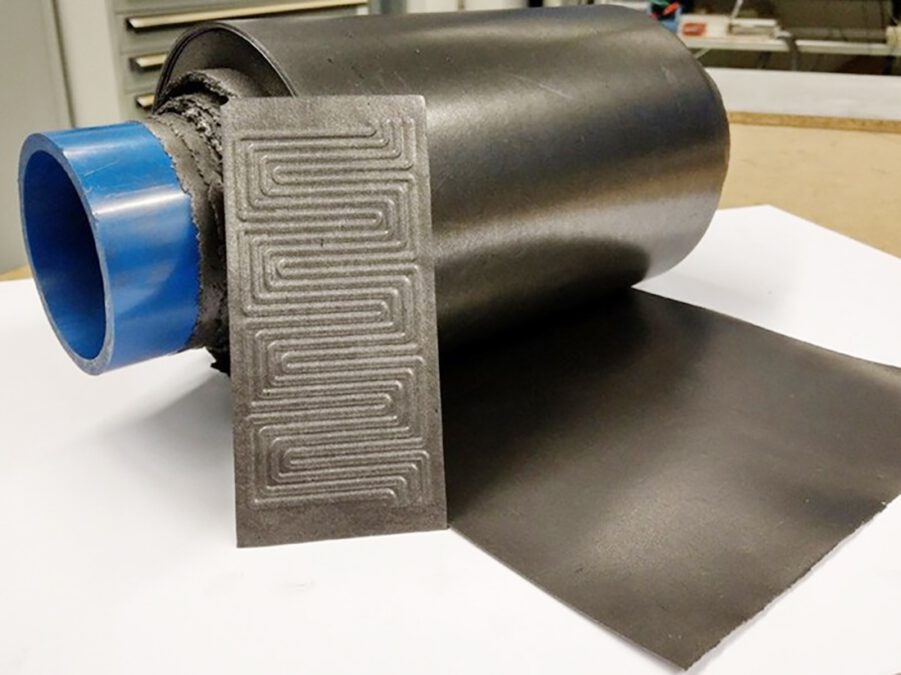
Polymer compound film as a starting material for the production of cost-effective and efficient bipolar plates for hydrogen production. © Fraunhofer UMSICHT
(Germany) Researchers at the Fraunhofer Institute for Electron Beam and Plasma Technology FEP have further developed an established vacuum coating process to enable the deposition of compact titanium thin films onto composite bipolar plates. Titanium bipolar plates are corrosion-resistant but expensive. Polymer-graphite-based composite bipolar plates are significantly more cost-effective and lighter, but require a suitable protective and functional layer to remain permanently stable and electrically conductive in the aggressive acidic environment. According to the researchers, they have developed a coating approach that combines the material advantages of composites with the functional properties of a titanium layer. The coating is applied using plasma-activated electron beam evaporation in a vacuum system. This provides a potentially scalable approach for making cost-effective composite bipolar plates functional for use in fuel cells and electrolyzers. The results were achieved in collaboration with the Fraunhofer Institute for Environmental, Safety and Energy Technology UMSICHT and could potentially be transferred to continuous production concepts such as roll-to-roll or sheet-to-sheet lines.
+ + + + +
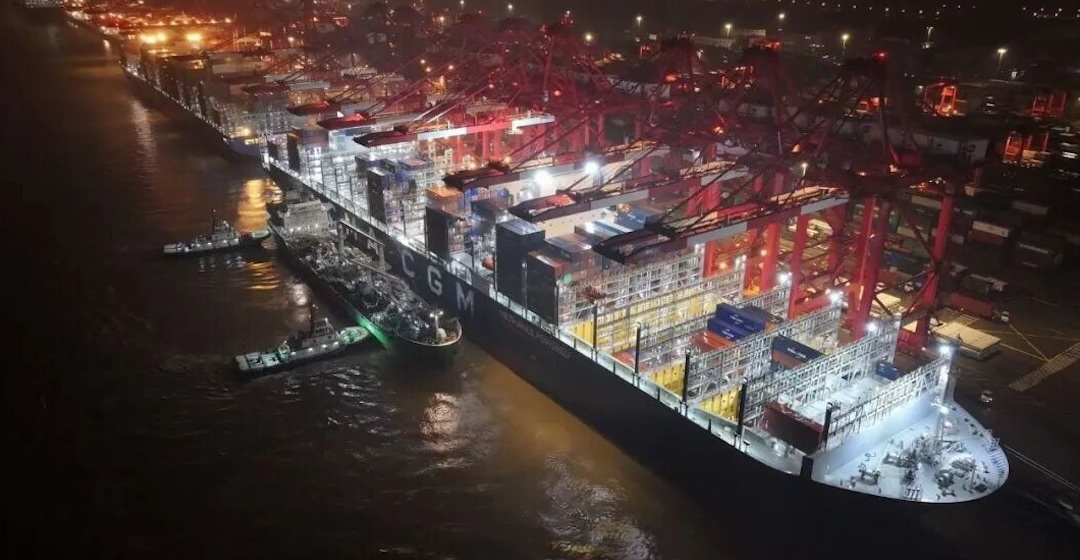
Shanghai Electric is bunkering large quantities of biomethanol for the first time in the "Osmium" vessel, owned by the French shipping and logistics company CMA CGM, at the port of Yangshan in Shanghai. © Shanghai Electric Group
(China) In Shanghai's Yangshan Port, biomethanol from the state-owned Shanghai Electric Group was bunkered on a methanol dual-fuel container ship operated by the French shipping company CMA CGM for the first time on a large scale. With the refueling of the "Osmium," Shanghai Electric has validated its fully integrated supply chain model, from production and land-sea logistics to bunkering in the port. Shanghai Electric's Taonan project is China's first large-scale commercial biomethanol plant and utilizes the region's abundant wind, solar, and biomass resources at its site in western Jilin Province. Following optimizations, the plant is now in continuous operation and producing biomethanol that meets international standards. Initial annual production is 50.000 tons. Compared to conventional coal-based methanol, biomethanol significantly reduces CO2 emissions over its entire life cycle, thus making concrete progress toward achieving decarbonization targets in the shipping industry.
+ + + + +
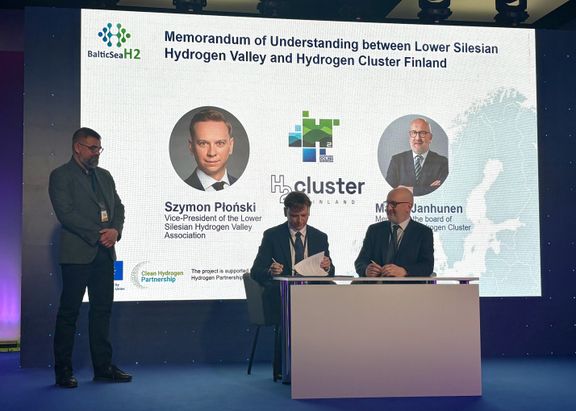
The Finnish-Polish cooperation was formalized by Marko Janhunen (Hydrogen Cluster Finland) and Szymon Plonski (Lower Silesian Hydrogen Valley Association). © Hydrogen Cluster Finland
(Finland) Hydrogen Cluster Finland and the Polish Lower Silesian Hydrogen Valley Association (LSHVA) aim to accelerate the creation of an integrated hydrogen market in the Baltic Sea region. The parties agreed to collaborate on promoting a green and low-carbon hydrogen economy through knowledge sharing, ecosystem development, and mutual support for innovation and industrial development. The LSHVA will also serve as a coordination platform for Finnish-Polish interests. Both Poland and Finland play a crucial role in building a strong hydrogen economy in the EU. While Finland is one of the most competitive production locations for hydrogen and eFuels, Poland possesses significant demand potential, a broad range of technological expertise, and considerable geological storage potential. The partnership builds on the collaboration within the cross-border “Hydrogen Valley BalticSeaH2,” where Finland, Poland, and other Baltic Sea countries are working to create Europe’s first large-scale integrated hydrogen market.
+ + + + +
Photo above
iStock / © Danil Melekhin



