

Germany: Nordic Baltic Corridor consortium surveys industry on hydrogen demand +++ Northern Ireland: Powerhouse submits planning application for hydrogen production plant in Ballymena +++ Finland: Environmental permit for P2X methanol plant in Joensuu is now legally binding +++ Australia: Hydrexia to supply Toyota mobile hydrogen refueling stations +++ Germany: No central planning for hydrogen ramp-up +++ South Korea: Investment in hydrogen-powered trucks with infrastructure is profitable +++ Germany: Brusa develops FCI component for Cellcentric fuel cell system +++ France: Lhyfe to supply hydrogen for Teal motorway service station +++ Germany: Government rejects quota for green steel and cement in public procurement +++ England: Hygen Energy acquires hydrogen project from Marubeni +++ USA: Ammobia raises $7,5 million to scale ammonia technology +++ Canada: Global Power acquires licenses from Northern Hydrogen for new technology platform
A selection of PtX topics summarized at the end of the week
+ + + + +
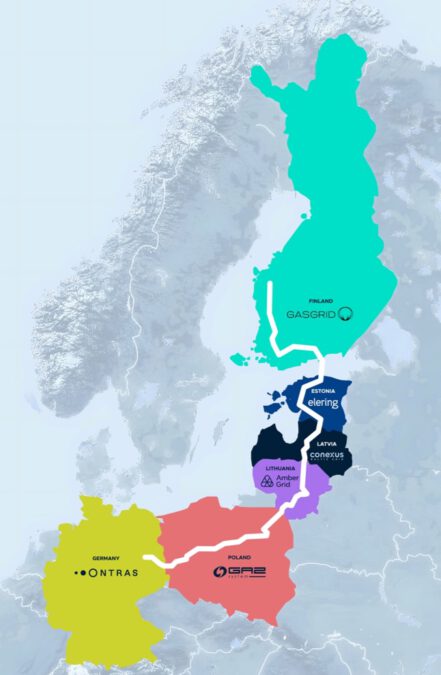
Six long-distance pipeline operators are planning the construction of a 2.500-kilometer-long Baltic Sea pipeline for hydrogen. © Ontras GmbH
(Germany) The project promoters of the cross-border infrastructure project Nordic-Baltic Hydrogen Corridor (NBHC) have launched a survey to determine the basis for the route and corridor design of the future 2.500-kilometer-long hydrogen pipeline. Construction is planned in the Baltic Sea region, running from Finland through Estonia, Latvia, Lithuania, and Poland to Germany, by the transmission system operators Gasgrid Vetyverkot Oy (Finland), Elering AS (Estonia), Conexus Baltic Grid AS (Latvia), Amber Grid AB (Lithuania), Gaz-System SA (Poland), and Ontras Gastransport GmbH (Germany). The project has the status of a European Project of Common Interest (PCI) and is being funded with €6,8 million from the European CEF investment program for a feasibility study, which began in 2025 and is expected to be completed in early 2027. The market survey is aimed at producers, consumers, operators of hydrogen storage and distribution networks, and transport customers. Depending on the company's role in the hydrogen markets, the survey consists of a maximum of six sections. The online survey is available in seven languages of the participating countries until March 31, 2026.
+ + + + +
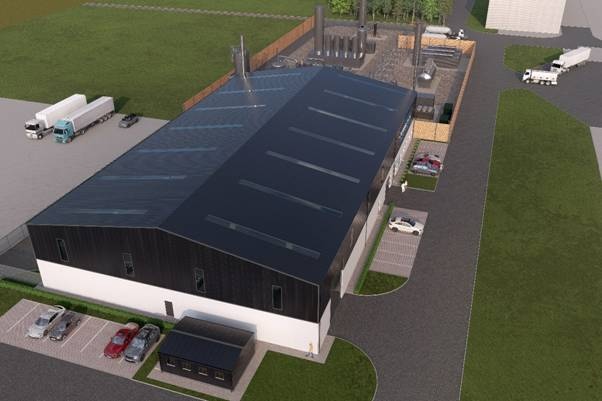
Design of the planned factory for producing hydrogen from non-recyclable waste in Ballymena, Northern Ireland. © Powerhouse Energy Group plc
(Northern Ireland) The engineering firm Powerhouse Energy Group plc has submitted the planning application for its planned hydrogen production plant in Ballymena, located in Silverwood Business Park, to the Mid and East Antrim Borough Council. The plant will produce 99,999 percent pure hydrogen and has a capacity of 40 tons per day. Two days earlier, the company signed a lease agreement with the landowner, Silverwood Business Park Ltd., for a 1,98-hectare site. The lease term is 25 years, with the first 12 months rent-free. The lease is contingent upon approval of the planning application. "Ballymena is poised to become Northern Ireland's hydrogen hub," says Powerhouse CEO Paul Emmitt. Companies located there include bus manufacturer Wrightbus and Translink, part of the state-owned Northern Ireland Transport Holding Company, which operates buses and trains for the local public transport network. In July 2025, Powerhouse signed a letter of intent to supply hydrogen to BS Holdings Ltd. BSH had, among other things, filed a patent for a combined heat and power plant powered by fuel cells. The project is funded by the UK's Department for Energy Security and Net Zero (DESNZ), therefore the hydrogen is subsidized and priced below market rates.
+ + + + +
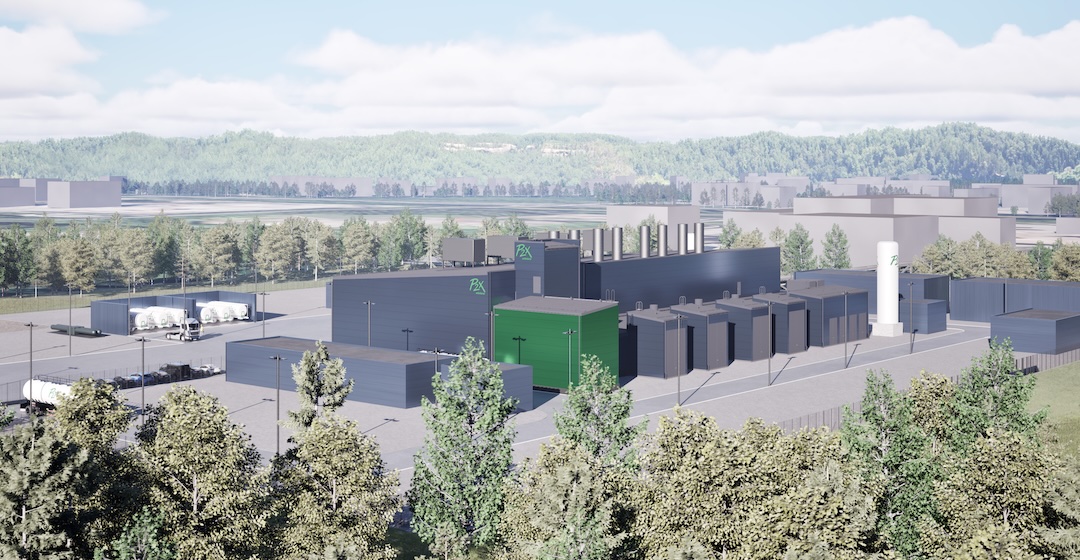
Illustration of the future hydrogen and methanol production plant in Joensuu. © P2X Solutions Oy
(Finland) The environmental permit for P2X Solutions Oy's planned synthetic methanol plant in Joensuu is now legally binding. The Administrative Authority of Eastern Finland granted the permit in mid-December. According to the company, no appeal was filed with the Vaasa Administrative Court before the deadline. This now provides "a solid basis for preparing the investment decision," says CEO Herkko Plit. The Joensuu plant will produce green hydrogen and process it into methanol with an annual capacity of 33.000 tons. The plant is located next to the Savon Voima power station in the Kontiosuo industrial park in Joensuu. The process heat will be used in Joensuu's district heating network. CO2 from local production facilities, including the Savon Voima power station, will be used for methanol production. Demand for the Joensuu methanol is expected to come primarily from the maritime and aviation sectors.
+ + + + +
(Australia) Toyota Motor Corporation Australia Ltd. (TMCA) has awarded a contract to the Chinese company Hydrexia Pty Ltd. for the supply, operation, and maintenance of mobile hydrogen refueling stations. This agreement follows the provision of refueling solutions to UMW Toyota in Malaysia and Toyota Philippines. Hydrexia has been expanding its international operations in Southeast Asia, Europe, the USA, and Australia for some time.
+ + + + +

No central planning in the hydrogen ramp-up: "The Federal Government is fully committed to the principles of the social market economy." © German Bundestag
(Germany) The German government rejects accusations from the AfD parliamentary group that it is pursuing a "centrally planned approach" to the hydrogen market ramp-up. In its response ( 21/3710 ) to a parliamentary inquiry, the government states that, "based on the coalition agreement," it is pursuing a substantial hydrogen ramp-up and is "explicitly relying on market-based and cost-efficient measures." To examine this scientifically, the Federal Ministry for Economic Affairs and Energy commissioned external experts in July 2025 to conduct a monitoring study of the energy transition, including the hydrogen ramp-up. The government considers all aspects of the relevant market in its funding policy, namely supply, demand, and infrastructure, in order to ensure that funding is targeted, budget-friendly, and solution-oriented. Such a "holistic approach" cannot be described as a "centrally planned approach."
+ + + + +
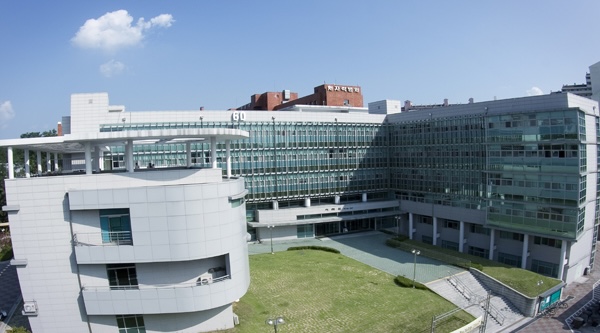
Researchers at Seoul National University of Science and Technology have proposed ways South Korea can boost the market ramp-up for hydrogen trucks. © Seoultech
(South Korea) Despite high initial costs for vehicles and refueling infrastructure, investing in hydrogen-powered trucks with corresponding infrastructure expansion is profitable, according to a study by the Seoul National University of Science and Technology (Seoultech). The study indicates that Korean households are prepared to invest an average of 3.121 won (1,81 euros) annually until 2033. With interest, this would amount to an average of 572,4 billion won (332 million euros) per year, the analysis concludes. The study also assesses practical infrastructure hurdles. Large-scale hydrogen refueling stations are often located at bus depots, restricting access for trucks. The researchers recommend expanding or relocating stations along key logistics routes and aligning tax breaks for trucks with those offered for hydrogen buses to encourage logistics companies to adopt the technology. The South Korean government aims to put around 30.000 fuel cell trucks on the road by 2040 to replace diesel vehicles, reducing CO2 emissions in the mobility sector by approximately 8,74 million tons. The surveys were conducted at the end of 2024, and the study, "Public acceptance towards expanding hydrogen fuel cell heavy-duty trucks in South Korea: A monetary assessment based on willingness to pay," was published in the journal "Transport Policy" in December 2025.
+ + + + +
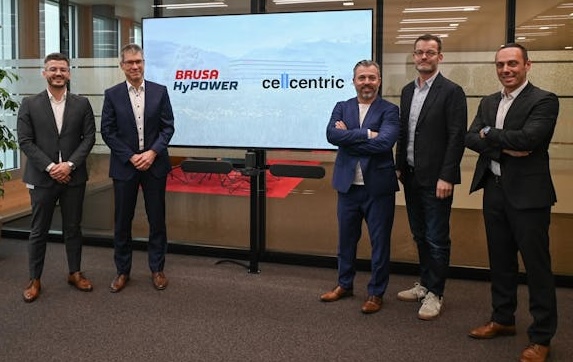
Cellcentric commissions Brusa to develop a DC/DC converter for fuel cell systems (from left): Adin Tuhcic (Director Sales & Marketing, Brusa), Holger Fink (CEO Brusa), Markus Siegel (Global Head of Procurement & Aftersales, Cellcentric), Jochen Sang (Head of R&D Components & Software Development, Cellcentric), Mario Heß (Head of Product Procurement, Cellcentric). © Cellcentric GmbH & Co. KG
(Germany) Cellcentric GmbH & Co. KG has commissioned Brusa HyPower AG to develop a DC/DC converter (Fuel Cell Interface, FCI) for its NextGen fuel cell system, which is scheduled to go into series production for various applications by the end of the decade. The power electronics will convert the fuel cell voltage to the high-voltage grid, monitor the fuel cell, safely disconnect it from the high-voltage grid when necessary, and supply high-voltage components within the fuel cell system with electrical energy. Brusa HyPower, with locations in Europe, the USA, and Asia, is part of the Brusa Group, which also includes Brusa Elektronik AG and Brusa Technology AG. Cellcentric was founded as a joint venture between Daimler Truck AG and the Volvo Group.
+ + + + +
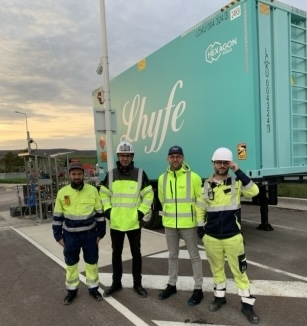
Lhyfe supplies green hydrogen to a Teal Mobility motorway filling station. © Lhyfe
(France) Hydrogen producer Lhyfe has reached an agreement with Teal Mobility to supply green hydrogen to France's first hydrogen station on the A4 motorway in the Grand Est region (northeast France). The station for heavy-duty vehicles is strategically located on east-west and north-south routes towards Germany and the Benelux countries. Lhyfe currently operates four hydrogen production plants in France and Germany with a total capacity of 21 megawatts. A 70 percent increase is planned for 2026.
+ + + + +

The German Federal Government is not planning a procurement quota for green rail steel for Deutsche Bahn. © Deutsche Bahn AG / Georg Wagner
(Germany) The German Federal Government rejects quotas for green steel and cement in public procurement. Contracts are awarded through a competitive process and do not include any requirements for product-specific procurement. The annual requirement of Deutsche Bahn (DB) averages around 300.000 tons for rail steel and switches, and 4.200 tons for steel profiles and bridge plates. DB AG has sourced approximately 1.000 tons of "green" rails from France on a one-off basis in the last five years. According to DB AG, depending on the production route, location, steel quality, and product, the current cost per ton of green steel is approximately 10 to 15 percent higher than that of conventional steel. No subsidy program for green steel is planned. In its July 2025 demand notification, Deutsche Bahn AG (DB AG) indicated a potential procurement requirement for CO2-reduced rail steel of approximately 5.800 tons (sufficient for about 50 kilometers of track) in 2026, rising to 58.000 tons (500 kilometers) in each of the years 2028, 2029, and 2030. The response ( 21/3563 ) to a parliamentary inquiry from the Alliance 90/The Greens parliamentary group in the Bundestag also states that Deutsche Bahn AG currently has no concrete procurement scenarios focusing on "green steel. "
+ + + + +
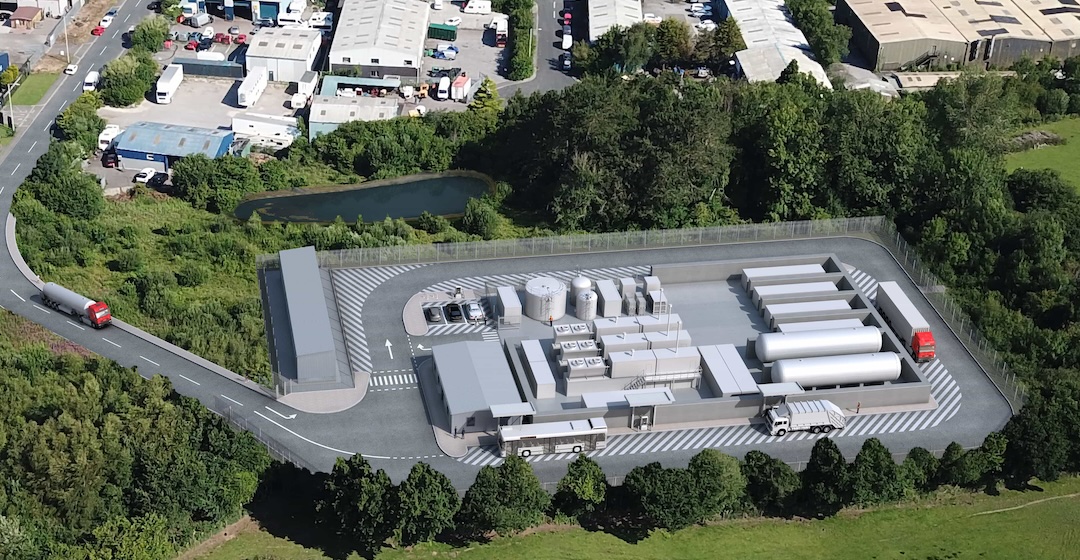
Hygen has acquired Marubeni's British government-backed hydrogen project in Wales. © Hygen Energy Ltd.
(England) Hygen Energy Ltd. has acquired the HyBont low-CO2 hydrogen project from Marubeni Corporation. The companies did not disclose the terms of the acquisition. The project, which is supported by the UK government under the first Hydrogen Allocation Round (HAR1), aims to produce hydrogen for refueling stations. The first phase comprises a feasibility study. The HyBont project focuses on the production of low-carbon hydrogen for buses and trucks at the Brynmenyn Industrial Estate in Bridgend, Wales. The integration of a photovoltaic system for the direct use of solar power for hydrogen production is also being considered.
+ + + + +
Ammobia will produce ammonia from natural gas using the Haber-Bosch process. © Ammobia Inc.
(USA) Ammobia Inc. has raised $7,5 million in a funding round to scale up its low-cost ammonia production technology. Investors include Shell Ventures, Air Liquide, MOL Switch (Mitsui OSK Lines), and Chevron Technology Ventures. Ammobia promises to "significantly reduce" capital expenditures for ammonia production with its "modular Haber-Bosch 2.0 plant design." Founded in 2022, the company now plans to build a pilot plant. "As the second most produced chemical worldwide, ammonia provides fertilizer for half the world's population and serves as a raw material for chemicals and plastics." With emerging applications in maritime shipping, power generation, and energy storage and transmission, demand is expected to increase significantly by 2050.
+ + + + +
(Canada) Global Power Solutions Corp. has signed a letter of intent with Northern Hydrogen and Energy Ltd. to jointly develop and commercialize a modular, hydrogen-based energy platform. Subject to necessary approvals, Global Power intends to acquire the licensing rights from Northern Hydrogen. The licensors are ModeOne Manpower Systems Corp. and MVP Systems. The technology is designed to scale from 80 kilowatts to over 1.000 megawatts. The modular systems are designed to combine on-site hydrogen production with continuous power generation and are suitable for applications such as data centers, mobile and strategic military operations, industrial and manufacturing facilities, and remote and off-grid communities. Global Power plans to build an 80-kilowatt demonstration plant within twelve months. A capacity of 100 megawatts is targeted for completion by the end of 2028, and approximately 1.000 megawatts by the end of 2030.
Photo above
iStock / © Danil Melekhin



