
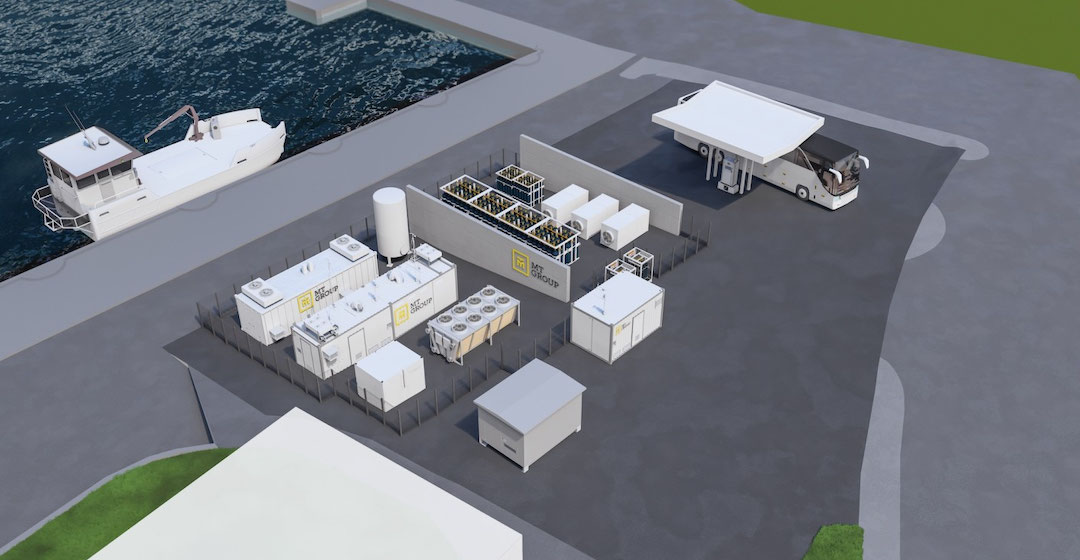
(Klaipėda, Lithuania) – Klaipėda will be the first port in Lithuania and the Baltic states to operate a green hydrogen production plant and refueling station. Construction of the electrolyzer is scheduled to begin in June. The port authority has now received the necessary permits. The hydrogen plant will be installed in a standard 40-foot shipping container and will produce 127 tons of the energy carrier annually. Electricity demand from renewable energy sources is projected at 2,25 megawatts.
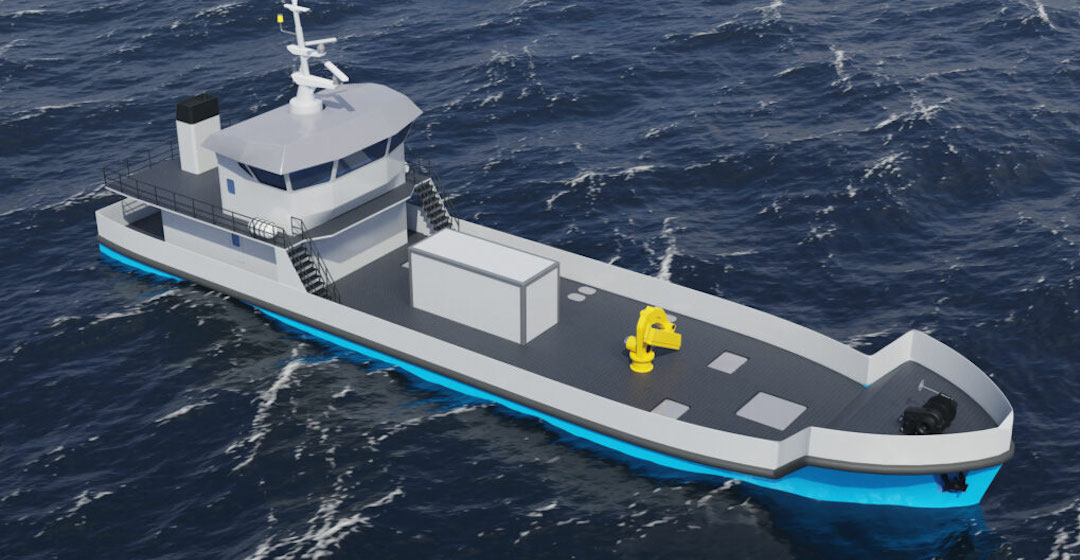
Rendering of the fuel cell-powered tanker, which will be responsible for collecting waste and cleaning incoming and outgoing ships in the port. © Port of Klaipėda
The goal is to supply green hydrogen for ships, various types of port equipment, and private means of transport. To achieve this, new technical networks will be installed or existing ones converted, for example, for electricity, water, wastewater, hydrogen pipelines, and communications. Production is scheduled to begin next year, and a hydrogen-powered ship for internal port operations is already being built, says Algis Latakas, Director General of the Seaport Authority.
The Baltics' first hydrogen filling station is being built in the Port of Klaipėda. © Port of Klaipėda
“The Port of Klaipėda, as a strategic transport hub, has great potential to become a showcase for green technologies in the Baltic Sea region,” said Mindaugas Zakaras, CEO of MT Group, last October. At that time, the engineering services provider announced that it had been awarded the contract for the design, supply, installation, and commissioning of the technical equipment for the station (Engineering, Procurement, Construction, EPC). This also includes the installation and integration of electrical, automation, and safety systems, the management of the project and construction process, and ensuring the station's two-year maintenance (as we reported ). In January of this year, the British company IMI Process Automation announced that it had been commissioned by MT Group to supply the “IMI Vivo” PEM electrolyzer. Nord Steel is supplying the pressure tanks for the station.
The project is being implemented as part of the "Next Generation Lithuania" economic recovery and resilience plan, which is financed by the "NextGenerationEU" fund. The estimated total cost for hydrogen production and the filling station is approximately €12 million, of which approximately €6 million will come from EU funds.
Photo above
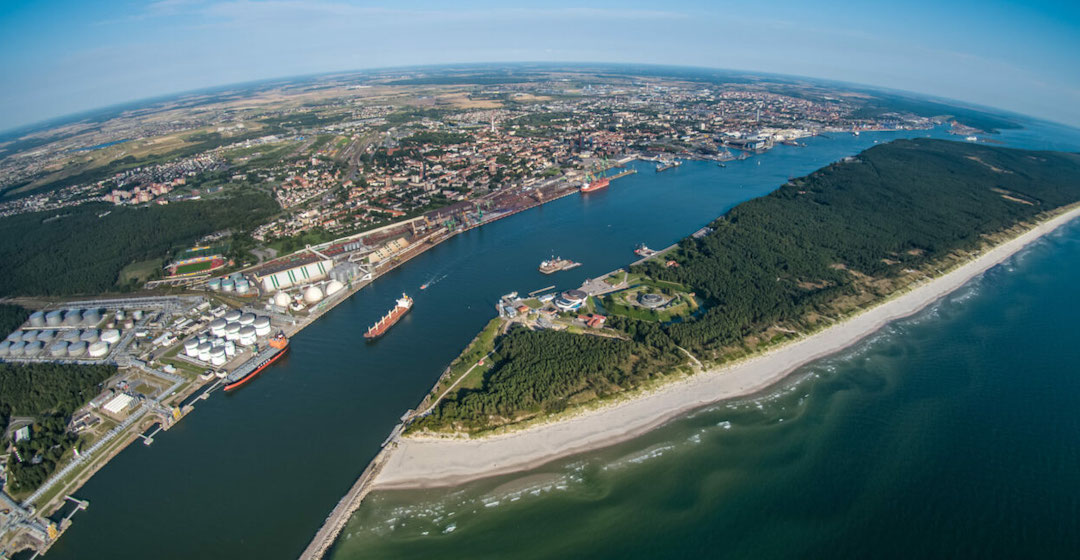
At the Port of Klaipėda, both water and land vehicles will eventually be able to refuel with hydrogen. © Port of Klaipėda



