
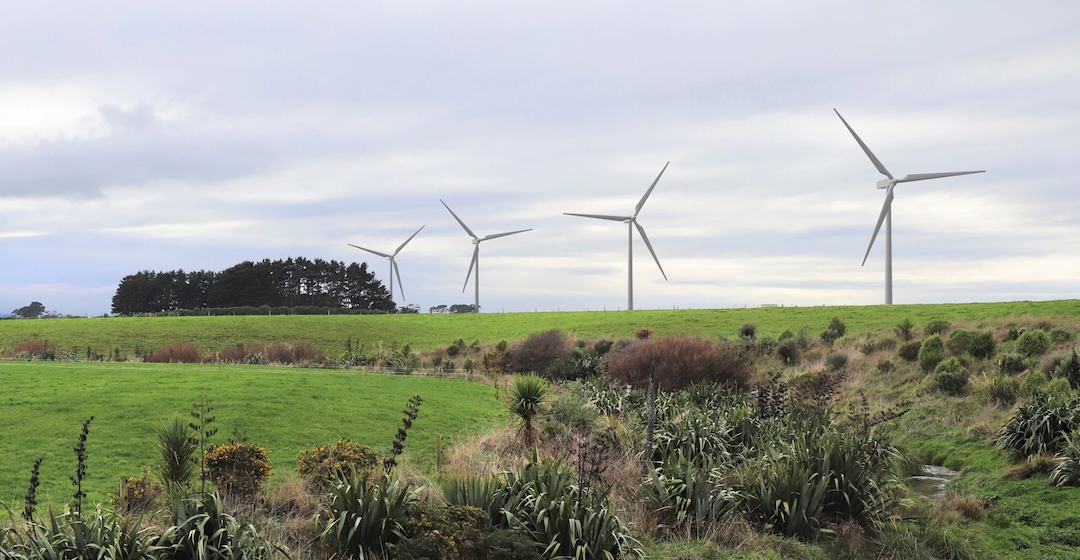
(New Plymouth, New Zealand) – Hiringa Energy has secured financing for the Kapuni project in New Zealand. This will be the first project on the island to integrate wind power, industrial renewable energy supply, and large-scale green hydrogen production. The electrolyzer to be installed will have a capacity of five megawatts and, once completed, is expected to produce two tons of green hydrogen per day. Its output can be scaled up or down depending on market growth and demand. The project is located in the South Taranaki district on the country's west coast. The company did not disclose the cost.
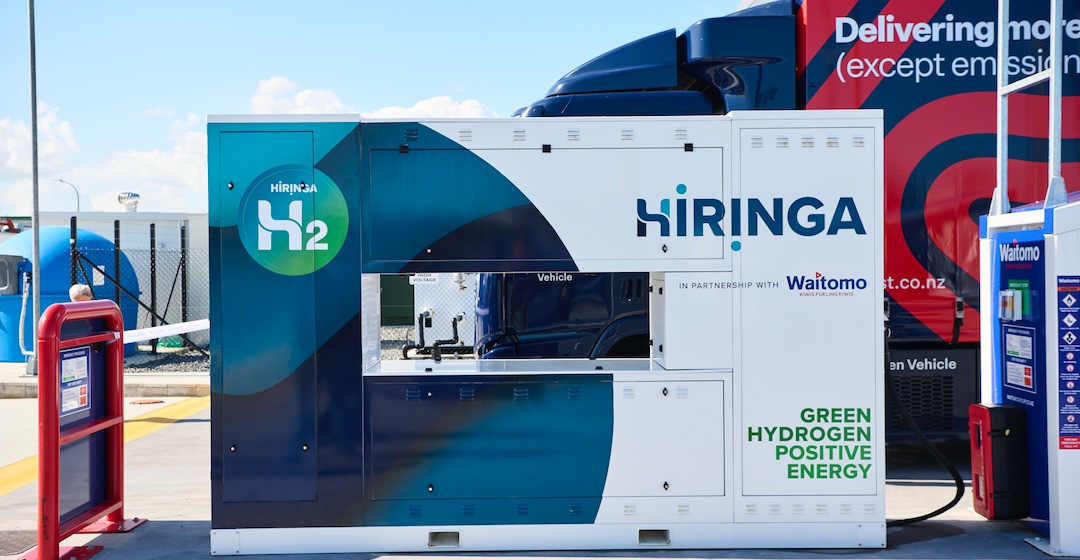
One of several Hiringa filling stations in New Zealand supplied with green hydrogen. © Hiringa Energy
Four wind turbines with a combined capacity of 25,6 megawatts will be installed to generate electricity. The projected annual yield of 100 gigawatt-hours corresponds to the needs of approximately 24.000 households. The resulting green hydrogen will then be supplied to Hiringa Energy's filling stations. The network, which opened in 2024, currently includes stations in Wiri (South Auckland), Te Rapa (Hamilton), Palmerston North, and Tauriko (Tauranga), and will eventually extend to the Taranaki region. Furthermore, the hydrogen will be used to replace some of the natural gas previously used for fertilizer production at the Kapuni plant of the farmers' cooperative Ballance Agri-Nutrients Ltd.
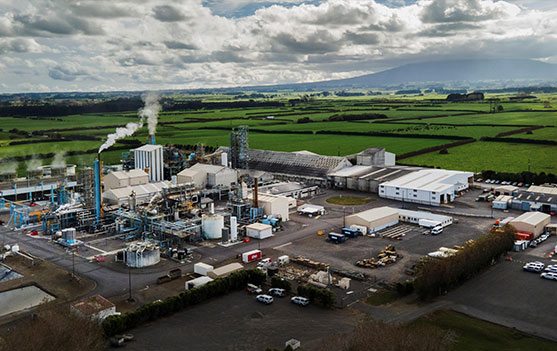
The Kapuni fertilizer plant, owned by the Ballance cooperative, is to replace some of its currently used natural gas with green hydrogen. © Ballance Agri-Nutrients Ltd
Preparatory construction work will begin this month, with the first phase focusing on the structural preparations for the wind turbines. The project is scheduled to go into operation in 2027.
Milestone for the energy sector in Aotearoa
According to the company, the completion of the financing is "an important milestone for the entire energy sector in Aotearoa" – the Māori name for New Zealand. "Kapuni is not just a wind farm – it is a cooperative and integrated energy project that demonstrates how strong partnerships between industry, Māori, and government can drive innovation, economic opportunities, and a successful energy transition," says Catherine Clennett, co-founder and chair of Hiringa Energy.
Fphoto above
Visualization of the wind farm for the Kapuni project in South Taranaki. The energy generated will, among other things, power an electrolyzer for the production of green hydrogen. © Hiringa Energy



