
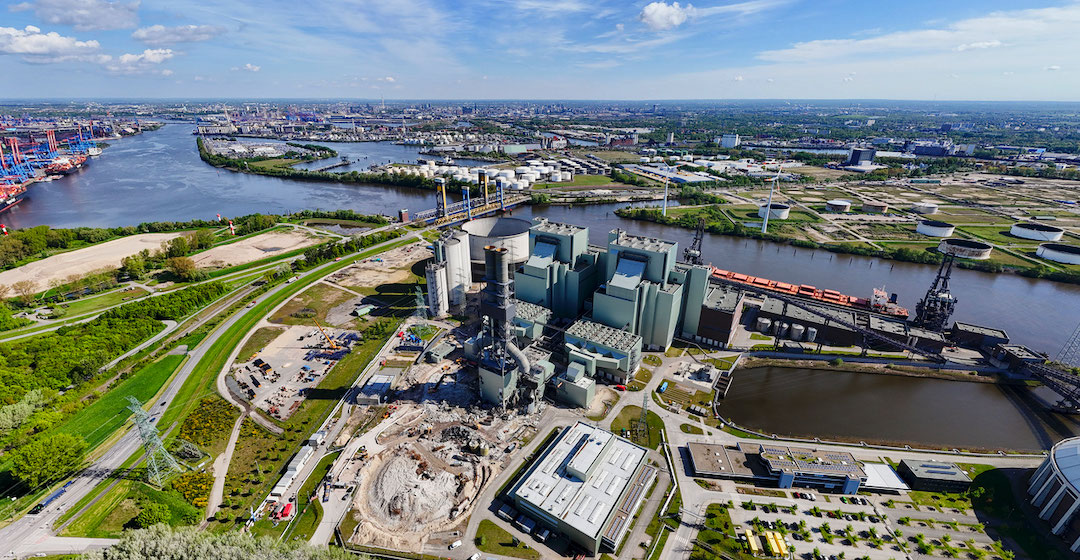
(Hamburg / Germany) – Two major projects for the development of a hydrogen infrastructure are launching in the Hanseatic city of Hamburg: “Hamburg Green Hydrogen Hub” (HGHH) and “Hamburg Hydrogen Industry Network” (HH-WIN). The Hamburg energy company Hamburger Energiewerke GmbH, with project partner Luxcara GmbH, and Gasnetz Hamburg GmbH are involved.
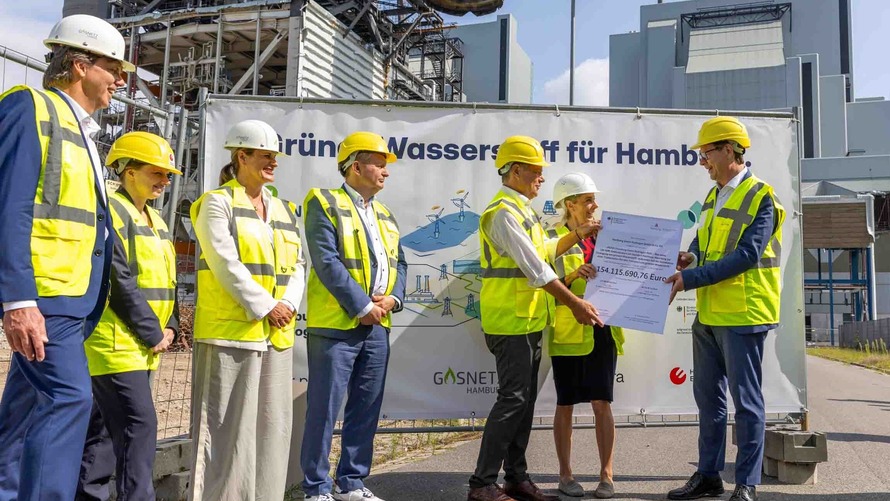
In the presence of Hamburg's Senator for Economic Affairs Melanie Leonhard and Hamburg's Senator for the Environment Jens Kerstan, Federal Minister Robert Habeck handed over the IPCEI funding notices for the HGHH and HH-WIN projects at the future hydrogen site in Moorburg. © Hamburger Energiewerke GmbH
The EU Commission gave the green light to the two IPCEI projects in mid-February, paving the way for national funding from the federal government and the City of Hamburg. Federal Minister for Economic Affairs Robert Habeck had already announced this in July (as we reported ). In the presence of Senator for Economic Affairs Melanie Leonhard and Senator for the Environment Jens Kerstan, Habeck has now presented the funding approvals totaling approximately €250 million at the site of the former Moorburg power plant. The projects will focus on the production, distribution, and use of hydrogen.
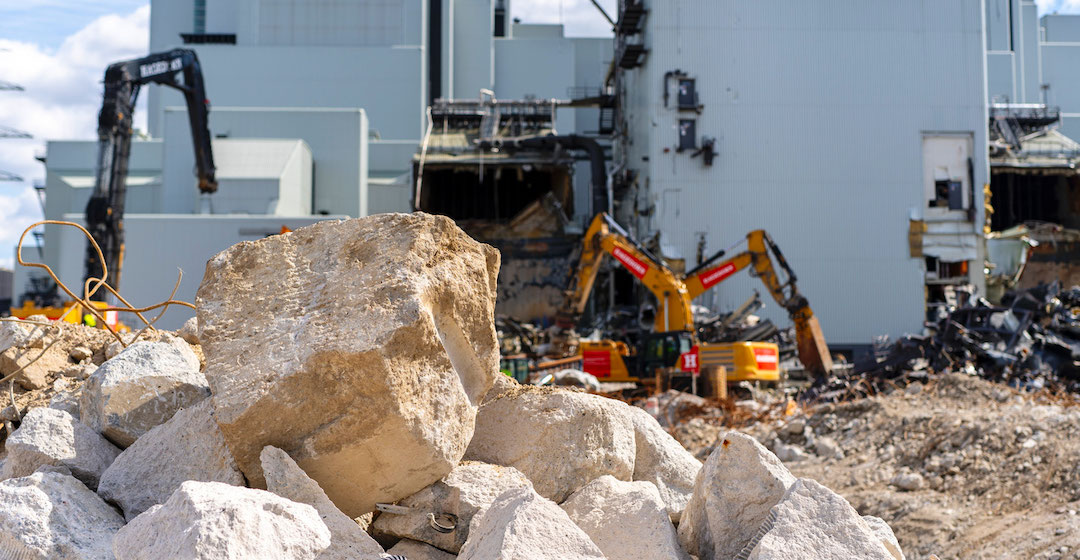
Hamburger Energiewerke acquired the Moorburg power plant from Vattenfall in March 2023. In 2015, the Swedish state-owned company put one of Germany's most modern coal-fired power plants into operation there, which was due to expire in 2038. According to media reports, the construction costs amounted to around three billion euros. However, it was only on the grid for five years: In December 2020, Vattenfall was awarded the contract in the auction for the nationwide phase-out of hard coal. The company shut down the two loss-making 800-megawatt blocks - and was compensated for this by the federal government. The responsible Federal Network Agency did not specify the decommissioning premium for the eleven selected "non-system-relevant" power plant blocks at the time. According to reports, the auction cost a cumulative 317 million euros (an average of just over 66.000 euros per megawatt). © Hamburger Energiewerke GmbH
As part of the Hamburg-based HGHH project , the former Moorburg coal-fired power plant is currently being decommissioned. The consortium of Energiewerke (25,1 percent) and Luxcara (74,9 percent) will install a 100-megawatt electrolyzer at the site to produce green hydrogen. This includes the construction of a trailer station for transporting the energy carrier. The decommissioning is being managed by "Energiehub Moorburg," a wholly owned subsidiary of Hamburger Energiewerke. The resulting construction debris will be processed on-site using a mobile crushing plant and later partially reused on the site to achieve the highest possible recycling rate. This is intended to conserve resources and avoid additional transport as much as possible.
Parts of the existing infrastructure could continue to be used for the electrolyzer in the future. For example, the water treatment systems and the workshop and storage building would remain. The existing connection to the high-voltage network for the future supply of the electrolyzer with green electricity will be converted and relocated.
The first phase will be completed by the middle of next year, the second phase in 2027. This will "create the conditions for scaling the electrolysis capacity up to 800 megawatts," according to a fact sheet.
Electrolyzer for 10.000 tons of hydrogen
Construction of the electrolyzer is scheduled to begin in 2025. It is expected to begin commercial operation in 2027 and produce around 10.000 tonnes of green hydrogen annually. "We will have created enough space next year so that construction of the large electrolyzer and the hydrogen grid connection can begin," says Christian Heine, spokesman for the management of Hamburger Energiewerke.
With the funding approval, the essential prerequisite has now been met to commission the large components and the construction of the electrolyzer this year. The consortium is aiming for a portfolio of hydrogen consumers from various industries and is already in negotiations with many companies.
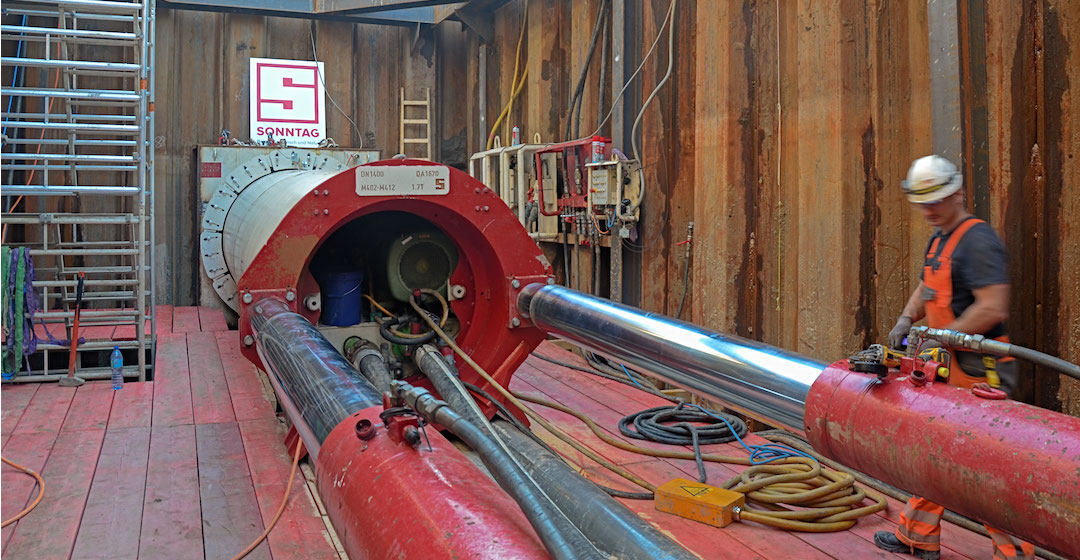
Excavation: A tunnel with a diameter of around 1,4 metres crosses the port railway and the Altenwerder main dike. © Gasnetz Hamburg GmbH
In the second project, HH-WIN, Gasnetz Hamburg is beginning construction of the HH-WIN hydrogen network, initially 40 kilometers long and later 60 kilometers long, to supply a large number of industrial companies south of the Elbe River with hydrogen. They are starting with the construction of a tunnel with a diameter of approximately 1,4 meters, says Managing Director Michael Dammann, to cross the port railway and the Altenwerder main dike – “a construction project with virtually no traffic disruptions.”
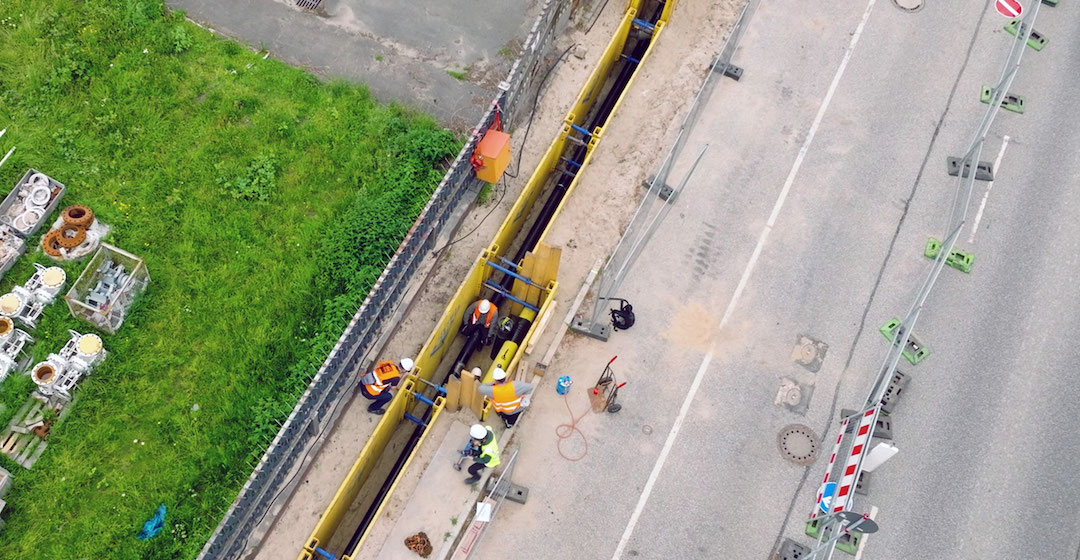
Construction of the hydrogen pipelines on Moorburger Straße. © Gasnetz Hamburg GmbH
In addition, Gasnetz is already building the hydrogen pipeline along Moorburger Strasse. Further construction phases will include the connection of the Hamburg Green Hydrogen Hub in Moorburg and other industrial areas. From the south, HH-WIN will be connected to the hydrogen pipeline system that reaches the Hamburg border near Leversen in Lower Saxony. This connection will enable hydrogen to be purchased for Hamburg as well as the feeding of ship imports and local production back into the "European Hydrogen Backbone". Both IPCEI hydrogen projects are scheduled to go into operation in 2027.
Photo above
The dismantling of the former Moorburg power plant is in full swing. A 100-megawatt electrolyzer will produce green hydrogen here in the future. © Hamburger Energiewerke GmbH
(Editor's note: We report regularly on projects approved by the EU Commission under the "Hy2Infra" wave of the " IPCEI Hydrogen " – Important Projects of Common European Interest. A list of all funded projects is available as a PDF.)



