
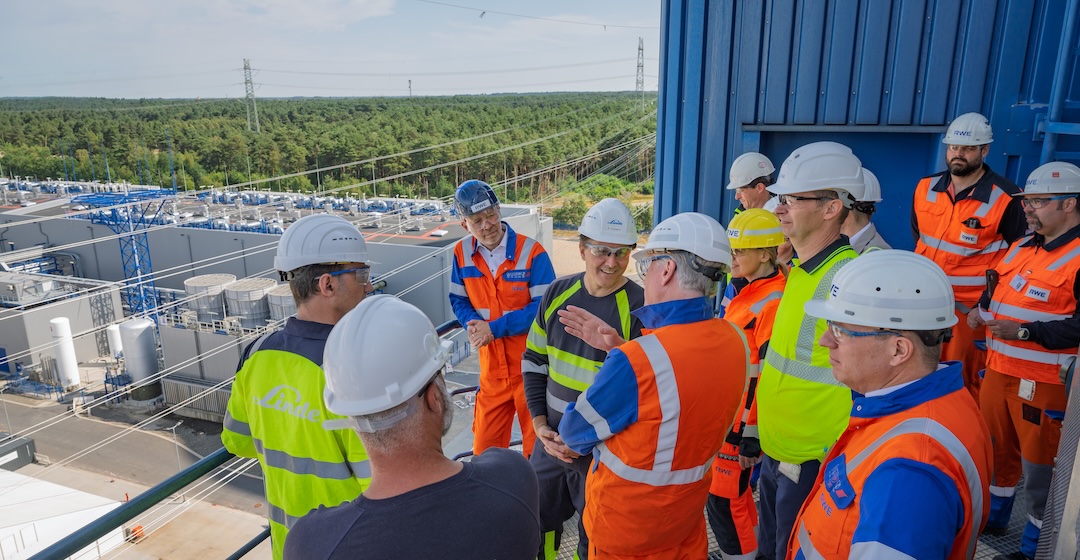
(Lingen / Germany) – The first green hydrogen produced in the GET H2 Nucleus project in Lingen, Lower Saxony, has reached the Ruhr region. The energy carrier flows via a pipeline network approximately 120 kilometers long, operated by the long-distance pipeline operators Nowega GmbH and Open Grid Europe GmbH (OGE) as well as the Evonik subsidiary Syneqt GmbH, from the RWE plant in Emsland to the Evonik chemical park in Marl, where the hydrogen will be used.
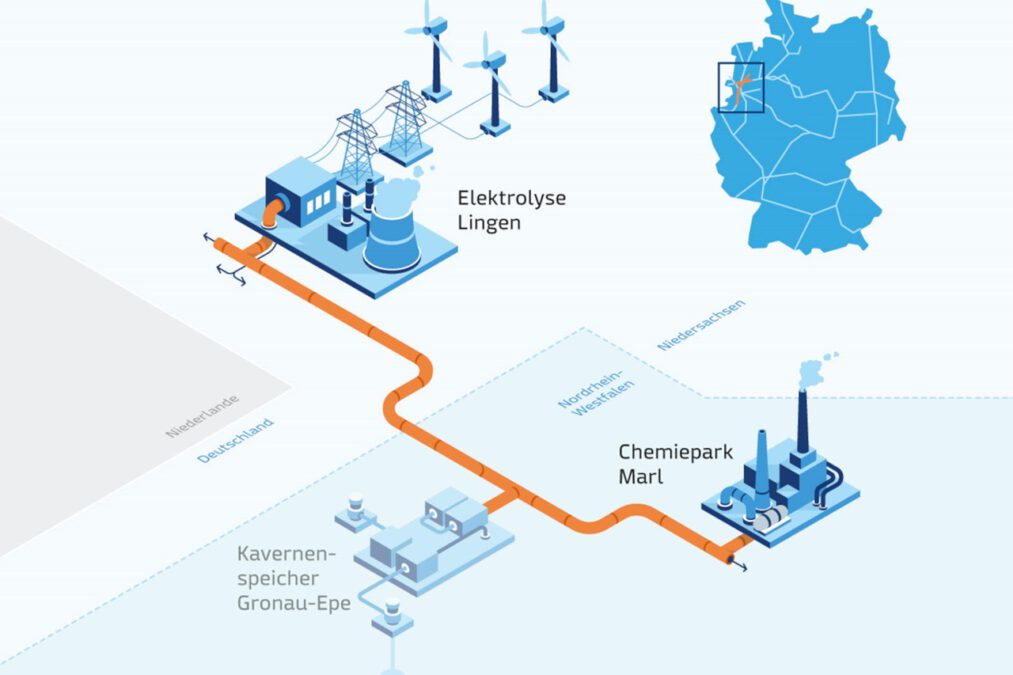
In the first phase of the GET H2 project, hydrogen will be transported from Lingen to Marl, with intermediate storage in Gronau-Epe. © RWE AG
The two 100-megawatt electrolysis plants in Lingen are currently in the commissioning phase. The process is "progressing rapidly," says Nikolaus Valerius, CEO of RWE Generation SE. "In the coming months, we will be preparing the plants for commercial operation." The interplay between electrolysis, transport infrastructure, and offtake is working. The electrolyzers are scheduled to be fully operational by the end of this year. A capacity of 300 megawatts is planned from 2027 onward. The energy company has commissioned Sunfire SE from Dresden and Bilfinger SE from Mannheim to expand the third development phase ( more information here ). The hydrogen produced in the Emsland region meets the EU requirements for renewable non-biological fuels (RFNBO). Customers therefore receive sustainability certificates and can count the green gas toward their decarbonization targets.
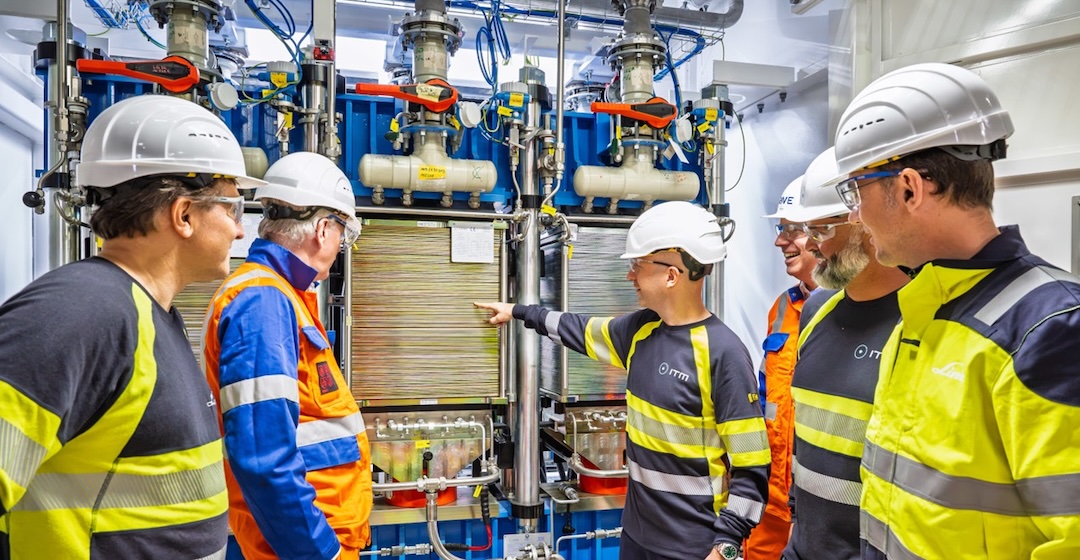
The electrolyzers in Lingen are scheduled to be operational by the end of the year with a cumulative capacity of 200 MW. An additional 100 MW of capacity will be added in 2027. © RWE / Helmut Kramer
Further pipeline projects connected to the GET H2 core are underway. These include the newly constructed ten-kilometer pipeline from Heek in western Münsterland to Epe near Gronau on the border between Germany and the Netherlands, completed by OGE and Nowega at the end of 2025, to connect the hydrogen storage facility there ( more information here ). RWE Gas Storage West will begin filling the cavern at the end of 2026, with operations scheduled to commence in mid-2027. To connect additional industrial customers, OGE and Nowega will convert an existing pipeline from Legden to Dorsten to hydrogen by 2027 and construct a new pipeline from Dorsten to Marl. A pipeline connecting the Marl chemical park and the refinery in Gelsenkirchen-Scholven has already been completed.

Project outline of GET H2 showing the involvement of project partners, including the Salzgitter and Duisburg steelworks. © Nowega GmbH
Parts of the GET H2 Nucleus project are being funded by the German federal government and the states of Lower Saxony and North Rhine-Westphalia as part of the Hy2Infra program, an "Important Project of Common European Interest" (IPCEI). These pipelines are among the first components of the hydrogen core network, which is being built step by step across Germany. The GET H2 initiative, founded in 2019, brings together more than 50 companies, institutions, associations, and municipalities. Its focus is on the concrete planning and implementation of projects along the entire hydrogen value chain, from electrolysis, import, transport, and storage to industrial applications.
Photo above
Symbolic commissioning of the hydrogen pipeline in Lingen, which transports the energy carrier to Marl. © RWE / Helmut Kramer



