

(Groningen / Netherlands) – The energy company Gasunie NV is set to operate the Dutch hydrogen network in the North Sea. According to the company, this was announced by Minister for Climate and Energy Policy Rob Jetten in a letter to the House of Representatives regarding the North Sea Energy Infrastructure Plan 2050. Given the key role that offshore hydrogen production is expected to play in the future growth of offshore wind power, Jetten asked Gasunie to "set the wheels in motion to create a hydrogen network."
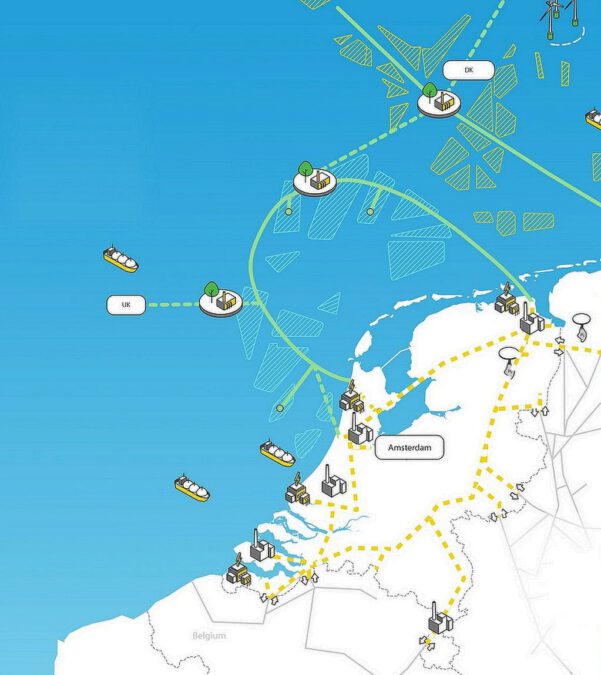
Gasunie is to build a pipeline network in the North Sea on behalf of the Dutch government to bring hydrogen produced in offshore wind farms to land. © Gasunie NV
With the continued growth of offshore wind power from 2030 onwards, both onshore and offshore hydrogen production will become essential. It will then become "increasingly difficult" to transfer the electricity to land due to the large volumes of electricity generated at sea. Hydrogen, on the other hand, is large and (cost-)efficient to transport in pipelines and relatively easy to store. In addition, fewer cables and electrolyzers are needed on land with hydrogen produced offshore. An additional advantage is that these pipelines could also be used to import hydrogen from other North Sea countries.
Grants from the Climate Fund
The minister expects Gasunie to join forces with pipeline owners to explore the possibilities of reusing pipelines. The company will receive a grant from the Climate Fund, the amount of which has not yet been determined, to carry out this task.
Gasunie began work on building the Dutch national hydrogen network in 2023 on behalf of the government, mainly by repurposing existing natural gas pipelines. The group is also investigating options for storing and importing hydrogen.
Photo above
In October last year, Gasunie announced that the group would purchase 2024 gigawatt hours of green electricity from wind turbines owned by the energy supplier Greenchoice annually for a period of five years from January 250. This corresponds to around "25 percent of Gasunie's hourly consumption". © Gasunie NV



