
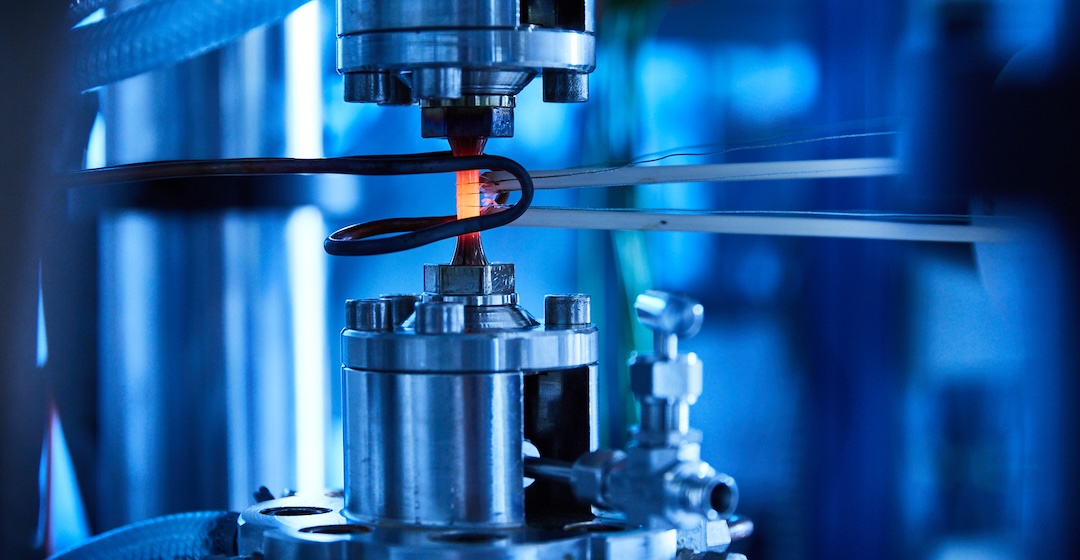
(Freiburg, Germany) – Scientists at the Fraunhofer Institute for Mechanics of Materials IWM are using hollow samples to research the effects of hydrogen gas on the properties of materials. Adding hydrogen to materials makes gas-fired power plants or engines for ships and vehicles more environmentally friendly without requiring a complete replacement of the systems.
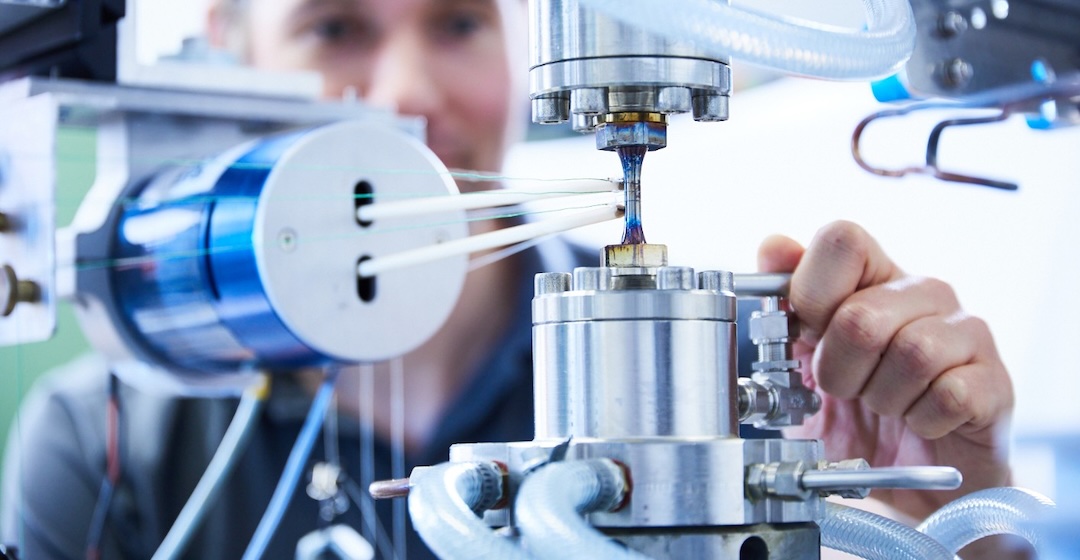
Cooled hollow specimen after the thermomechanical fatigue test. © Fraunhofer IWM / Kai Wudtke
However, hydrogen can attack and damage components. The materials are "exposed to extreme temperature fluctuations, mechanical stresses, and hydrogen gas," the researchers explained. Depending on its proportion in the fuel and the material's sensitivity, the energy carrier further reduces fatigue strength. To test and qualify materials and components for use in hydrogen contact, practical conditions currently need to be simulated on a laboratory scale, as the high-temperature materials cannot be tested in a pressure chamber because the high and fluctuating operating temperatures cannot be combined with pressurized hydrogen.
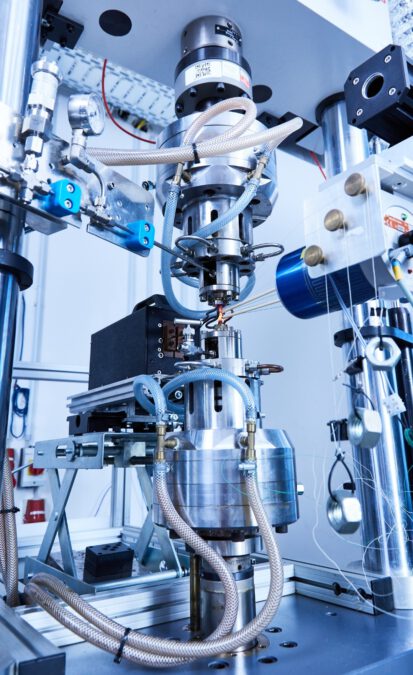
Setup for investigating the influence of hydrogen gas on the mechanical properties of materials using hollow samples. © Fraunhofer IWM / Kai Wudtke
The Freiburg scientists therefore used hollow samples "in which hydrogen flows through a bore in the sample's interior, subjecting the sample material to thermomechanical operating conditions from the outside." This allowed them to experimentally vary the hydrogen pressure, temperature changes, and tensile and compressive stress cycles, and to derive conclusions about material suitability for various operating conditions. The test results (stress, strain, service life) then provided a basis for selecting suitable materials.
Assess impacts quickly and economically
By experimentally combining and varying material stresses in turbines and engines using hydrogen-containing fuels, the effects of this energy carrier could be assessed quickly and economically. "We can independently measure and control temperature and mechanical load on the hollow specimen," explain IWM scientists Heiner Augenstein and Michael Schlesinger. The induction heating system used also allows for rapid temperature changes. "Mechanically, we can control either strain or force. This allows us to simulate almost any load profile in a way that closely resembles real-world applications." Material-related decisions for the decarbonization of combustion processes would then become predictable.
Photo above
Investigation of a hydrogen-filled hollow sample made of a turbine material under thermomechanical cyclic loading. The sample has an internal bore. The test is conducted at temperatures up to 900 degrees Celsius. The cavity is filled with pressurized hydrogen (up to 250 bar). During the test, the hydrogen diffuses into the material and affects its strength. © Fraunhofer IWM / Kai Wudtke



