
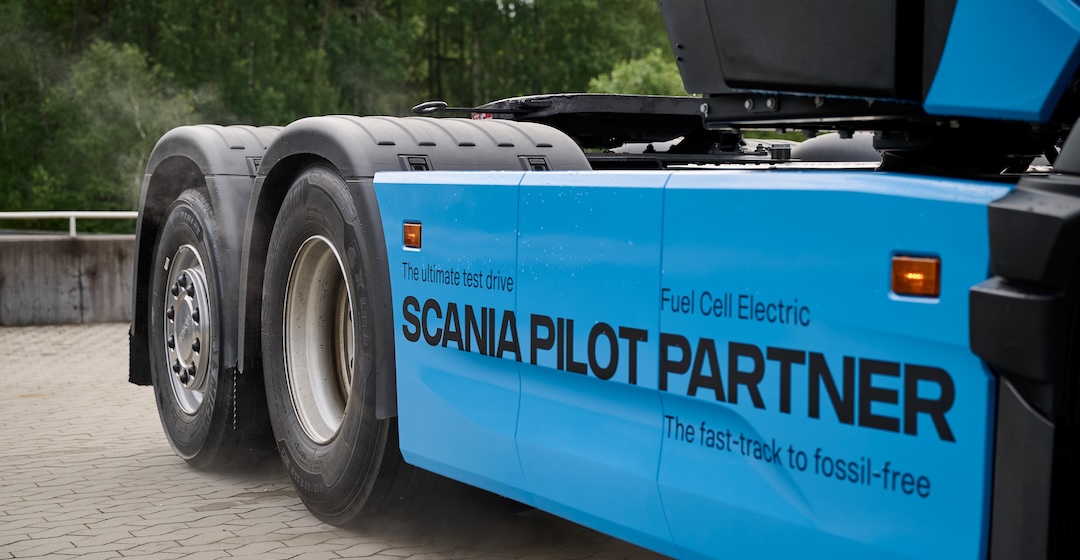
(Jyväskylä, Finland) – Finland's first fuel cell truck will soon begin operating between Jyväskylä and Helsinki as part of a pilot project. The service is expected to commence around the turn of the year with the transport company A. Peltola Oy as part of its regular fleet. The project is being initiated and coordinated by the Central Finland Mobility Foundation (Cefmof). Alongside the vehicle's operation, the organization will collect data and experience regarding its performance in commercial logistics. This information will be used for research and development, as well as to promote the wider commercial adoption of hydrogen-powered heavy-duty transport.
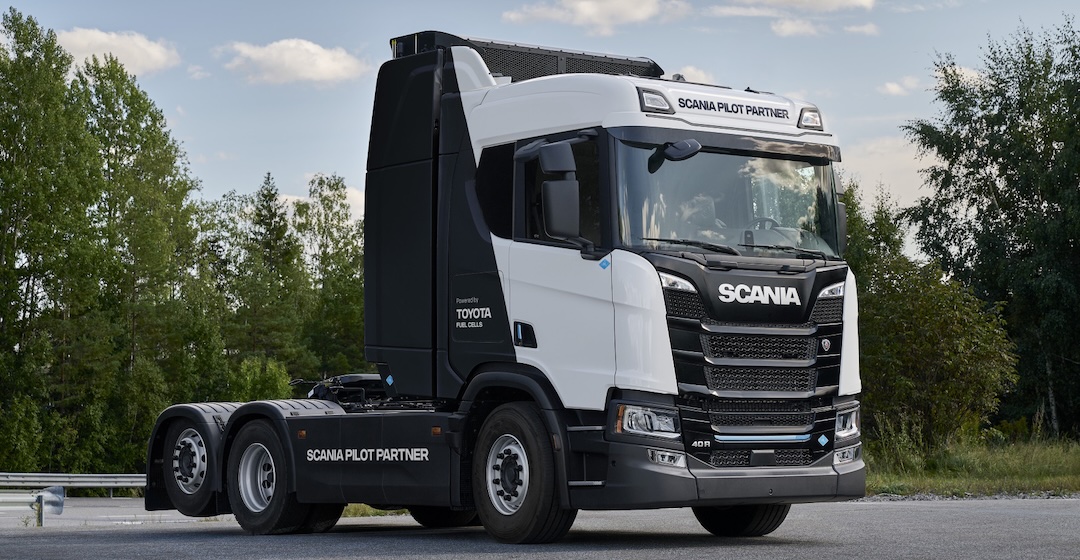
A fuel cell version of the Scania vehicle can hold 56 kilograms of hydrogen and has a range of several hundred kilometers. © Scania Suomi Oy
The tractor unit is not a standard production model, but a 68-ton truck designed for high-capacity transport (HCT). According to Cefmof, this is "the first fuel cell-powered HCT combination of this size in Europe." "The hydrogen truck will be part of our regular commercial operations, allowing us to gain experience under real-world conditions," says Ari Peltola, owner of A. Peltola. He adds that it also allows for a comparison of all four drive systems used in heavy-duty transport: diesel, biogas, battery, and hydrogen. In addition to the fuel cell, the truck also has a large rechargeable battery. This combination enables a range of several hundred kilometers. Refueling takes place at the station operated by Cefmof Hydrogen Oy in Jyväskylä. The tank holds 56 kilograms of hydrogen at 700 bar. The fuel cell delivers 300 kilowatts, the electric motor 400 kilowatts, and the traction battery provides 416 kilowatt-hours.
Development of a national hydrogen transport corridor
The decision-making process regarding the city of Jyväskylä's participation in the financing is currently underway. Since 2007, road traffic emissions in Jyväskylä have decreased by 28 percent – significantly slower than emissions from other sources (minus 57 percent). "Should this trend continue, road traffic would be the city's largest source of emissions by 2030," according to Cefmof.
Their location on Finland's main transport routes, the hydrogen refueling infrastructure, and the research and development activities in the region offer favorable conditions for the development of hydrogen-powered heavy goods vehicles. The long-term goal is to create the conditions for the establishment of a national hydrogen transport corridor, starting in Jyväskylä.
Photo above
Cefmof has launched a pilot program testing a fuel cell-powered Scania truck with a gross vehicle weight of 68 tons in regular logistics operations. © Scania Suomi Oy



