
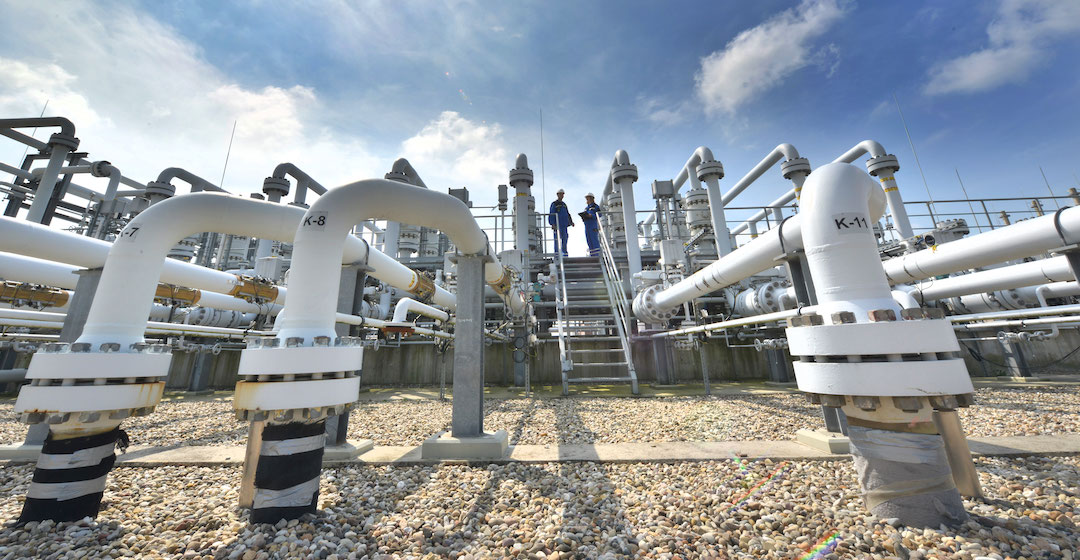
(Bonn / Germany) – Germany's long-term need for hydrogen storage is increasing. This would also integrate sectors and applications into a secure supply where direct electrification is technically or economically impossible or extremely difficult. Current scenarios indicate a capacity requirement of eight terawatt-hours (TWh) by 2030, rising to between 32 and 94 TWh by 2045, according to a study by the German Association of Gas and Water Industries (DVGW).
Storage facilities near the hydrogen core network
Due to its well-developed natural gas storage infrastructure, Germany has the highest underground storage capacities in Europe. Moreover, these are located in close proximity to the expected hydrogen demand regions with energy-intensive industries, as well as the future import locations and hydrogen production centers in northern Germany, according to the authors. "This means that the storage sites are often also in the immediate vicinity of the future core hydrogen network" and are available nationwide thanks to their connectivity.
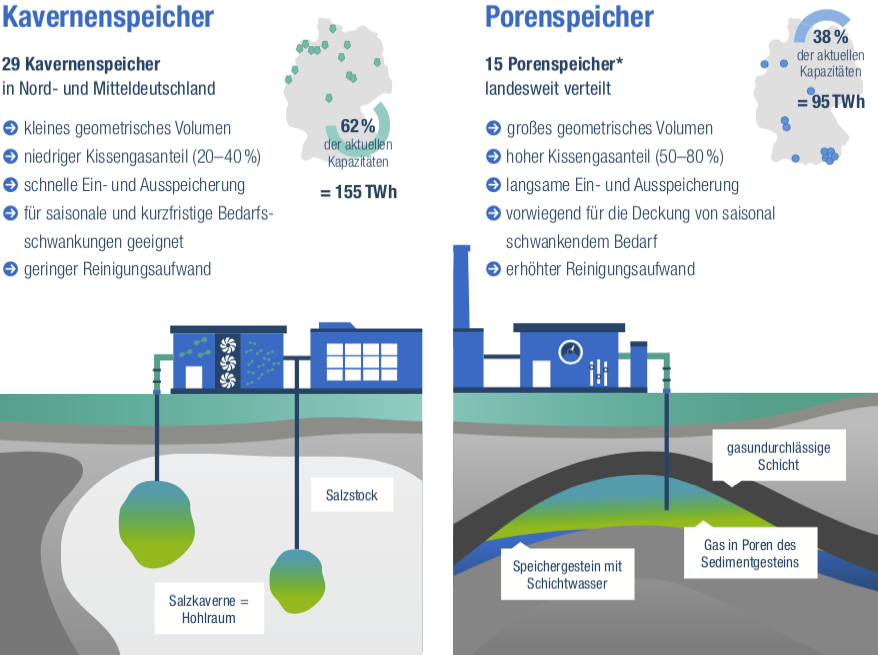
Examples of cavern and porous rock storage facilities. The capacity figures refer to the quantity of working gas (currently only 14 porous rock storage facilities remain in operation; the Storenergy site in Fronhofen was decommissioned in October 2024). © Screenshot from the DVGW study "Hydrogen Storage: Potentials, Challenges and Outlook"
To rapidly expand the necessary storage capacities, it would therefore be advisable to convert existing underground storage facilities currently used for natural gas. Although Germany's natural gas storage capacity of 250 TWh is very high compared to other European countries, the authors argue that even a complete switch to hydrogen would not be sufficient to meet the projected demand. This is because hydrogen has a lower density and a lower volumetric calorific value than natural gas, meaning that "the same volume contains less energy." As a result, the storage capacity is reduced to about one-fifth of the energy stored in natural gas facilities.
A hypothetical conversion of all existing cavern and porous rock storage facilities would yield a calculated hydrogen storage potential of approximately 50 TWh. Depending on the scenario, the study therefore determined a new storage capacity requirement of 63 TWh. Depending on how many porous rock storage facilities prove to be equally suitable, the maximum required additional capacity could be reduced to 44 TWh.
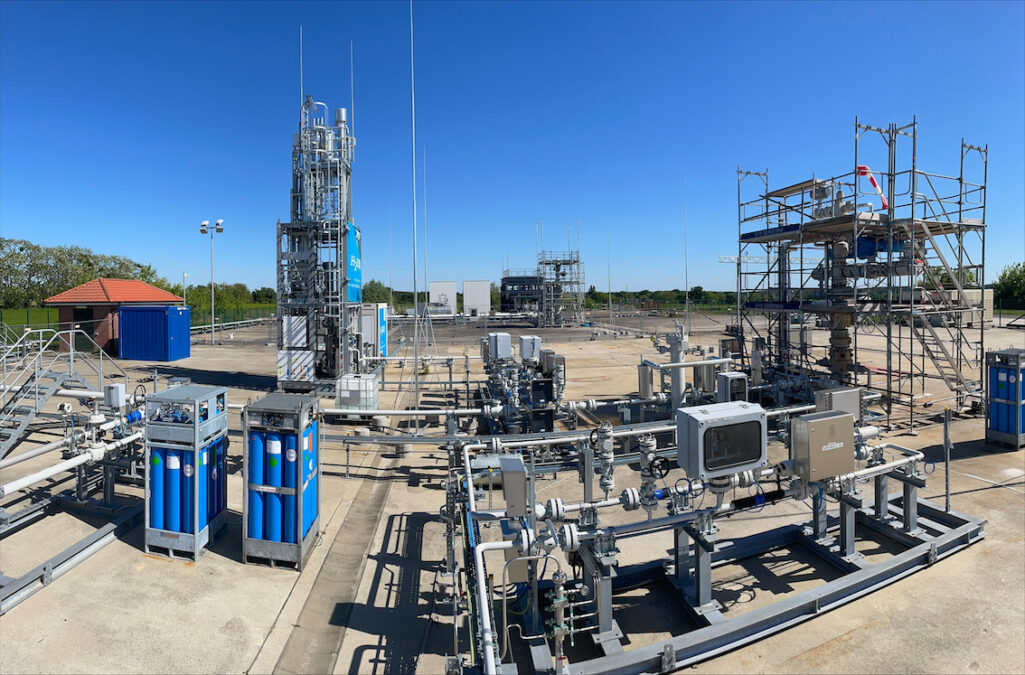
EWE AG has tested hydrogen storage in a test cavern in Rüdersdorf near Berlin. The energy supplier plans to store hydrogen there starting in 2027. © EWE AG
The geological conditions in Germany offer favorable opportunities for the construction of new porous and cavern storage facilities. In particular, the potential cavern sites located on land and near the coast in the North German Basin are easily accessible and especially attractive due to their proximity to potential electrolysis sites and hydrogen import routes. Significant geological potential also lies beneath the North Sea. "However, due to the high infrastructure requirements, developing these sites is only feasible to a limited extent," the analysis concludes. The same applies to the salt formations located inland, "where the supply of fresh water for brining the caverns and the removal of the brine pose particular challenges."
Favorable conditions for new buildings
The construction of a new cavern storage facility takes approximately eleven years, while converting an existing natural gas cavern storage facility into a hydrogen storage facility takes about six years. The construction of a new porous rock storage facility is estimated to take ten years, and conversion around eight years. The study therefore identifies an urgent need for action to rapidly develop and expand the required storage capacities.
- Simplify and shorten approval processes
- Locations should be chosen in such a way that capacities are created regardless of the storage type; cavern storage is not possible everywhere due to geological reasons.
- Reducing barriers for investors through transparent technical and regulatory requirements
- Minimize uncertainties regarding the integration of potential underground gas storage sites into the planned hydrogen core network
- Consideration of storage facilities in Germany within the European context
"Germany is currently a transit country for natural gas and could also play this role for hydrogen in the future." Due to its high storage potential, it could also meet the needs of other European countries, particularly those with unfavorable geological conditions. However, the growing need for hydrogen storage capacity is countered by the continued need for methane storage to secure Germany's and Europe's natural gas supply.
Storing electricity from renewable energy sources
“Storage is more important than ever in the energy system of the future,” says Gerald Linke, Chairman of the Board of the German Technical and Scientific Association for Gas and Water (DVGW). Reasons include the “volatility of the amount of renewable energy generated in the electricity system and the need to store surpluses”; for example, through the production of hydrogen, but also “for a readily available supply to power plants to stabilize the electricity grid.” In the winter months, the need for heat generation is added, either through the direct use of hydrogen or electricity from the reconversion of the energy carrier. However, since the overall demand for hydrogen is gradually increasing, “the available quantity of hydrogen must keep pace” – precisely through storage.
The short study “Hydrogen storage: Potentials, challenges and outlook” by the DVGW research center at the Engler-Bunte Institute at the Karlsruhe Institute of Technology (KIT) is available free of charge as a PDF (12 pages).
Photo above
Energy provider EWE AG plans to convert a natural gas storage facility at its cavern site in Huntorf for the large-scale storage of hydrogen. © EWE AG / Torsten Ritzmann




Stop talking, just do it already or I'll emigrate to China.
Why don't you finally think outside the box...Dirk