
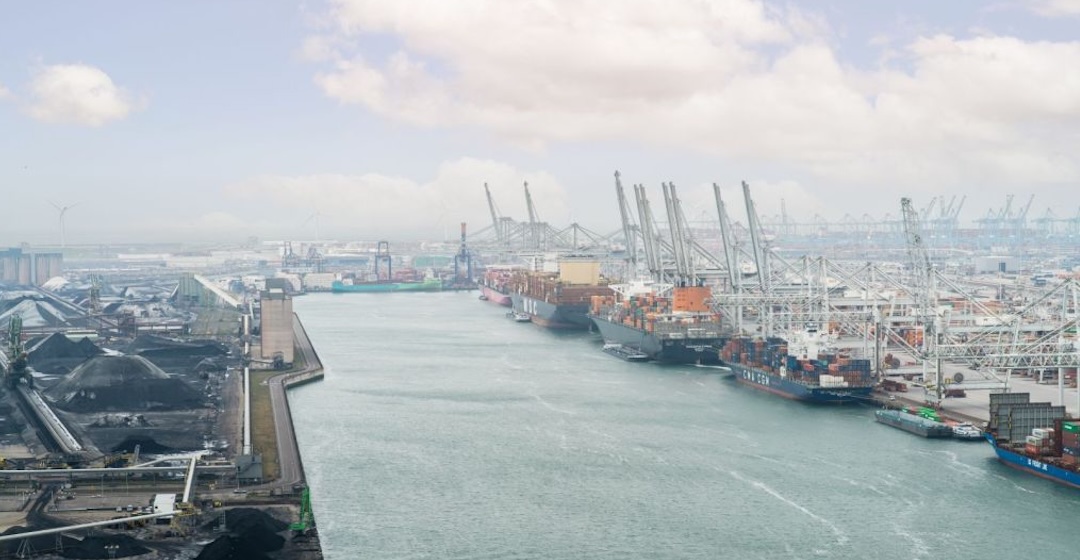
(Rotterdam / Netherlands) – Dutch energy supplier Gasunie NV says it is in the final stages of work on its hydrogen pipeline in the Port of Rotterdam. This is the first section of the future European Hydrogen Backbone network.
Gasunie subsidiary Hynetwork Services BV completed the 32-kilometer-long long-distance gas pipeline last September. This pipeline is intended to transport hydrogen from the Maasvlakte port area to industrial customers. "Now that the last weld has been completed, they are finishing the work," says Mark Stoelinga, Energy and Infrastructure Manager at the Port of Rotterdam Authority. The final step is to connect the pipeline to the hydrogen producers and consumers.
Uniper hesitates – bShell is making progress
There is no shortage of potential producers and consumers. For example, the energy company Uniper SE has been pushing ahead with plans to build a large 500-megawatt electrolyzer to produce green hydrogen. "In the first phase, we'll start with 200 megawatts," says Martijn Overgaag, who is responsible for hydrogen activities at Uniper. This plant could produce approximately 20.000 tons of hydrogen per year. The technical design is complete. The plant is to be built directly at the point where electricity from the offshore wind farms of the energy supplier TenneT is transferred to the mainland.
In the summer of 2025, Uniper received a grant of €297 million for the first phase. However, the company has not yet made a final investment decision. It must first be ensured that there are sufficient buyers for the energy carrier. "It is important that future customers contact Hynetwork in good time to arrange a connection so that we can actually supply hydrogen," says Overgaag.
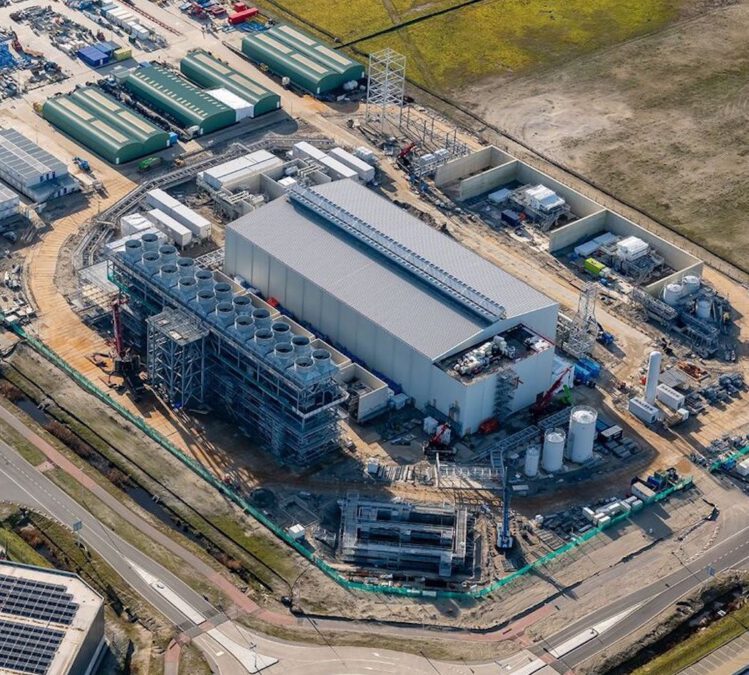
Shell is building the "Holland Hydrogen 1" project in the Port of Rotterdam. © Port of Rotterdam Authority
In contrast, the oil company Shell has almost completed construction of a 200-megawatt electrolyzer on the Maasvlakte. The green hydrogen will flow from there through the Hynetwork pipeline to the nearby Shell refinery in Pernis, replacing the grey hydrogen currently used there for crude oil processing. The industrial gas supplier Air Liquide is also building a 200-megawatt electrolyzer on the Maasvlakte. However, the company has its own hydrogen pipeline connected to the industrial area near the port of Antwerp.
500.000 tons of hydrogen per year
Demand is high in Rotterdam. Of the approximately 3.000 companies in the port area, 20 are major consumers of hydrogen, says Mark Stoelinga of the port authority.
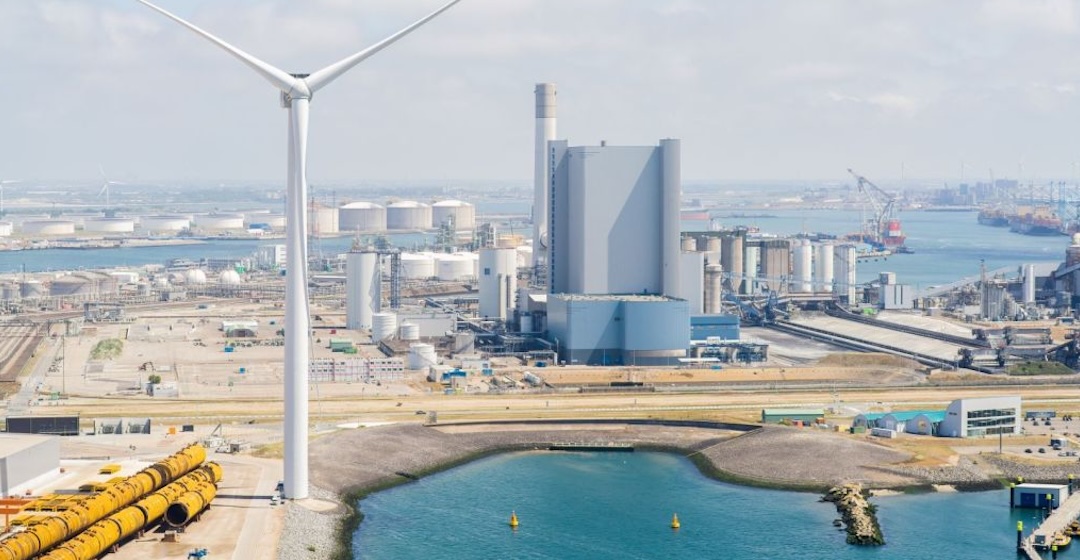
Currently, 20 companies on the Maasvlakte require approximately 500.000 tons of hydrogen per day, which could be replaced by green hydrogen via the Hynetwork pipeline. © Gasunie NV
These companies – refineries, fertilizer plants, and chemical factories – currently consume about 500.000 tons of hydrogen per year. This hydrogen is “almost entirely gray.” The new pipeline has a capacity of about 1,2 million tons per year – and could easily cover current demand. Green hydrogen is also being considered as an alternative to natural gas in industrial processes. “But the price difference is still very large at the moment,” says Stoelinga. Low-carbon blue hydrogen, produced from natural gas using carbon capture and storage, is “an important interim solution in the coming years.”
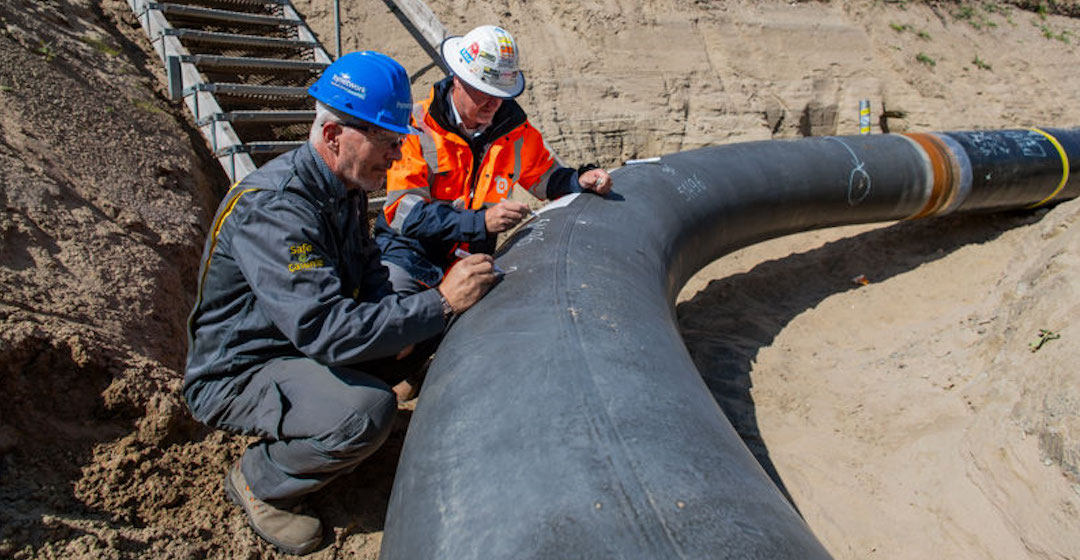
The first section of the Dutch hydrogen network has been laid; work is now underway on the connections: Two construction workers leave their mark on the last pipe inserted into the pipeline. © Hynetwork
Work on the Porthos project, which aims to utilize depleted gas fields in the North Sea, is proceeding in parallel for CO2 storage . The CO2 pipeline built for this purpose runs partially parallel to the existing Hynetwork hydrogen pipeline. "Over a length of approximately 14 kilometers, the two pipelines are sometimes only 40 centimeters apart," Hynetwork stated in September. Their working hours have constantly interfered with each other. Following an extensive testing phase, commissioning is scheduled for April 2026.
Initially, the new network will focus on the Rotterdam port area. Companies could be connected via branch lines as soon as they are ready to actually use or produce sustainable hydrogen. According to Hynetworks, the industrial clusters in the Netherlands will then be connected in phases by 2033. Finally, the network will also be extended to industrial centers in Germany and Belgium as part of the Delta Rhine Corridor project.
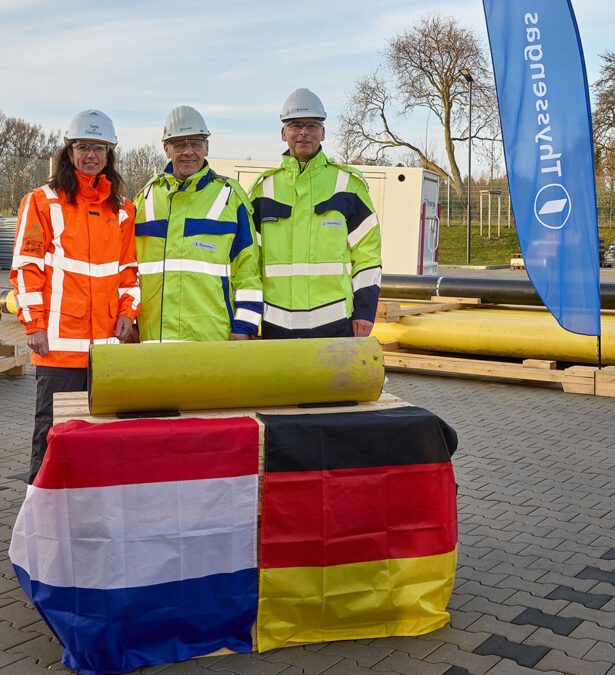
Gasunie, Thyssengas H2, and Gasunie Deutschland have agreed to develop the infrastructure for a cross-border hydrogen transport network between the Netherlands, Germany, and Denmark. (From left): Helmie Botter (Director of Hydrogen Transport at Gasunie), Thomas Gößmann (Managing Director of Thyssengas), Thomas Becker (Managing Director of Thyssengas). © Thyssengas H2 GmbH
Hynetwork, Thyssengas H2 GmbH, and Gasunie Deutschland recently concluded the preliminary stage of a grid connection agreement for a cross-border hydrogen transport infrastructure. The pipeline system largely comprises existing natural gas pipelines, which will be converted for hydrogen transport. According to the agreement, a central axis will be created via the border crossings at Oude Statenzijl (Groningen) and Vlieghuis (Drenthe), directly connecting Dutch industrial areas, import ports, and storage and production facilities with industrial areas in Germany – primarily in the Ruhr region and Rhineland – and the markets of Northwest Europe. Preparatory work began in the summer of 2025.
For now, the focus is on Rotterdam.
International connectivity will also be crucial for Uniper, but not until after 2032. "In 2030, it won't be realistic to export large quantities of green hydrogen to Germany, so we will focus on Rotterdam in the first phase," says Overgaag. There, "there is already significant demand potential. The main challenge now is to create a market."
European legislation, specifically the Renewable Energy Directive (RED 3), mandates an increase in the use of "renewable fuels of non-biological origin" (green hydrogen). According to this directive, 42 percent of the hydrogen used by industry in 2030 should be sustainably sourced. The Netherlands is still working on the precise details of this regulation at the national level.
H2 blending is mandatory in the Netherlands
Furthermore, the Netherlands has a mandatory blending requirement stipulating that fuels must contain one percent renewable hydrogen. "Once all the rules are clear and stable, there will be additional and guaranteed demand," says Overgaag. "This will allow us to conclude long-term contracts." While German industry is an important hydrogen market, served from Rotterdam via the Rhine-Ruhr Delta corridor, Antwerp is also significant due to future industrial demand.
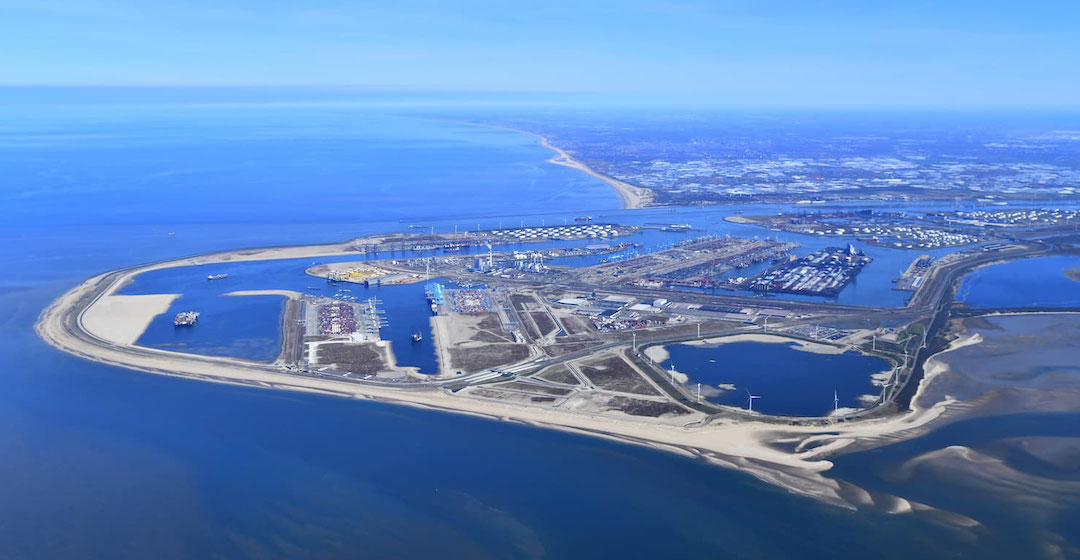
The Port of Rotterdam Authority has been successfully developing the new Maasvlakte port area for several years. © Port of Rotterdam Authority / Danny Cornelissen
For the Port of Rotterdam Authority, the hydrogen pipeline is part of a broader strategy to position the port as a European energy and raw materials hub. In addition to production, Rotterdam is also heavily involved in importing hydrogen and hydrogen carriers such as ammonia. Terminals are currently being prepared to receive, store, and distribute these flows. In May 2025, the Indian company AM Green Ammonia India Private Ltd. signed a contract with the Port of Rotterdam to establish a supply chain between India and Northwest Europe. The companies stated that the project could facilitate trade in green fuels on the order of one million tons annually, worth up to one billion dollars.
Cross-border cooperation is needed
Cooperation with other industrial regions is essential. Rotterdam is working with ports like Antwerp (Belgium) and Duisburg (Germany) to combine supply and demand and expand infrastructure as efficiently as possible. "We compete in many areas," says Stoelinga, "but when it comes to this kind of infrastructure, you have to work together. Otherwise, the project won't get off the ground."
Photo above
Dutch energy supplier Gasunie is in the final stages of construction on its hydrogen pipeline in the Rotterdam port area. © Gasunie NV



