
(Freiburg, Germany) – The share of renewable energies in Germany's electricity mix was 56,1 percent in 2024. This is almost one percentage point higher than in 2023 (55,3 percent). This figure represents the share of the load, meaning the electricity mix that actually comes out of the socket. The share of renewable energies in total net electricity generation, including power plants in industry and commerce with their own generation, is approximately 58,4 percent (2023: 54,6 percent).
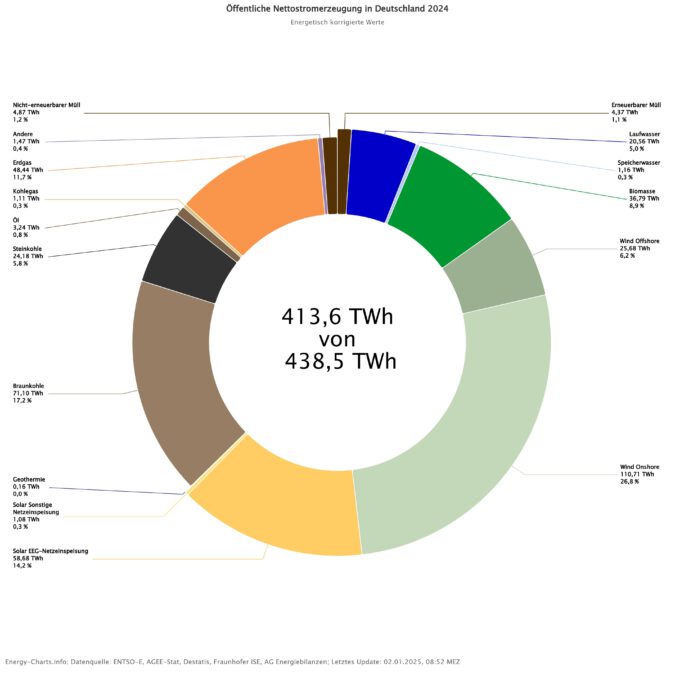
In total, more than 2024 TWh of electricity was generated in 438. This also includes industrial power plant electricity for companies' own consumption. 413,6 TWh came from public net electricity generation. Renewable energies contributed more than half. The share of onshore wind power was 110 TWh (26,8 percent), followed by a wide margin by brown coal (17,2 percent) and solar power remunerated under the Renewable Energy Sources Act (EEG) (14,2 percent). © Fraunhofer ISE
Cumulatively, renewables generated electricity totaling around 277 terawatt hours (TWh), 4,4 percent more than in the previous year (265 TWh). Production from lignite fell by 8,6 percent, and from hard coal by as much as 26,9 percent. Since 2014, emissions from electricity generation have halved from 312 to around 152 million tons of CO2 per year. This is the result of a survey by the Fraunhofer Institute for Solar Energy Systems (ISE) in Freiburg. "Due to the increasing share of renewable energies and the decline in coal-fired power generation, electricity generation is now lower in CO2 than ever before," say the researchers.
Wind power was the most important source of electricity
With a yield of 2024 TWh, 136,1 was a weaker wind year than 2023 (139 TWh), but wind power remains the most important source of electricity at 33,1 percent. The onshore share fell to 110,5 TWh (2023: 115,3 TWh), while offshore production was slightly above the previous year's level at 25,6 TWh (23,5 TWh).
However, the expansion of wind energy is "still significantly" behind plan, according to the Freiburg-based company: By November, 2,4 gigawatts (GW) had been newly installed onshore, compared to seven gigawatts planned. 0,7 GW were installed offshore; five to seven gigawatts per year are planned by 2026, and a cumulative total of 2030 GW is to be installed by 30.
Photovoltaic share 14 percent
According to the survey, a new record of 2024 TWh was achieved in solar power generation in 74,4. Of this, 59,9 TWh were fed into the general grid and 14,5 TWh were used for internal consumption. Total production increased by around 13 TWh (21 percent) compared to the previous year, and the share of public net electricity generation was a good 14 percent. The best month was July with 8,7 TWh.
The expansion of photovoltaics exceeded the federal government's targets for the second time in a row in 2024: "Instead of the planned 13 gigawatts, 13,3 gigawatts had already been installed by November," according to the Fraunhofer ISE. The institute predicts that the increase will reach 15,9 gigawatts by the end of December; more precise data was not yet available at the time of the survey.
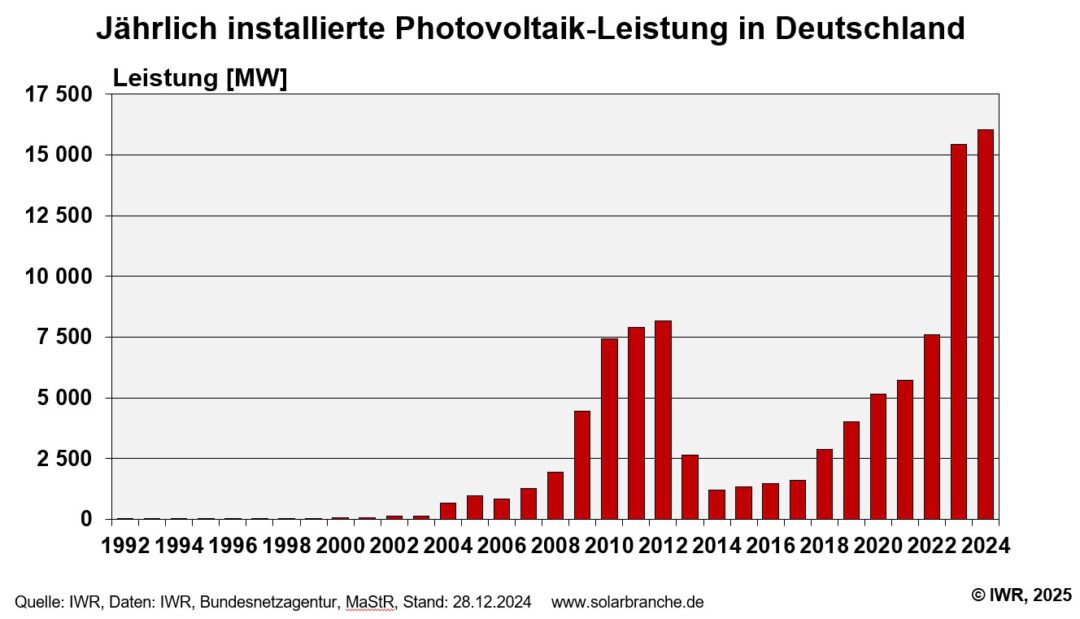
According to IWR estimates, more than one million PV systems will be newly commissioned in 2024 with a cumulative capacity of over 16.000 MW (16 GW). © IWR
The International Business Forum for Renewable Energies (IWR) in Münster estimates that the newly installed solar capacity in 2024 (as of December 28, 2024) will be "over 16 GW". The Institute of Renewable Energy, founded in 1996, has evaluated data from the Federal Network Agency's market data register. In the last three years (2022 to 2024), solar systems with around 40.000 megawatts (MW) have been newly connected to the power grid - that is almost as many as in the entire previous annual period between 2011 and 2021. The total output of all installed solar systems in Germany will therefore rise to over 2024 MW by the end of 99.200, but the total PV output could move even closer to the 100.000 MW mark due to the expected late registrations.
Nuclear power offset by renewables
According to Fraunhofer ISE, the need for storage capacity is also increasing in parallel with the expansion of renewable energy sources in Germany. The installed battery capacity grew to 11,9 GW (2023: 8,6 GW), and the storage capacity from 12,6 to 17,4 gigawatt hours (GWh).
2024 was the first full year in Germany without electricity generation from nuclear power since 1962. In their last year of operation in 2023, the remaining three nuclear power plants Emsland A, Neckarwestheim 2 and Isar 2 supplied around 6,3 percent of public electricity generation. "This was replaced energetically by renewable energies."
The graphical presentation of the report “ Electricity generation in Germany in 2024 ” with data on generation, import/export, prices, installed capacity, emissions and climate is available free of charge as a PDF (112 pages).
Photo above
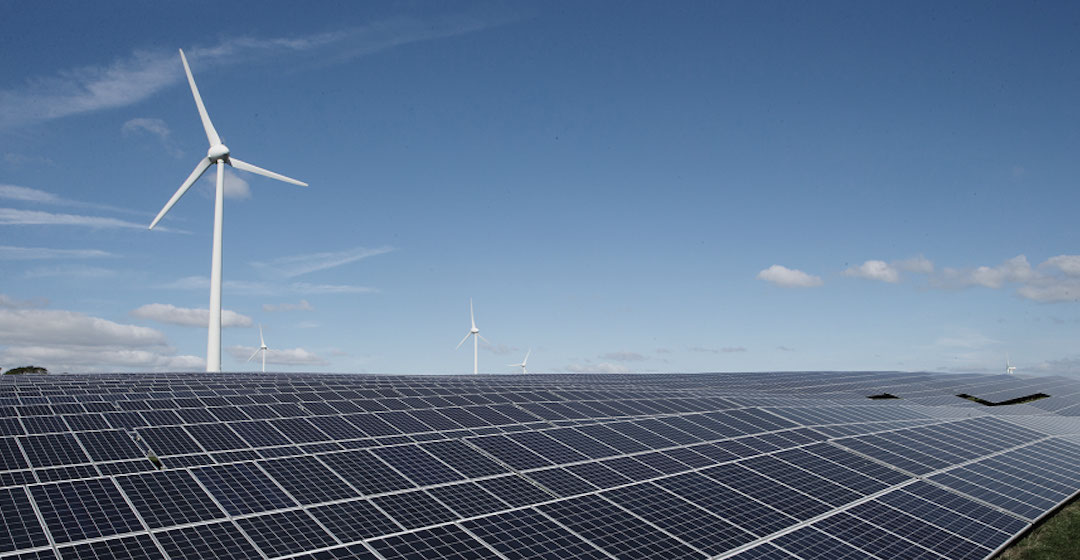
Wind and solar accounted for the majority of electricity generation from renewables in Germany in 2024. © Vattenfall Energy Sales



