
(Aachen, Germany) – According to estimates by the International Maritime Organization (IMO) of the United Nations, shipping is responsible for approximately three percent of global greenhouse gas emissions. To further reduce these emissions, environmentally friendly alternatives to conventional fossil fuels are needed. Industry and science are working intensively on emission-free shipping using fuel cells or hydrogen combustion engines. Recently, there have been several success stories.
Cruise also for sensitive waters
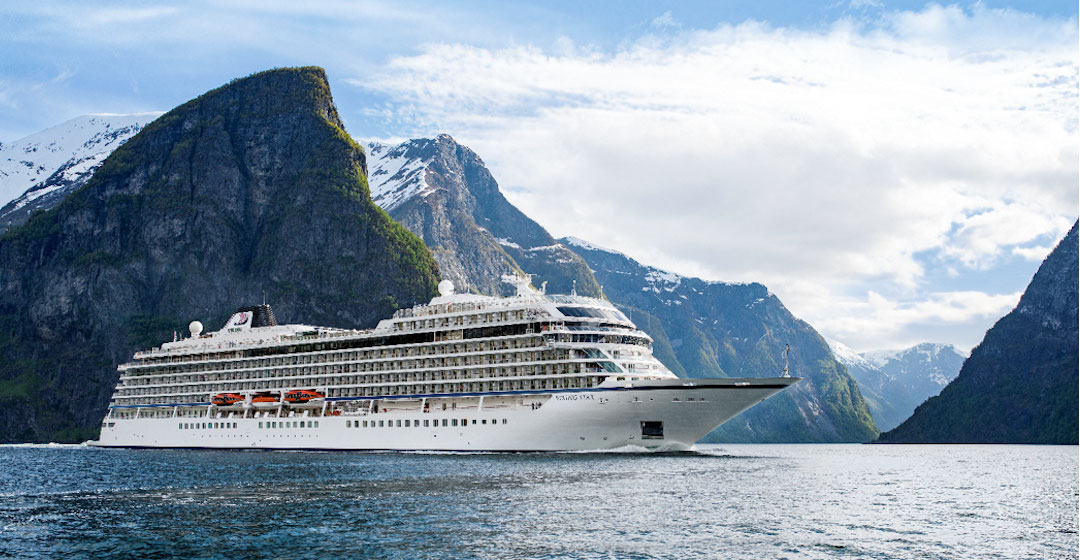
The "Viking Libra," reportedly the world's first hydrogen-powered cruise ship, is currently being built at the Fincantieri SpA shipyard in Ancona, Italy. Delivery to Viking River Cruises Inc., headquartered in Basel, Switzerland, is scheduled for the end of 2026. The ship will be operated by the company's subsidiary Viking Ocean Cruises.
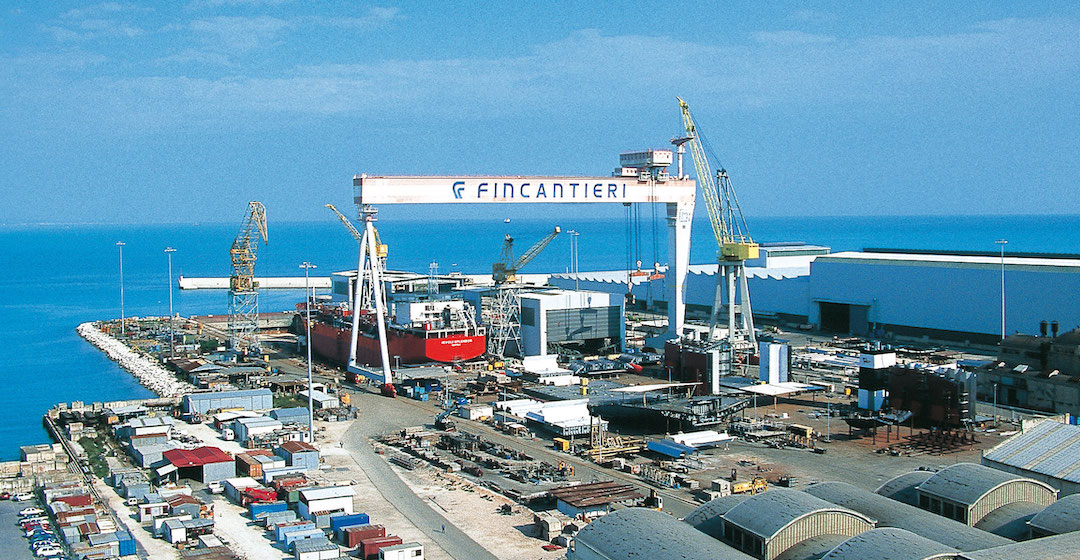
Fincantieri is building the "Viking Libra" and other hydrogen-powered ships of the Hinging Group at its shipyard in Ancona, Italy. © Fincantieri SpA
The ship, with a gross tonnage of approximately 54.300 tons (153.670 cubic meters), has 499 cabins and can accommodate 998 guests. The propulsion system is based on liquid hydrogen and fuel cells and was developed by Isotta Fraschini Motori (IFM), the Fincantieri subsidiary specializing in fuel cell technology. Its power output is six megawatts (8.150 hp).
"Viking has made the fundamental decision to invest in hydrogen," says CEO Torstein Hagen. The emission-free hybrid propulsion system allows for sailing even in environmentally sensitive areas. A second vessel with the same propulsion system is already under construction at Fincantieri: The ocean-going vessel "Viking Astrea" is scheduled for delivery in 2027. Furthermore, Viking and Fincantieri have signed contracts for two more ocean-going vessels for delivery in 2031, as well as an option for two more vessels for completion in 2033.
Development of an H2 general cargo carrier
As part of a project called "H2ESTIA" led by the Dutch Innovation Agency (Nederlandse Innovatie Maatschappij, NIM), a zero-emission cargo ship is being designed to operate on liquid hydrogen. It will be equipped with a newly developed cryogenic hydrogen storage and bunkering system. In addition to the fuel cell system, which uses batteries to provide primary propulsion, it will also feature wind-assisted propulsion to further improve energy efficiency and waste heat recovery solutions to reduce hydrogen consumption.
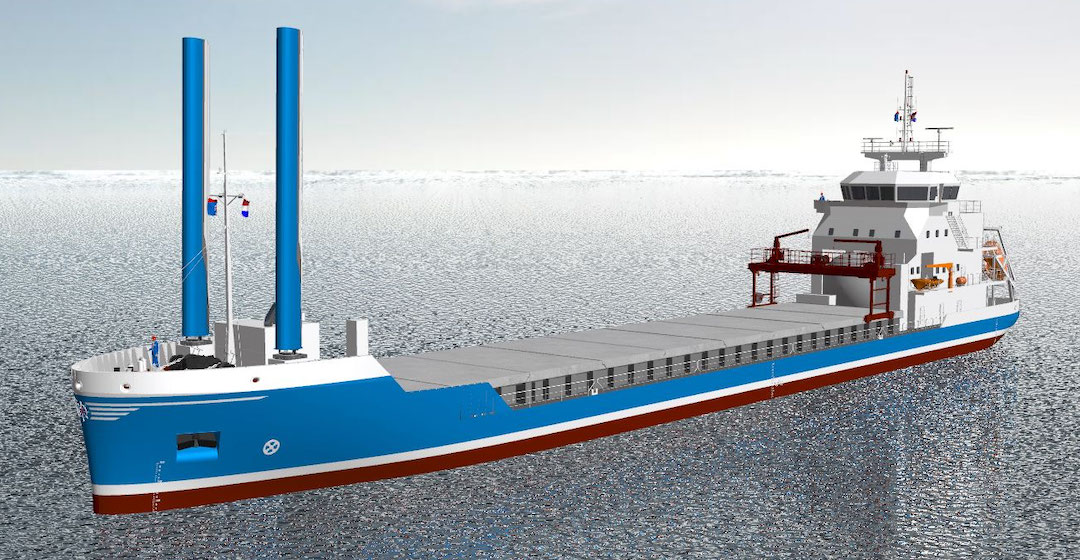
Concept: As part of the H2ESTIA project, a consortium aims to develop a hydrogen-powered bulk carrier. © Dutch Innovation Shipbuilding
"In parallel with the H2ESTIA project, we are working on securing supplies as well as the necessary bunkering and logistics," says Jan van Dam, CEO of the shipping company Van Dam Shipping, which plans to operate the vessel in the North Sea. The development consortium of shipping and technology companies includes the Dutch research institutes TNO, Maritime Research Institute Netherlands (MARIN), and the University of Twente, as well as the cryogenic tank specialist Cryovat International, the software developer EnginX, the machinery supplier Encontech BV, the classification society RINA, and the Dutch Ministry of Infrastructure and Water Management.
“Hydrocat 60” for offshore transport
The "Hydrocat 60" from Windcat Workboats International BV, part of the Belgian company CMB.Tech NV, has already been completed and recently delivered. The crew transfer vessel (CTV) is expected to enter service shortly. The vessel is the first in the MK5 series to be equipped with a dual-fuel hydrogen combustion engine, jointly developed by CMB.TECH and MAN. This allows it to run on both hydrogen and conventional diesel. The CMB.TECH system can store 458 kilograms of compressed hydrogen.
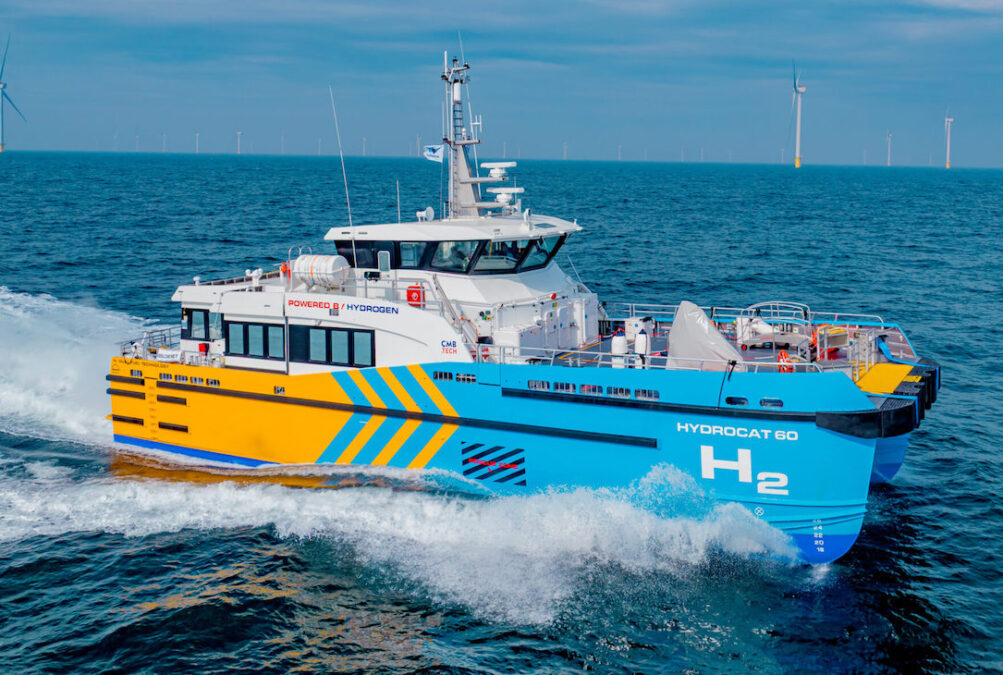
The Hydrocat 60 personnel carrier, equipped with a dual-fuel engine, can run on both hydrogen and marine diesel. © CMB.Tech NV.
The design is tailored to the needs of the offshore wind industry, with improved crew comfort and operational efficiency. It offers optimized seakeeping characteristics, a larger deck area, and provisions for even greater hydrogen storage. With an overall length of 27 meters, an optimized hull shape, a wider beam, and increased freeboard, these vessels ensure better accessibility and are also suitable for more remote projects.
This is now the third hydrogen-powered CTV in the Windcat fleet, says Managing Director Willem van der Wel. "We see that hydrogen is gaining momentum in the offshore wind industry." With additional hydrogen-capable vessels already in the water and under construction, the company is responding to the growing demand.
Yanmar develops maritime fuel cell system
In April, Japanese Yanmar Power Technology Co., Ltd., a subsidiary of Yanmar Holdings, received "Approval in Principle" (AiP) for its GH320FC marine hydrogen fuel cell system from the classification society DNV. The "approval in principle" confirms that the design is feasible and that no significant obstacles to its implementation exist.
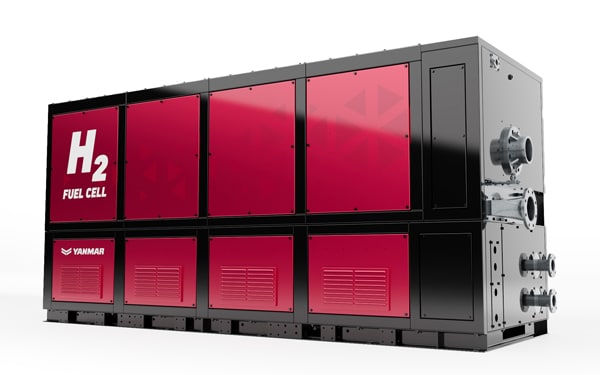
Yanmar's scalable maritime fuel cell system GH320FC has received type approval © Yanmar Holdings Co., Ltd.
The design allows for easy installation on various vessel types and allows for the parallel connection of multiple fuel cell modules, thus meeting the diverse energy requirements of different vessel types and operations. It is suitable for passenger ferries in coastal shipping, freighters in inland waterways, port services, and operations in low- or zero-emission zones across Europe, said Eric Tigelaar, Department Head at Commercial Marine Yanmar Europe. "This is a significant milestone on the path to making our hydrogen fuel cell solutions accessible to European customers," said Masaru Hirose, General Manager of Large Power Products Business at Yanmar Power Technology Co., Ltd.
Hydrogen-powered cargo boats as an alternative to trucks
In a new study, industrial chemists at the University of Münster have evaluated the costs of hydrogen-powered freight transport. They suggest that small, autonomous, hydrogen-powered boats could partially replace cargo transport by truck. The scientists led by Professor Stephan von Delft mathematically modeled such a boat and conducted a life cycle and cost analysis. "Our calculations show in which scenarios hydrogen-powered boats are not only more sustainable but also more economical than established transport solutions," says von Delft.
The researchers calculated the emissions and total costs per kilometer driven. They distinguished between inexpensive gray hydrogen and low-emission, but currently more expensive, green hydrogen produced using electricity from renewable energies. They compared these with the total costs of diesel-, hydrogen-, and battery-powered trucks.
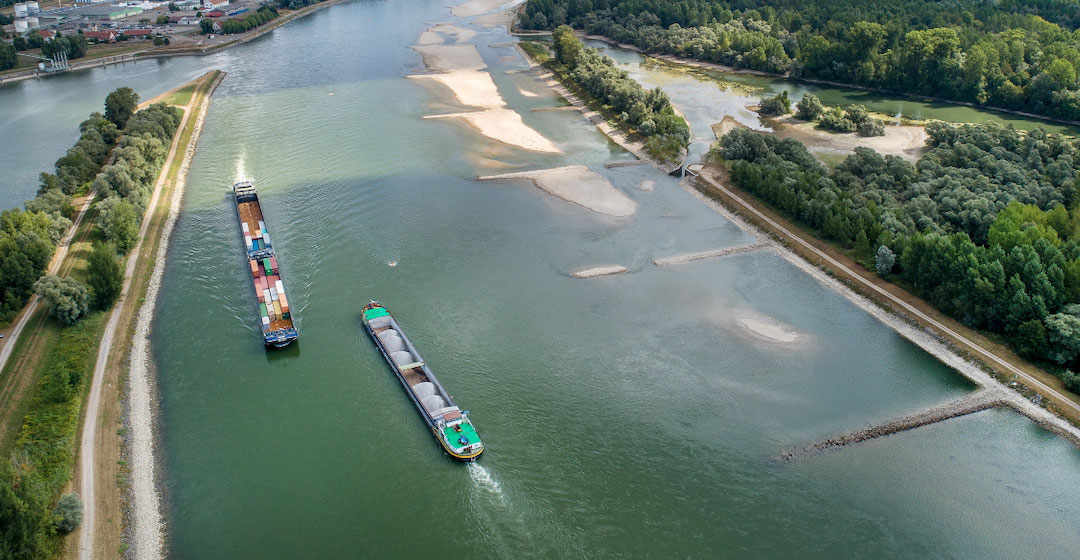
Shipping on the Upper Rhine: Small hydrogen-powered barges can be more environmentally friendly than trucks, according to a study by the University of Münster. © Federal Institute of Waterways Engineering and Research
The result: Green hydrogen-powered boats are cheaper than diesel trucks for distances of 576 kilometers and more than battery- or hydrogen-powered trucks for distances of 624 kilometers or more. This suggests that such a boat could be the most cost-effective solution for transporting goods over distances of more than 624 kilometers. Extrapolated to the entire road transport market, autonomous, hydrogen-powered boats have the potential to serve a good 18 percent of the market more cost-effectively than truck transport—equivalent to 350 billion ton-kilometers. This unit of measurement refers to the transport of one ton of cargo over a distance of one kilometer.
The boats studied are large enough to transport exactly one standard container. While they won't replace container ships on the open sea, they are an interesting alternative for inland waterway transport, especially compared to trucks, which also transport exactly one container, says doctoral student Simon Schlehuber. Furthermore, thanks to their shallow draft, the boats could expand the navigable river network and maintain shipping operations, especially during periods of low water levels.
Marine fuel from wastewater
The start-up ICODOS GmbH, founded at the Karlsruhe Institute of Technology (KIT), has, together with partners, built a demonstration plant in the Mannheim sewage treatment plant that uses wastewater as a resource.
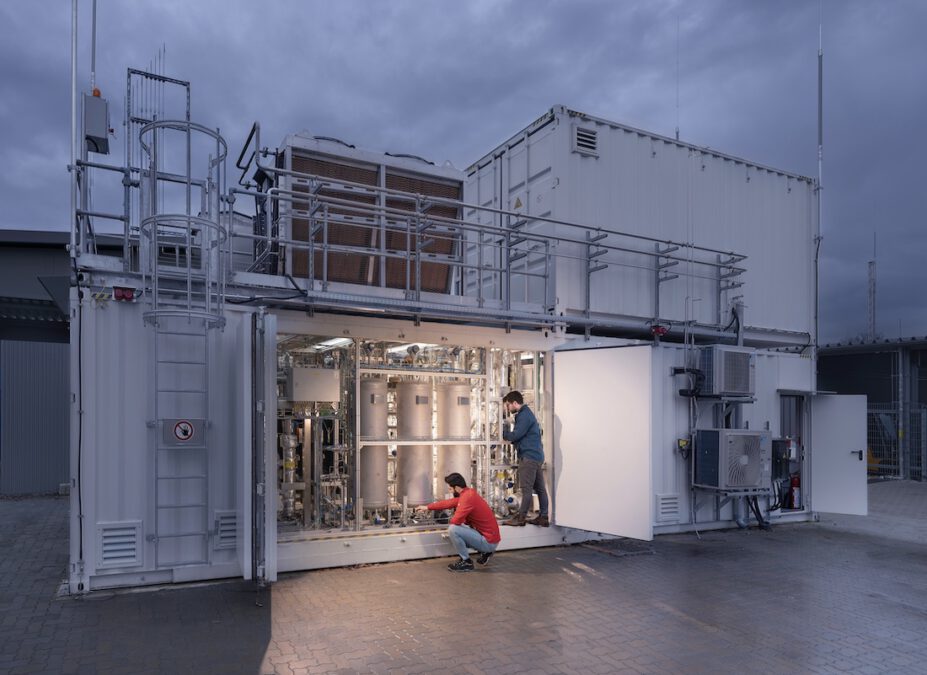
ICODOS, a KIT spin-off, is developing a plant that uses biogas and hydrogen in wastewater treatment plants to produce methanol for ship propulsion. © Karlsruhe Institute of Technology
The resulting biogas is first purified. The CO2 it contains then reacts with renewably produced hydrogen to produce methanol, which can be used as marine fuel or in the chemical industry. "In Germany alone, wastewater treatment plants could produce several million tons of sustainable methanol annually," says Vidal Vazquez, co-founder of ICODOS. Due to its compact and scalable design, the process is particularly suitable for decentralized implementation. The project demonstrates that wastewater treatment plants "can serve as the heart of sustainable fuel production – a potential that has so far remained untapped." The company is already in discussions with other wastewater treatment plants to set up production facilities there as well.
Photo above
Viking and Fincantieri have announced details about the "Viking Libra." The hydrogen-powered cruise ship is currently being developed at the Italian design house Fincantieri's shipyard in Ancona and is scheduled for delivery to Viking Cruises in 2026. © Viking River Cruises Inc.



