
(London / UK) – Africa is set to become a major player in the global green hydrogen market over the next five years, with an expected 41 projects. North African countries, including Egypt, Algeria, and Morocco, will lead the way: their year-round solar and wind energy resources offer ample opportunities for investment in hydrogen production and export infrastructure.
Africa OPEX Report 2025 of the London-based trade association Energy Industries Council (EIC). © EIC
The countries are strategically well-positioned to jointly develop the South H2 corridor with Europe, a pipeline more than 3.300 kilometers long that is intended to supply Germany, Austria, and Italy with four million tons of green hydrogen annually (as we reported ). Egypt's national hydrogen strategy alone aims to hold an eight percent share of the global hydrogen market by 2050 and produce ten million tons annually, a significant portion of which is destined for export. These are some of the key findings of the new "Africa OPEX Report 2025," prepared by the Energy Industries Council (EIC), which, according to its own statements, has over 950 members from the energy sector.
Countries must act now
However, the EIC warns that the hydrogen sector in Africa "faces serious challenges despite its promising prospects," including establishing a regulatory framework and building a stable infrastructure. "Although the longer-term outlook for the hydrogen sector is positive, no commercial-scale project has yet made a final investment decision," says Neil Golding, EIC Director of Market Monitoring: "Offtake agreements must be signed and demand must be created for the projects to be commercially viable."
It is clear, says Golding, "that North Africa is well positioned to support Europe's hydrogen ambitions and that it could become a potentially significant supplier in the future." The EU is also providing financial support for the entire hydrogen value chain - for example for Namibia and South Africa - which indicates "positive prospects for the sector."
Fertile ground for green hydrogen
Africa's vast solar and wind resources and low production costs provide "fertile ground for scaling up green hydrogen production." The Africa Green Hydrogen Alliance, launched in 2022 and led by Egypt, Kenya, Mauritania, Morocco, Namibia and South Africa, aims to position the continent "as a global leader in this sector."
According to the report, sub-Saharan Africa is also developing green hydrogen capacity, with countries like Namibia leading the way. A $10 billion project there will create 15.000 construction jobs and 3.000 permanent jobs. Further north, in Mauritania, the Aman and Nour projects are set to produce hydrogen.
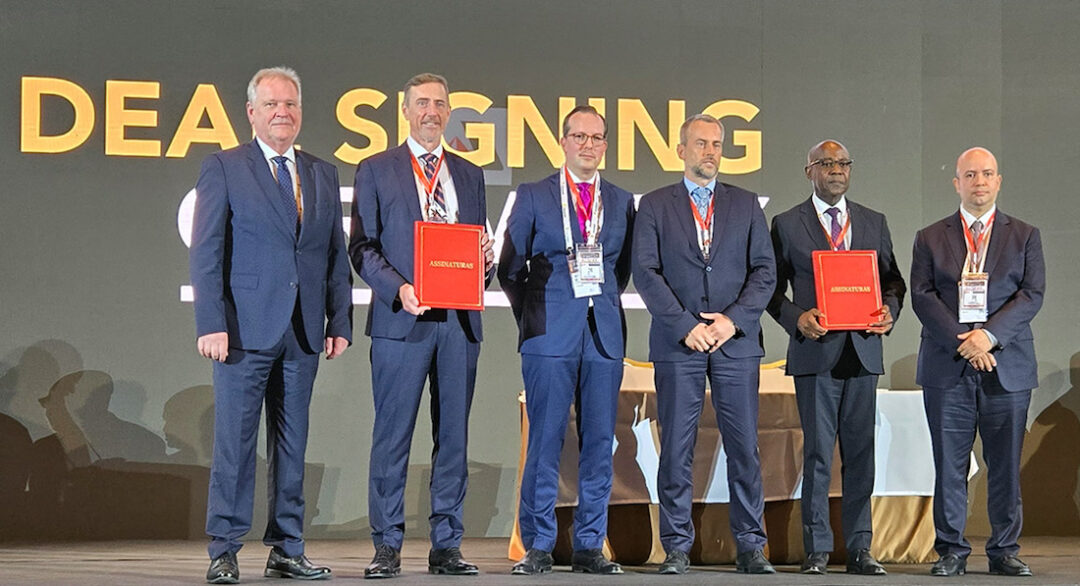
In October 2024, CWP Global joined a consortium that includes the Nuremberg-based infrastructure company Gauff to develop a 600 MW hydrogen project in Angola. The company's hydrogen portfolio currently consists of eight projects in Africa, Australia, South America and North America with a cumulative capacity of 200 gigawatts, including the PtX projects in Africa in Mauritania (Aman), Djibouti (Hayyu) and Morocco (Amun). The consortium partners from left to right: Stefan Traumann (German Ambassador to Luanda, Angola), Mike Scholey (CEO for Hydrogen, CWP Global), Julian Reichert (Head of Project Development, Conjuncta), Stefan Tavares Bollow (Managing Director, Gauff Engineering), Orlando da Mata (PCA, CPD-Sonangol), Vladimir Machado (CEO, CPD-Sonangol) © Gauff GmbH & Co. Engineering KG
For the “ Aman ” project, for example, the Mauritanian government and CWP Global reached an agreement in 2022 whereby the Belgrade-based project developer would investigate a 30-gigawatt green hydrogen production facility in the Dakhlet Nouadhibou and Inchiri regions in western Mauritania. According to information provided at the time, this also included the installation of wind turbines (15 gigawatts) and photovoltaic power plants (15 gigawatts) to generate the necessary green electricity. In Angola, CWP, as part of a consortium it joined in October 2024, plans to build a 600-megawatt hydrogen production facility powered by hydroelectricity.
The upfront costs of green hydrogen projects require international cooperation and financing initiatives, according to the EIC report. The European REPowerEU plan, which aims to reduce the continent's dependence on Russian gas and which aims to import ten million tonnes of green hydrogen from Africa every year, is "a sign that efforts are already being made". However, "more targeted financing and cooperation are key to scaling up hydrogen production" in Africa.
Hydrogen market linked to renewable energy growth
In order for companies from Europe and other countries to move to Africa, "the right regulatory and financial conditions must be in place that promote Africa's hydrogen and cleantech potential," says Rebecca Groundwater, Head of External Affairs at the EIC. The green hydrogen sector is closely linked to the general growth of renewable energies in Africa.
There are currently 11,2 gigawatts of solar power and 9,9 gigawatts of wind power installed across the continent. If you add hydropower (40 GW), there are renewable energy plants with a cumulative capacity of 61,1 GW, it was said upon request. South Africa is the leader in solar capacity with 59 solar parks, while North African countries such as Egypt and Morocco are driving forward the development of wind energy and will be feeding nine gigawatts of electricity into the grid by 2024.
energy storage required
However, the continent must also invest in energy storage in parallel with production, according to the report. Capacity has increased from 180 megawatts in 1979 to 4,2 gigawatts in 2023, including 3,6 gigawatts in South Africa. "However, the sector faces major challenges due to a lack of clear regulations," the EIC says.
In 2024, solar power plants with a capacity of 424,3 megawatts and wind power plants with 821 megawatts were added, mostly in North African countries and South Africa. Africa must invest $2026 million annually between 2030 and 190 to ensure that the renewable energy sector continues to flourish, the Council quotes the International Energy Agency as saying.
But there appears to have been a shift in energy growth. Last year, the same number of projects were commissioned in both the renewable energy and oil and gas sectors - driven by the need to provide access to electricity for 600 million people: 43 percent of Africa's total population.
The “ Africa OPEX Report 2025 ” on traditional and new energy sectors costs £195 (plus VAT) for non-EIC members. A short summary is available free of charge.
Photo above
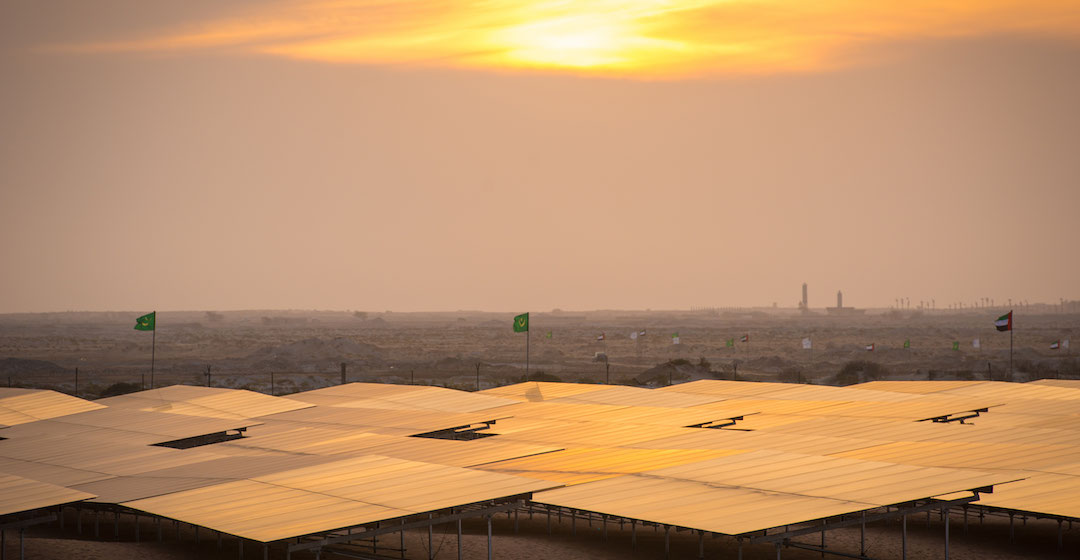
The Abu Dhabi Future Energy Company PJSC (Masdar) has been active in Africa for many years. The picture shows the "Sheikh Zayed" PV plant in the capital Nouakchott of the Islamic Republic of Mauritania, which was put into operation in spring 2013 - a milestone at the time. According to Masdar, the 15 megawatt power plant accounted for ten percent of the country's energy generation capacity at the time. © Masdar / Clement Tardif



