
(Berlin / Germany) – Renewable energies are essential for the production of green hydrogen via electrolysis. The German government intends (as previously reported) to fundamentally reform the Renewable Energy Sources Act (EEG). Across sectors, significant negative impacts are feared for the production, transport, and use of green electricity. This would also affect the hydrogen industry.
Bill of the Federal Government
"The Renewable Energy Sources Act (EEG) requires fundamental reform for a number of reasons," states the draft legislation with which the German government intends to initiate a fundamental system change in German renewable energy subsidies. The aim is to "consistently align the EEG 2027 with affordability, cost-efficiency, and security of supply" (link to the text of the draft legislation below).
Key measures include "the abolition of feed-in tariffs for small rooftop solar installations and mandatory direct marketing for these producers of new installations." Fixed feed-in tariffs for electricity are planned for new photovoltaic systems with a capacity of less than 25 kilowatts until the end of 2028. However, the subsidies will be "significantly reduced," according to the plan: instead of running for 20 years as before, they will now only last three years, and the rate will decrease from around eight cents to 5,2 cents per kilowatt-hour.
PV systems and onshore wind power
A fundamental change is also planned for larger PV systems from 100 kilowatts upwards. Furthermore, the current division of new photovoltaic installations between rooftop and ground-mounted systems is to be changed in favor of "more cost-effective ground-mounted systems".
To achieve the expansion target for onshore wind power (115 gigawatts by 2030), the German government is planning an additional twelve gigawatts of tendered capacity. In the event of limited capacity, the order of applications will no longer be decisive. Grid operators will be permitted to prioritize connection projects based on factors such as planning maturity and grid compatibility. If new wind and solar farms are built in congested grid areas, financial compensation for a portion of the electricity curtailed due to grid problems will be suspended for six years.
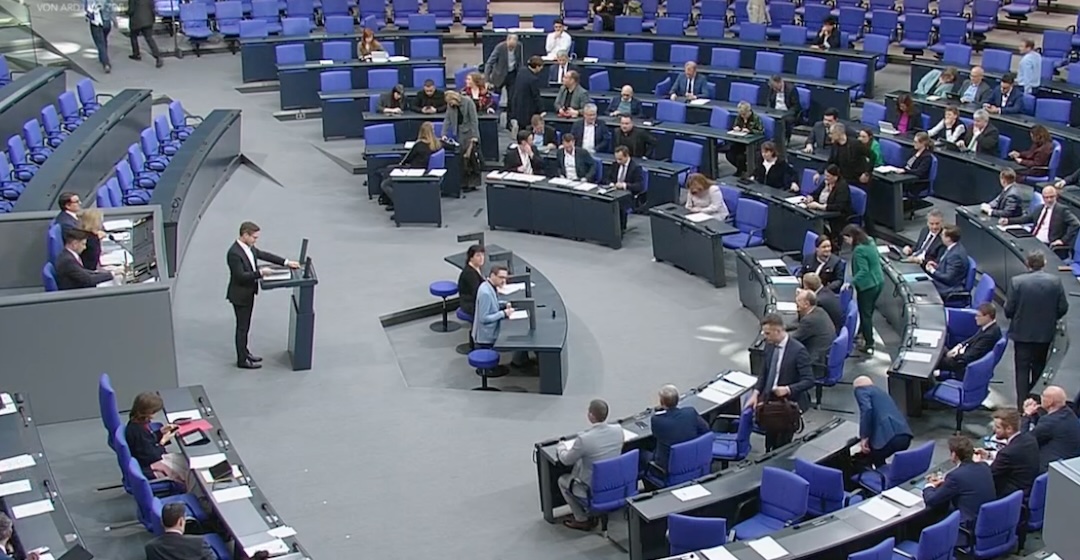
The Bundestag will debate on Thursday, 24th September 2026, in first reading the Federal Government's draft law "EEG Amendment 2027" (Drucksache 21 / 7867).
The planned time is 8:35 pm. The debate will be broadcast live on Parliamentary television transferred. The draft will then be referred to the lead Committee on Economic Affairs and Energy for further consideration.
Photo above
The German Bundestag will debate the Renewable Energy Sources Act (EEG) 2027 on September 24. © German Bundestag



