
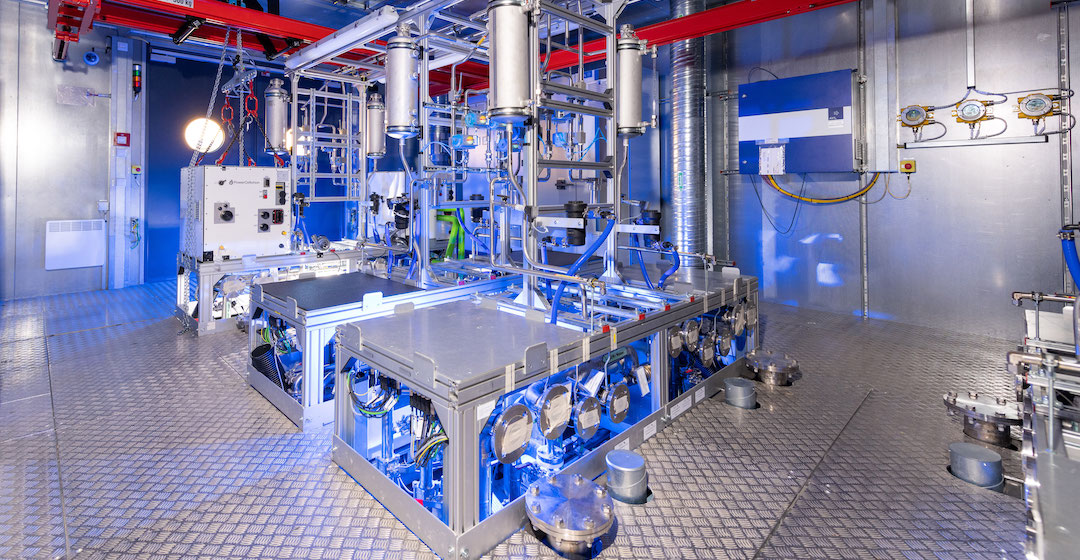
(Empfingen, Germany) – The German Aerospace Center (DLR) will be testing fuel cell-based propulsion systems with megawatt-scale output. The testing will take place at the innovation campus of the E2U Empfingen Development Center for Environmental Technology. According to the DLR, the focus will be on systems with an output of approximately 1,5 megawatts, which could, for example, power ships and potentially be used in aviation in the future. Such systems are not yet commercially available.
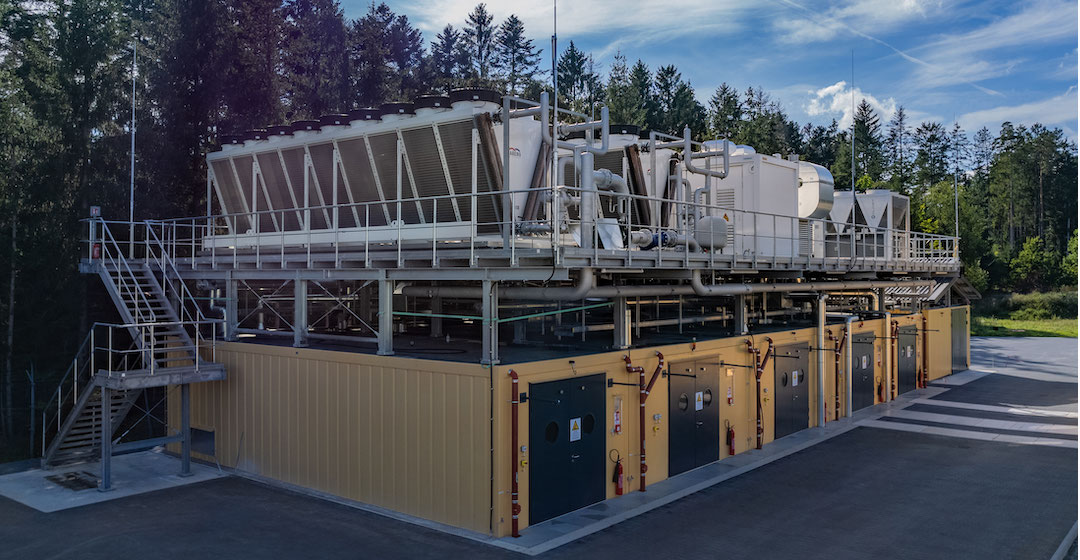
BALIS can also be used to examine entire drive trains with fuel cell systems, electric motors, tank infrastructure and control and regulation technology. © DLR (CC BY-NC-ND 3.0)
The modular test field, called "BALIS", makes it possible to comprehensively examine individual components and entire drive trains: This includes the fuel cell system itself, electric motors, tank infrastructure and control and regulation technology. All parts of the system are housed in containers. The DLR Institute of Technical Thermodynamics is responsible for the project.
According to its own information, the DLR is also building its own electric drive system in the megawatt power class. It consists of a fuel cell system, hydrogen tank, electric motor, control components and power electronics. This will enable all process steps of a fuel cell drive to be "fundamentally recorded, understood and qualified," say the researchers. The largest fuel cells currently commercially available for mobile applications have an output of up to several hundred kilowatts. "In order to reach the megawatt range, the systems must be built from several interconnected modules."
research on cryogenic hydrogen
Another research focus is the handling of liquid hydrogen (LH2) in large quantities for the operation of the entire propulsion system. To this end, the DLR is installing a test tank and the necessary refueling infrastructure with additional funding of around three million euros.
In relation to the storage volume, liquid hydrogen has a higher storage density than gaseous hydrogen. Hydrogen only becomes liquid at very low temperatures starting at minus 253 degrees Celsius (cryogenic hydrogen). The liquefaction, storage and transport of hydrogen place special demands on the infrastructure in order to keep the pressure and temperature constant.
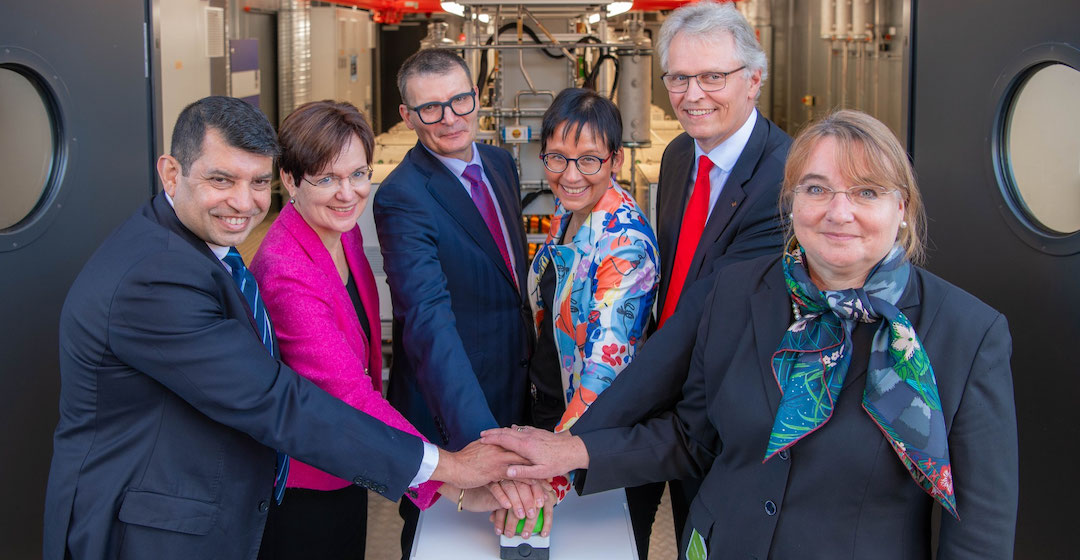
The DLR commissioned the new BALIS test field on October 28 in the presence of representatives from politics, science and industry. © DLR
The BALIS test environment is already fully booked with research projects for the next three years. Among the companies with which DLR is collaborating are the DLR spin-off H2Fly , the fuel cell manufacturer Power Cell, the electric drive specialist Compact Dynamics, and the industrial gas manufacturer Air Liquide. From the aerospace sector, DLR is working with companies such as Diehl Aerospace, GE Aerospace, and Deutsche Aircraft; the system partner is AVL.
"Especially in aviation, the step from a stable propulsion system on the ground to qualification for use in aircraft is very complex and takes time," says Karsten Lemmer, member of the DLR Executive Board and responsible for innovation, transfer and scientific infrastructures. A system like BALIS creates the "basis and reliability that is needed for the transformation of aviation." The Federal Ministry for Digital and Transport is funding BALIS with 26 million euros.
Photo above
A look inside the test field: The focus of the research work is the development of new drive systems based on fuel cells with outputs in the megawatt range. © DLR (CC BY-NC-ND 3.0)



