
(Karlsruhe, Germany) – Germany is among the leading locations internationally for fuel cell research and development. This is the conclusion of a study by the Fraunhofer Institute for Systems and Innovation Research ISI. The findings provide comprehensive insights into technological trends, funding activities, publications and patents, as well as global market developments.
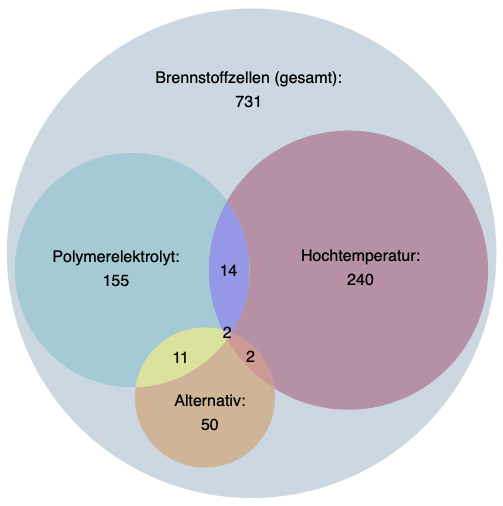
By July 2025, 731 fuel cell projects had received EU funding. High-temperature fuel cells accounted for the largest share, followed by polymer electrolyte technology. 257 projects could not be assigned to any specific category. According to the Fraunhofer Institute for Systems and Innovation Research (ISI), these were often large-scale projects, usually part of a larger value chain; for example, in "Hydrogen Valleys" with pilot regions testing a fully hydrogen-based infrastructure. © Fraunhofer ISI / Screenshot from the monitoring report
According to the authors, datasets from German and European funding portals, international patent databases, and bibliographic databases were structured, classified, and evaluated according to three technology categories: polymer electrolyte fuel cells, which are frequently used in mobile applications; high-temperature fuel cells for stationary power supply and combined heat and power (CHP); and alternative fuel cells, including alkaline and direct alcohol variants. The study shows, the authors state, that there has been continuous funding for fuel cell research and development in Germany and Europe for decades. Between 1969 and 2024, nearly 800 relevant projects were supported in Germany with funding in the billions; approximately 730 projects received EU funding by mid-2025.
Funding for fuel cell research is increasing
Since 2000, Germany has seen a significant increase in public investment, at times exceeding €180 million per year. At the European level, annual funding rose from €5 million to nearly €200 million in 2024. Germany, France, and Italy are among the leading recipient countries.

Bosch, Siemens, and the Jülich Research Centre are among the world's most active patent applicants. Photo: Series production of the fuel cell drive system at the Bosch plant in Stuttgart-Feuerbach. © Robert Bosch GmbH
“The funding policies of the last decades have made a decisive contribution to Germany being one of the leading innovation locations in the field of fuel cells today,” says project manager Henning Döscher: “Both basic research and industrial application development are specifically promoted” – which has led to the “development of strong networks between science and industry”.
While China and the USA recorded the highest number of publications worldwide, Germany ranked fifth. In terms of patent applications, Germany ranked third behind Japan and the USA. The study analyzed more than 150.000 scientific publications and 32.000 transnational patents related to fuel cells.
Many patents from German companies
German companies are particularly strong in the field of polymer electrolyte and high-temperature fuel cells. Among the most active patent applicants are international corporations such as Toyota and Panasonic, as well as German companies like Bosch, Siemens, and the Jülich Research Centre.
The monitoring also includes a meta-study in which 45 international market studies were evaluated and indicate a high degree of uncertainty in the forecasts for the global fuel cell market: "For 2030, sales estimates range from 2 to 117 billion dollars," the authors state.
Despite this wide range, clear trends emerged: In the meta-study, polymer electrolyte fuel cells dominate with over 60 percent market share, while high-temperature fuel cells reach around 35 percent. The fuel cell market is in an early stage of development, says Sven Altvater, research associate at Fraunhofer ISI and co-author of the study: "Public funding measures, industrial policy strategies, and technological breakthroughs will be crucial in determining how quickly the market matures and establishes itself in the coming years."
The results of “H2GO – National Action Plan Fuel Cell Production – Results 2025” can be found on the Fraunhofer ISI website.
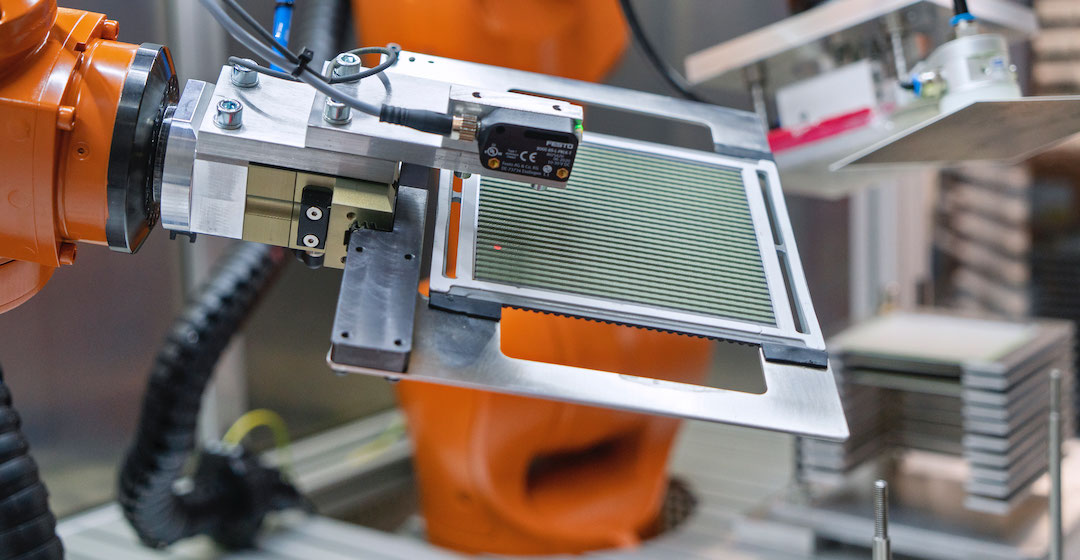
Photo above
Fully automated assembly of individual components for high-temperature electrolyzers and high-temperature fuel cells: Thyssenkrupp Nucera and the Fraunhofer Institute for Ceramic Technologies and Systems IKTS collaborated to advance high-temperature electrolysis (SOEC) to market maturity. © Fraunhofer IKTS



