
(Berlin, Germany) – Three Danish projects will receive funding from Germany through the "Auction-as-a-Service" mechanism as part of the latest call for proposals from the European Hydrogen Bank. The projects will receive between €0,98 and €1,70 per kilogram (€/kg) of hydrogen to bridge the cost gap between production and projected sales prices. The hydrogen will be delivered to Germany via the planned "Danish Hydrogen Backbone," which is scheduled to be operational by the end of 2030.
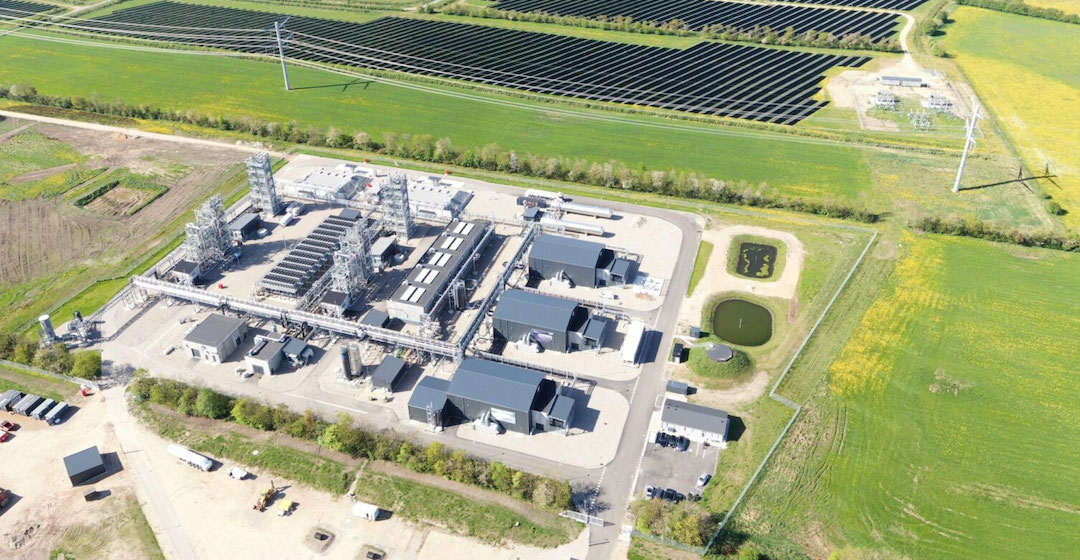
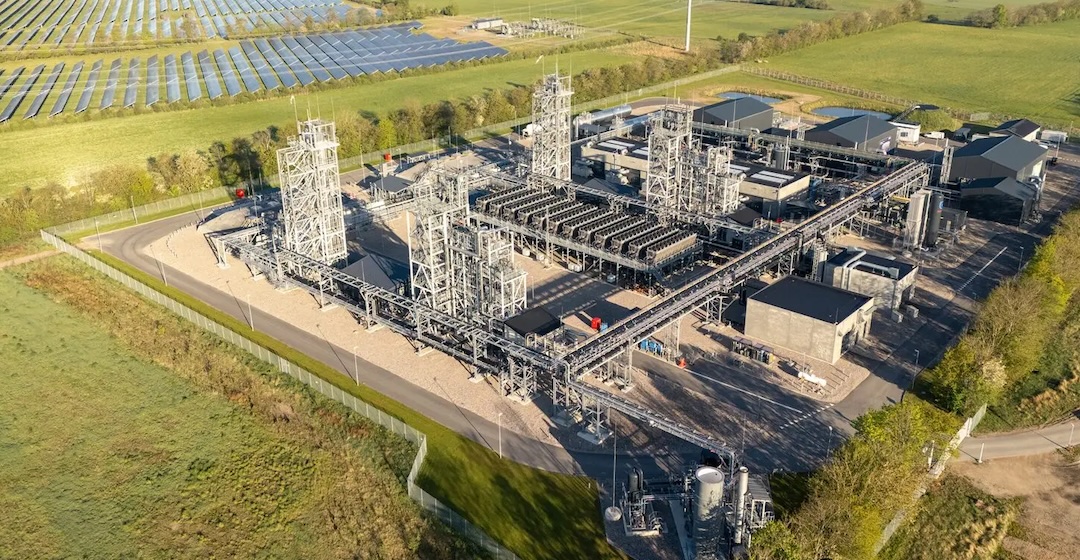
The methanol plant in Kassø is powered by solar energy and has a capacity of 42.000 tons. © European Energy A/S
European Energy A/S will receive €228 million for a hydrogen production capacity of 150 megawatts (MW). The funding (€1,07/kg) will enable the further expansion of the Kassø site and contribute to strengthening the European infrastructure for renewable fuels, says Executive Vice President and Head of PtX, Rene Alcaraz Frederiksen. "We appeal to the Danish government to make a clear commitment to building the hydrogen infrastructure that will transport our products to customers in Germany."
European Energy operates two Power-to-X plants in Denmark: an 8,1 MW green hydrogen production plant in Esbjerg and, in partnership with Mitsui & Co. Ltd., the 52,5 MW e-methanol production plant in Kassø, which is already operational. Both plants are part of the Power-to-X portfolio, which also includes other projects in Europe, North America, Brazil, and Australia. The company has offices in Hamburg, Potsdam, Teuchern, Leipzig, and Wiesbaden, employing a total of more than 80 people.
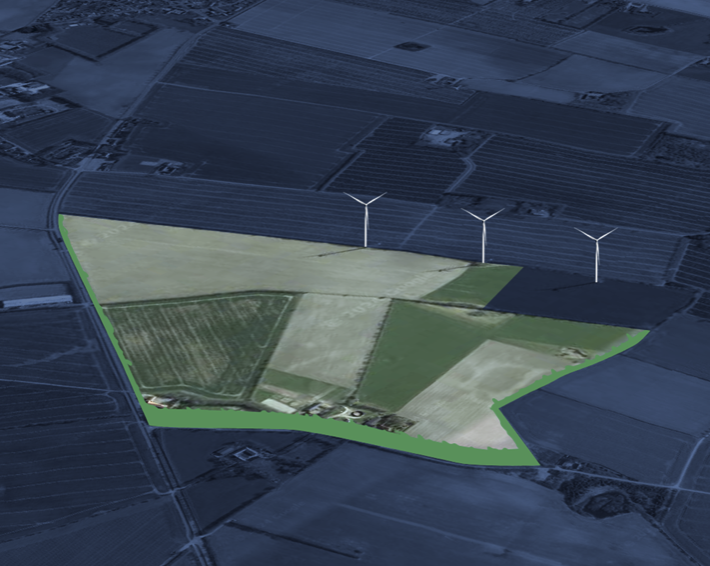
Everfuel will install a 200 MW electrolyzer capacity with the "Frigg" project at the Revsing Energy Park in Vejen, Denmark, and will receive €244,9 million in funding. © Everfuel A/S
Everfuel A/S , also based in Denmark, will receive approximately €245 million in funding (€0,98/kg). The support is earmarked for a 200 MW electrolyzer capacity in the first phase of Everfuel's "Frigg" project at the Revsing Energy Park in Vejen, Denmark. The capacity can be scaled up to two gigawatts. Projects like Frigg are "crucial for industrial decarbonization," says Marc Schürch, board member and representative of Swiss Life Asset Managers, an investor in Everfuel. The focus is now on securing capacity in the Danish hydrogen backbone as "the next important milestone," says Everfuel CEO Jacob Krogsgaard. Regulatory conditions still need to be adjusted to ensure a successful booking in December.
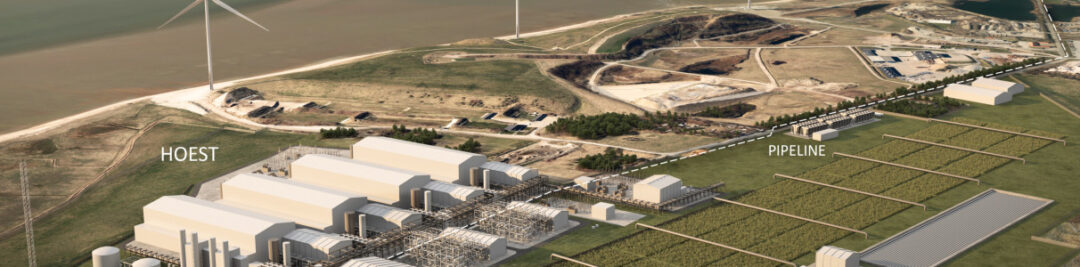
The "Høst" project in Esbjerg by Copenhagen Infrastructure Partner (CIP) with a planned capacity of 240 megawatts. © Høst PtX Esbjerg
The "Høst" project in Esbjerg by Copenhagen Infrastructure Partner (CIP), a 240-megawatt plant, has been awarded €777 million (€1.70/kg). According to previous statements, the project is part of the CIP Energy Transition Fund I. It will be powered entirely by renewable energy and will be able to produce 120.000 tons of green hydrogen annually. The hydrogen produced will also be transported and fed into the German hydrogen grid.
EU state aid scheme
The EU recently approved Germany's €1,3 billion state aid scheme . The European Hydrogen Bank's "Auctions-as-a-Service" instrument is designed to allow member states to provide additional funding to companies that submitted projects to the auction but were ultimately unsuccessful, for example, due to a lack of overall funding, even though their projects would have been eligible for approval. This pre-selection by the EU reduces the administrative burden on member states and ensures cost-effective allocation.
Photo above
European Energy receives funding in the amount of €228 million for the expansion of hydrogen production in Kassø to 150 megawatts. 52 MW are already operational. The pilot plant produced RFNBO-certified e-methanol with green hydrogen for the first time in May. © European Energy A/S



