
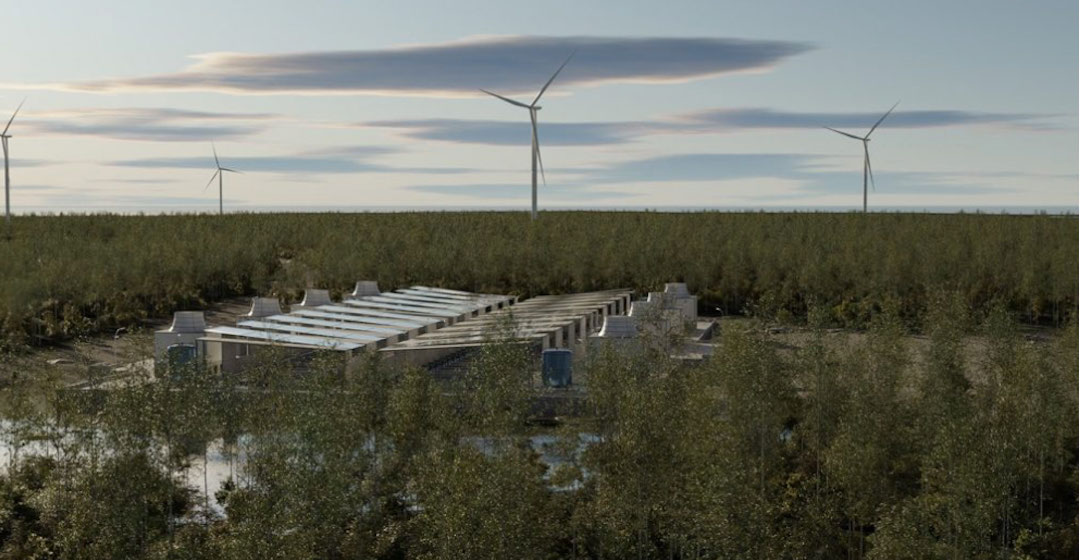
(Corner Brook, Canada) – Project developer CWP Global, together with Corner Brook Port Corporation (CPBC), plans to explore the "potential of a green hydrogen hub." The electrolyzers in the "Gwinya" project, located on the west coast of the Canadian province of Newfoundland and Labrador, will utilize electricity from wind farms with an installed capacity of five gigawatts.

In the process known as "direct reduction" (DRI), the CO2-intensive coke is replaced with natural gas or hydrogen to produce iron. In the process, a product called "iron sponge" is created from ore in pellet form. These pellets are pressed into small iron briquettes (HBI, hot briquetted iron) and then processed into crude steel in an electric arc furnace. The technology has been in use since the 70s. What is new is the use of green hydrogen and green electricity. © Graphic: Steel Institute VDEh
The plan is to use the green hydrogen to produce hot briquetted iron (HBI) and to use the small iron ore briquettes to make green steel. HBI is produced by directly reducing iron ore pellets using natural gas - or in this case hydrogen - instead of coke. The Port of Corner Brook will play "an essential role", not least as an export center for the locally produced HBI, which will supply steel manufacturers in Canada and abroad with decarbonized iron.
The next steps for the project are to formally register the project, begin the environmental assessment process and conduct a feasibility study on various aspects of the proposed hub, including infrastructure, logistics and economic impacts.
Photo above
Corner Brook Port Corporation (CPBC) has signed a letter of intent to explore the development of a green hydrogen hub in the Canadian province of Newfoundland and Labrador. © CWP



