

(Bonn / Germany) – The number of development activities for hydrogen engines is growing both nationally and internationally, in industry as well as at universities and research institutions. However, hydrogen for fuel cells and hydrogen for hydrogen combustion engines are taxed differently: "While hydrogen for fuel cells is exempt from energy tax, hydrogen for hydrogen engines is subject to taxation." This different treatment is not justified, as both options "represent valid technology pathways for commercial vehicles" and are classified as "zero emission" in the EU CO2 fleet regulation.
Exemption from energy tax
"In order to significantly accelerate the use of hydrogen in road transport and the transition to renewable energy sources, the exemption from energy tax is justified." This is the demand of the Federal Association for Self-Propelled Logistics and Shippers (BWVL) in an open letter to the future federal government. The demand is supported by 36 well-known companies and institutions.
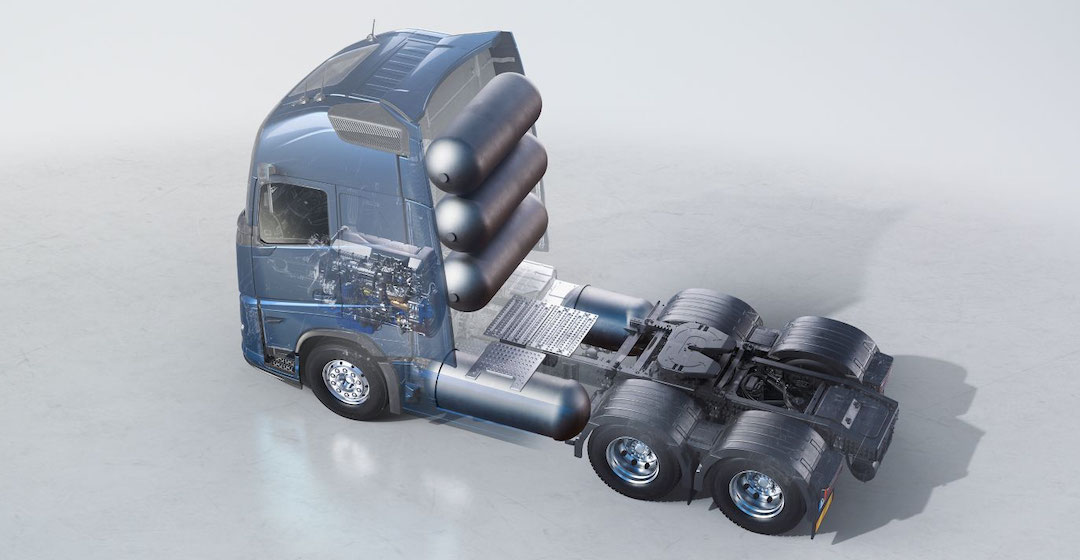
A hydrogen-powered combustion engine is intended to complement the company's low-emission heavy-duty truck offering. Volvo is also among the signatories of the open letter. The company plans to begin testing hydrogen combustion engines in practice by 2026. © Volvo Truck
Firstly, the argument goes, the consumption in a hydrogen engine is locally CO2-free. Secondly, the energy required for electricity and natural gas in hydrogen production is already heavily taxed. And finally, "numerous favorable tax measures – from energy taxes to vehicle taxes – have also been introduced for battery- and fuel-cell electric mobility." These tax breaks apply even though the electricity or hydrogen used is only gradually being converted to renewable sources. "This approach is also correct and necessary for the hydrogen engine," the association states.
In addition to distorting competition, "unequal tax treatment also leads to concrete problems in the use of hydrogen engines." For example, there is currently no technical possibility to differentiate between the two technologies during the refueling process. This has led "to numerous hydrogen filling stations excluding hydrogen engines from refueling for tax reasons," according to the association. The tax burden is currently €0,901 per kilogram, and from 2027 it will even rise to €1,257. This "counteracts a positive market development for the hydrogen engine."
EU states have discretion
Therefore, the unequal tax treatment should be remedied across the EU. The Energy Tax Directive (2003/96/EC) allows member states to grant tax exemptions under certain conditions. Thus, according to paragraph 15, states may grant "full or partial tax exemptions or tax reductions" for taxable products "used in pilot projects for the technological development of more environmentally friendly products or fuels from renewable raw materials."
Since "no quick agreement is expected" on the reform of the EU Energy Tax Directive, a national approach could solve the problem – especially since other regions such as the USA, China, and India have also "discovered the hydrogen combustion engine." The effects of "a positive trend in hydrogen engines" extend "far beyond the actual technology," according to the BWVL: "The hydrogen engine can significantly accelerate the use of hydrogen in transport and provide a positive impetus toward the hydrogen economy."
The full text of the open letter can be found on the association's website.
Photo above
The BWVL (German Federal Association of Transport and Communication Engineers) is demanding that the new German government exempt hydrogen for combustion engines from energy tax. © Daimler Truck AG



