

(Berlin / Germany) – The German Federal Cabinet has adopted the “Import Strategy for Hydrogen and Hydrogen Derivatives”. This strategy complements the National Hydrogen Strategy and provides “a clear framework for the urgently needed imports of hydrogen and hydrogen derivatives to Germany”, according to the Federal Ministry for Economic Affairs and Climate Action, which is leading the initiative.

The “Import strategy for hydrogen and hydrogen derivatives” adopted by the federal government is only available as a PDF (see link below). © BMWK
"A large part of Germany's hydrogen demand will have to be covered by imports from abroad in the medium to long term," says Economics Minister Robert Habeck. Germany expects a large and stable domestic demand. The import strategy creates "investment security for hydrogen production in partner countries, the development of necessary import infrastructure and for German industry as a buyer," said the minister. The federal government expects Germany to need 2030 to 95 terawatt hours (TWh) of hydrogen and derivatives in 130. By 2045, demand will rise to around 360 to 500 TWh for hydrogen and 200 TWh for hydrogen carriers such as ammonia or methanol. Using such derivatives, molecular hydrogen can be chemically bound and thus transported and stored more easily.
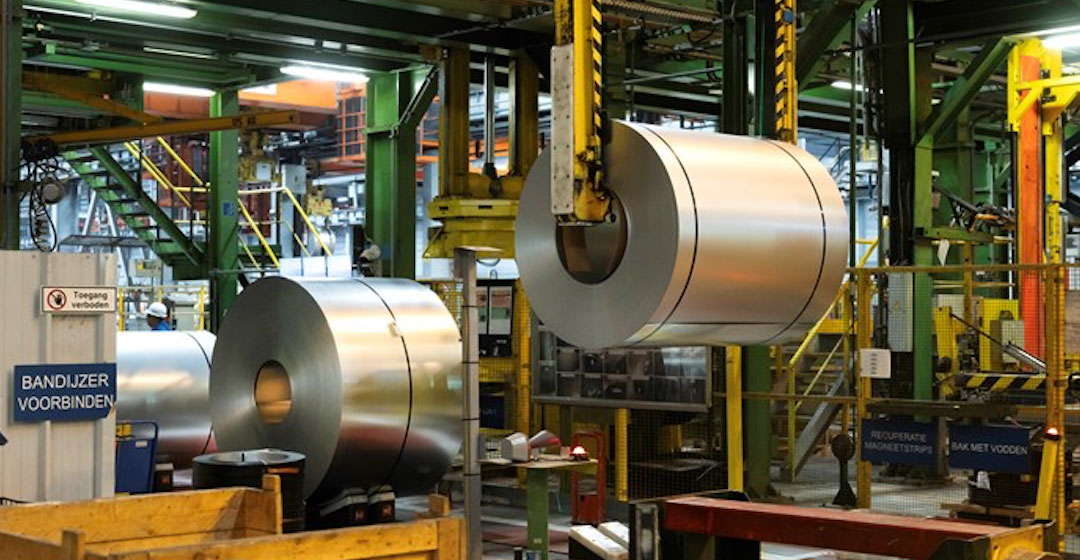
The steel industry in particular has a high demand for hydrogen to decarbonise production processes. © Arcelormittal
These needs will arise particularly by 2030 in the steel industry, the basic materials and petrochemicals industries, mobility and logistics, and the power plant sector, both through the substitution of today's fossil fuels and through new manufacturing processes.
A large part of Germany's hydrogen demand will be covered by imports from abroad in the medium and long term. By 2030, the import share will be between 50 and 70 percent. Germany will become one of the largest hydrogen importers in the world. The federal government's goal is to ensure a permanent "reliable supply of green hydrogen". In order to enable the necessary rapid hydrogen ramp-up, the import strategy also includes low-carbon hydrogen in meeting demand.

The federal government supports a diversified range of products for the import of the energy carrier, including liquid organic hydrogen carriers (LOHC). The graphic representation of hydrogen transport using benzyltoluene comes from Hydrogenious LOHC Technologies GmbH in Erlangen: 1) Production of green hydrogen; 2) Storage in the hydrogen carrier; 3) Transport in existing infrastructure; 4) Release of the hydrogen; 5) Use; 6) Return transport of the hydrogen carrier for reuse. © Hydrogenious LOHC Technologies GmbH
The plan is to import a "diversified range of products". In addition to molecular, i.e. gaseous or liquid hydrogen, various derivatives such as ammonia, methanol, naphtha and electricity-based fuels would be considered, as well as media such as liquid organic carriers (LOHC). It should be considered at an early stage to use the imported hydrogen derivatives directly wherever possible. However, the conversion of derivatives back into molecular hydrogen as required will also play an important role.
The federal government wants to build import infrastructures for pipeline and ship transport in parallel, whereby the use of natural gas infrastructures and their conversion to hydrogen could lead to cost savings. Molecular hydrogen is particularly cost-effective to transport via pipelines. These enable imports from Europe and neighboring countries to Germany in particular.

Hydrogen and its derivatives are a possible option for decarbonization in various sectors. From the perspective of the federal government, the use of hydrogen in individual fields of application should not be restricted. Ultimately, the market will decide in which areas and over what time horizon hydrogen can be used economically. © BMWK (graphic from: “Import strategy for hydrogen and hydrogen derivatives”)
Hydrogen derivatives, carrier media and downstream products are particularly suitable for transport by ship, rail or road. This would enable imports from regions of the world that cannot be connected by pipeline for technical and economic reasons. Currently planned onshore liquefied natural gas (LNG) terminals would be designed in such a way that they could land hydrogen derivatives after use.
The mix of instruments in the import strategy is based on the various value creation stages of the international hydrogen market development (upstream, midstream, downstream).
- the creation of framework conditions for planning security as well as support instruments on the supply side and incentive systems
- the parallel development of pipeline-based import infrastructure and import terminals for cross-border transport of hydrogen and its derivatives to meet Germany's import needs
- Transparency regarding the properties of traded hydrogen products through agreement on global sustainability standards with international partners
- a broad diversification of supply sources, including bilateral and multilateral cooperation with a wide range of partner countries, regions and international actors, such as Canada and Namibia
- supporting the promotion of research and development measures.
In Europe, there are good conditions for the production of hydrogen in the North and Baltic Seas, the Mediterranean and the Black Sea. Therefore, increased cooperation within the EU and with EU neighboring countries, for example with Norway, Denmark, Great Britain or in North African countries, is "of great importance".
Import of green hydrogen
Strategic partnerships with countries such as South and West Africa and Australia lay the foundation for the future supply of green hydrogen. In these countries, there are good conditions for using wind and solar power to produce the energy source.
In the ramp-up phase, there is not yet enough green hydrogen at competitive prices. First, the necessary capacities, including pipeline and ship transport, must be created in the exporting countries for a global - and in the future also green - hydrogen market.
The “ Import Strategy for Hydrogen and Hydrogen Derivatives ” is available free of charge exclusively as a PDF (38 pages).
In a briefing for the Bundestag ( document 20/12410 ), the German Federal Government explains its "Import Strategy for Hydrogen and Hydrogen Derivatives". The document is available free of charge as a PDF (41 pages).
Photo above
Hydrogen derivatives, carrier media and downstream products are the main options for imports by ship. Currently planned liquefied gas terminals would be designed in such a way that they could land hydrogen derivatives after LNG use and convert them back into hydrogen. Photo: floating landing terminal for liquefied natural gas and its regasification (FSRU, Floating Storage and Regasification Unit) in Wilhelmshaven. © Zukunft Gas / Jost Listemann



