

(Berlin, Germany) – The German Federal Council (Bundesrat) is calling on the Federal Government to implement the European Action Plan for Steel and Metals “as quickly as possible.” The aim must be “to ensure the competitiveness of green steel as soon as possible after the introductory phase through suitable market conditions.” This includes effective CO2 pricing and a suitable market framework both for the production of green hydrogen in accordance with the Renewable Energy Directive (RED II) and for hydrogen-based products in general.
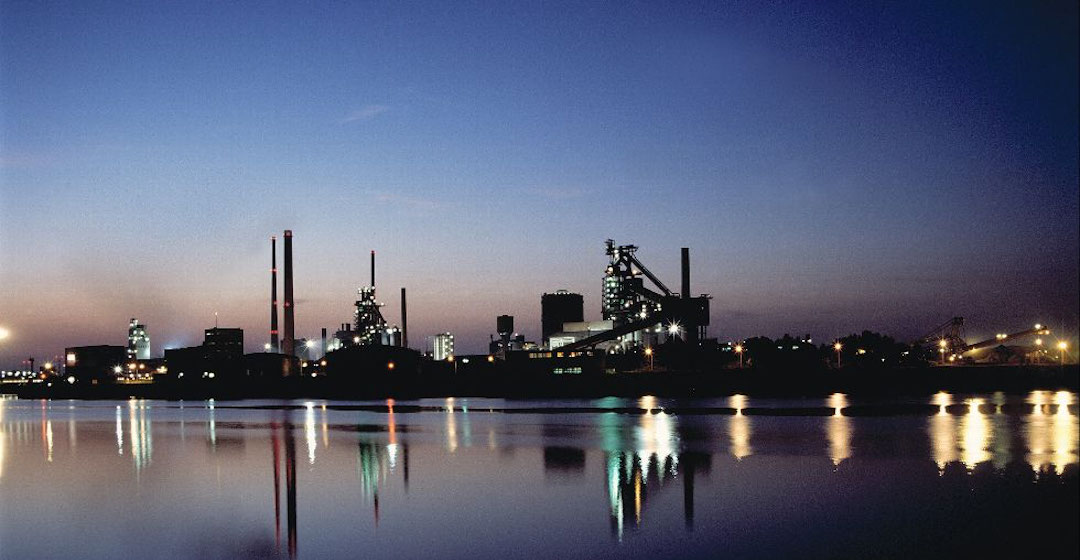
Wrong direction: Just recently, steel company ArcelorMittal halted all plans to use green hydrogen for iron production at its Bremen (photo) and Eisenhüttenstadt plants. The reason given was that the "political, energy, and market-related framework conditions" had "not developed in the hoped-for direction." © ArcelorMittal SA
The future viability and competitiveness of the steel industry in Germany must be sustainably secured and relieved by reducing electricity prices, for example, transmission network charges. According to the EU Commission's "Action Plan," electricity prices in the EU are two to three times higher than in the US, and gas prices are even five times higher than in the United States.
"In order to integrate renewable energies into a secure and competitive system, transport and storage infrastructures must be rapidly expanded," the resolution continues. Furthermore, lead markets for climate-friendly and climate-neutral products should be strengthened and the rapid expansion of a cross-border hydrogen infrastructure should be accelerated so that the steel industry can obtain green hydrogen cost-effectively.
The Federal Council supports a review of how pragmatic criteria for green and low-carbon hydrogen can be further established at the European level. "A non-bureaucratic certification system is crucial for successfully advancing the ramp-up of the hydrogen economy." Furthermore, targeted government safeguarding instruments are needed, particularly for the steel industry, to enable the necessary long-term contracts for hydrogen procurement.
Chamber of States calls for “Steel Summit”
It must be ensured that necessary imports from third countries and border regions are not hampered by regulations. At the same time, local hydrogen production must not lose its competitiveness. Furthermore, the Federal Council points out that, from a climate and industrial policy perspective, the direct reduction of iron ore using natural gas as a transition technology to hydrogen is preferable to the currently predominant steel production using coke as a reducing agent.
The Chamber of States calls on the Federal Government to immediately convene a steel summit with all companies and countries in Germany that are facing transformation in order to “jointly translate these current challenges to secure Germany as a steel location into concrete political action steps and to provide adequate answers to current implementation obstacles.”
In Germany, the steel companies Salzgitter AG and Thyssenkrupp AG have been working for some time to convert their production processes from coke to (potentially green) hydrogen. In June, ArcelorMittal SA halted its long-announced project, funded by the EU, the federal government, and the states with €1,3 billion, to also use hydrogen for iron and crude steel production at its Bremen and Eisenhüttenstadt steelworks – much to the dismay of the affected states and municipalities that had hoped for a transformation (as we reported).
The Bundesrat's resolution is forwarded to the Federal Government. There are no legal requirements as to when and how the Federal Government must consider the proposals.
The text “Implementation of the European Action Plan for Steel and Metals to safeguard the competitiveness and decarbonization of the steel and metal industry” is available as a PDF (7 pages).
The text of the EU Commission's "European Steel and Metals Action Plan" is available as a PDF (19 pages).
Photo above
The Federal Council is calling on the federal government to hold a steel summit and expand the hydrogen infrastructure for the benefit of industry. Pictured: Coil storage facility of steel company Salzgitter AG, which is converting its plant to green hydrogen for the production of pig iron as part of the Salcos project. © Salzgitter AG



