
Berlin, Germany) – German government plans to provide an additional €400 million over the next four years for climate-friendly shipping and the modernization of ports.
Funding for seaports and inland projects
The additional federal funds would primarily provide greater support than before to the seaports in the five coastal states of Hamburg, Lower Saxony, Bremen, Schleswig-Holstein, and Mecklenburg-Western Pomerania. Shipping projects and inland ports would also benefit, according to the Federal Ministry for Economic Affairs and Energy.
As expected, the Central Association of German Seaport Operators (ZDS) and the Federal Association of Public Inland Ports (BÖB) welcome the announcement. "Now it is crucial that the funds are quickly allocated to concrete projects that actively drive structural change in ports – be it in the area of wind energy or low-emission port operations," says Florian Keisinger, Managing Director of the Central Association of German Seaport Operators (ZDS).
Investment backlog 18 billion euros
In past legislative periods, German transport ministers evidently had little interest in public port infrastructure: The investment backlog across Germany amounts to around 18 billion euros, according to the ZDS – 15 billion of which is for seaports and 500 billion for inland ports. "The urgently needed modernization of this critical infrastructure can only be achieved through a long-term, sustainable financing strategy." The German seaports are therefore also calling for a significant increase in port burden equalization to at least XNUMX million euros annually for investments and operating costs.

While ports in Germany await their modernization, Rotterdam is already working on the future: The Port of Rotterdam has been expanding its activities for importing hydrogen and green fuels for years. Through private-sector collaborations, such as the recent one with AM Green Ammonia Pvt. Ltd., the company expects annual throughput of one million tons, valued at up to one billion dollars, from trading in green fuels alone. © Port of Rotterdam Authority / Martens Multimedia
German sea and inland ports directly and indirectly secure 4,5 million jobs in Germany, including around 1,5 million in industry. "Measured against this, the demands of the port industry are relatively low and represent money very well invested," says Marcel Lobeck, Managing Director of the Federal Association of Public Inland Ports (BÖB).
However, a quick allocation of the promised funding for the modernization of German shipping and ports is not yet in sight. First, the bureaucratic wheels still need to grind a bit: According to the Federal Ministry of Transport, details of the funding options are "being developed" and will be presented "during the course of the year."
Photo above
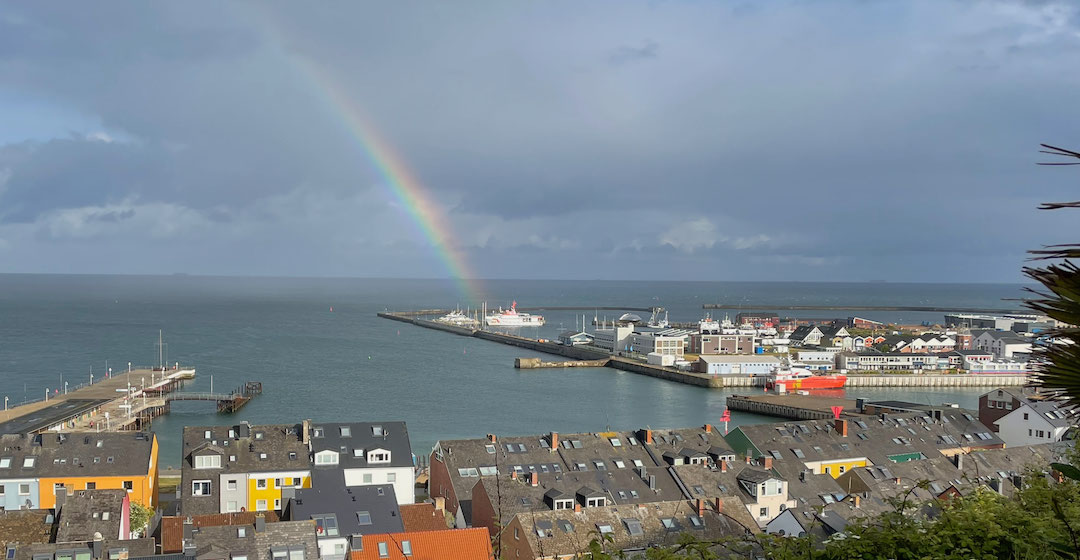
The federal government plans to support climate-friendly shipping and the modernization of ports with €400 million (pictured: the port of Heligoland). © Andreas Lohse



