
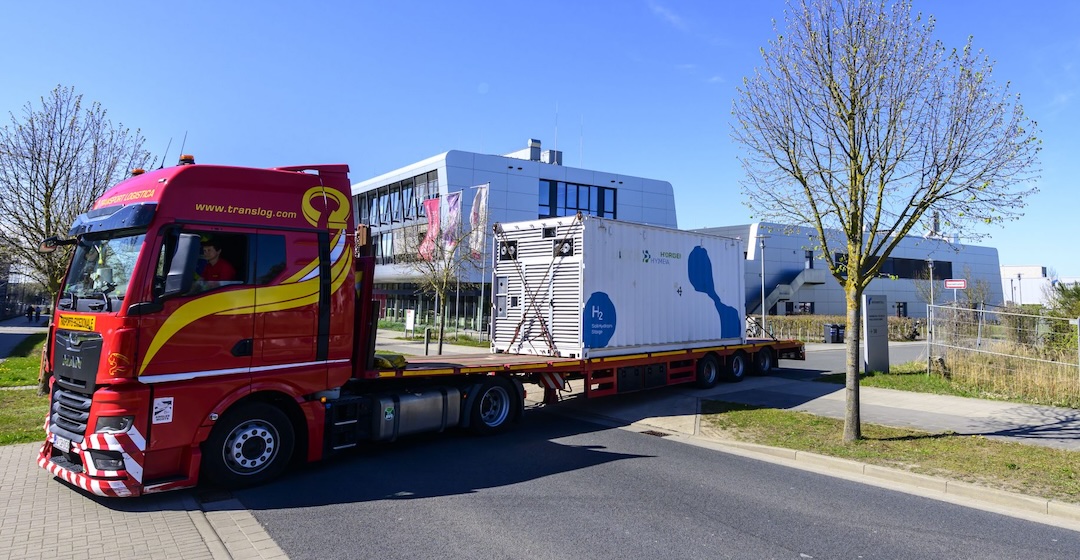
(Braunschweig, Germany) – A large-scale metal hydride storage system with a capacity of 500 kilograms of hydrogen has been delivered to the Lower Saxony Research Center for Automotive Engineering (NFF) at the Technical University of Braunschweig. The containers at Braunschweig Research Airport are being prepared for operation in stages. They are based on a technology in which hydrogen is safely bound in metal structures. According to the Technical University, this process enables "particularly compact, efficient, and long-term storage at comparatively low pressure while simultaneously increasing operational reliability."
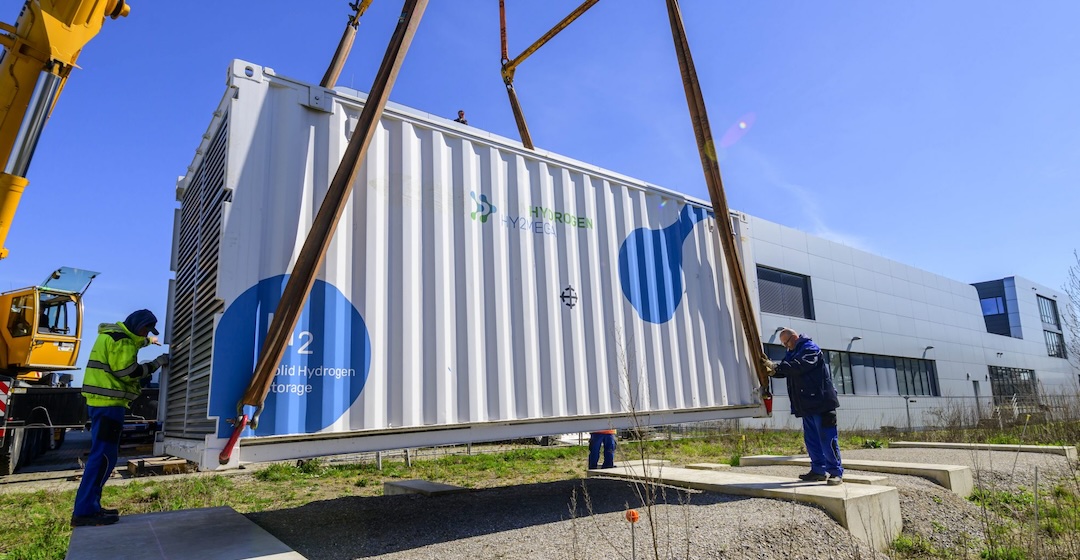
After delivery, the storage units are connected and gradually prepared for operation. © Isabell Massel/NFF
The hydrogen is produced from renewable energy sources via electrolysis at the H2 terminal, located a few hundred meters from the NFF, transported to the research center via pipeline, and stored there in the new metal hydride storage tanks. "In conjunction with large-scale storage, we at the NFF can research and further develop key questions regarding the integration and scaling of hydrogen technologies under near-real-world conditions," says Michael Heere from the Institute for Internal Combustion Engines and Fuel Cells. Beyond the "H2 Terminal" joint project, the metal hydride storage tanks are designed so that they can also be flexibly deployed and shared in other research projects.
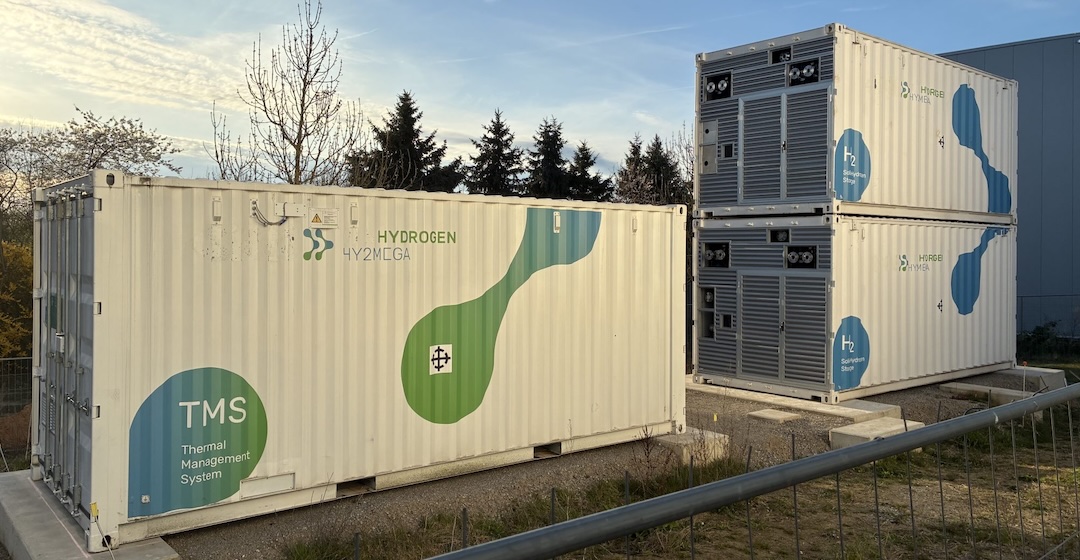
The H2 terminal in Braunschweig serves as a research platform along the entire hydrogen value chain. © Isabell Massel/NFF
The H2 terminal in Braunschweig serves as a research platform along the entire hydrogen value chain: Green hydrogen is produced on site using various electrolysis technologies, tested in test benches, used for applications such as a hydrogen filling station, and the interaction with battery storage and photovoltaics for grid stabilization is researched.
The energy carrier will also be distributed via the pipeline infrastructure to the Fraunhofer ZESS, where it will be used in test benches to investigate aging processes and for decarbonization. The waste heat generated during electrolysis will be used for a district heating network. The Federal Ministry for Research, Technology and Space (BMFTR) is funding the project with approximately 20 million euros.
The Braunschweig Hydrogen Terminal is hosting an open day as part of the nationwide "Hydrogen Week" (June 20, 10:00 a.m. to 5:00 p.m.). Address and details can be found on the event website.
Photo above
The 500-kilogram hydrogen storage unit for research purposes was delivered to Braunschweig Airport. © Isabell Massel/NFF



