
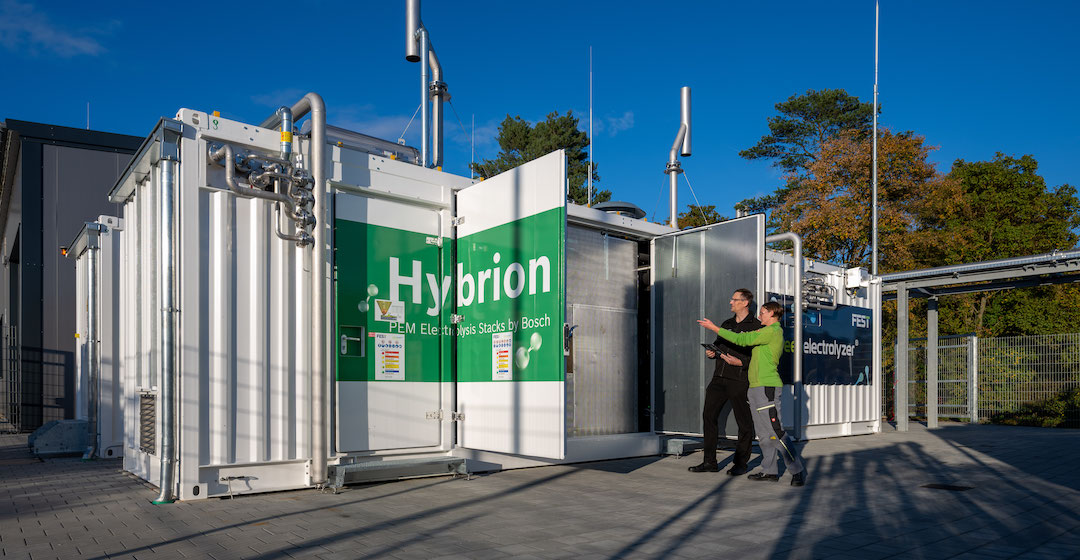
(Bamberg, Germany) – The technology company Robert Bosch GmbH is commissioning two "Hybrion" PEM electrolysis stacks, each with a capacity of 1,25 megawatts, in an electrolyzer at its Bamberg site. According to the company, the plant, with a combined capacity of 2,5 megawatts, produces green hydrogen in accordance with EU regulations.
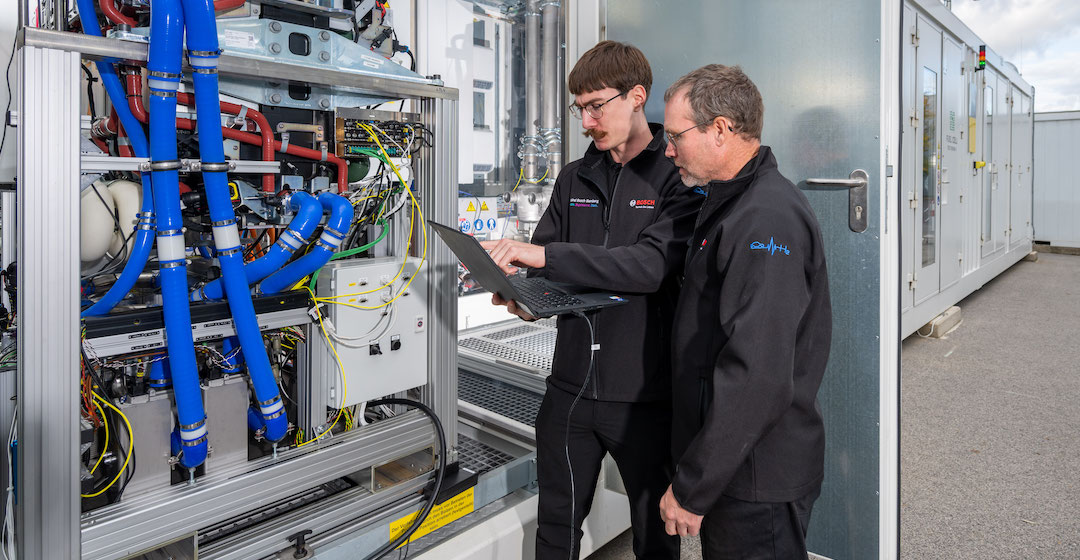
The hydrogen produced on site is used for comprehensive lifetime tests of the fuel cell systems in Bosch's "Lifetime Container". © Robert Bosch GmbH
The electrolyzer supplied by FEST GmbH from Goslar is "part of a complete hydrogen landscape" encompassing production, storage, and utilization, says Markus Heyn, Bosch Managing Director and Chairman of the Mobility business sector. Using proton exchange membrane technology, the device produces approximately 23 kilograms of hydrogen per hour per stack; at full load, production exceeds one ton of hydrogen per day. This amount is enough to power a 40-ton truck with the Fuel Cell Power Module (FCPM) drive system for up to 14.000 kilometers.
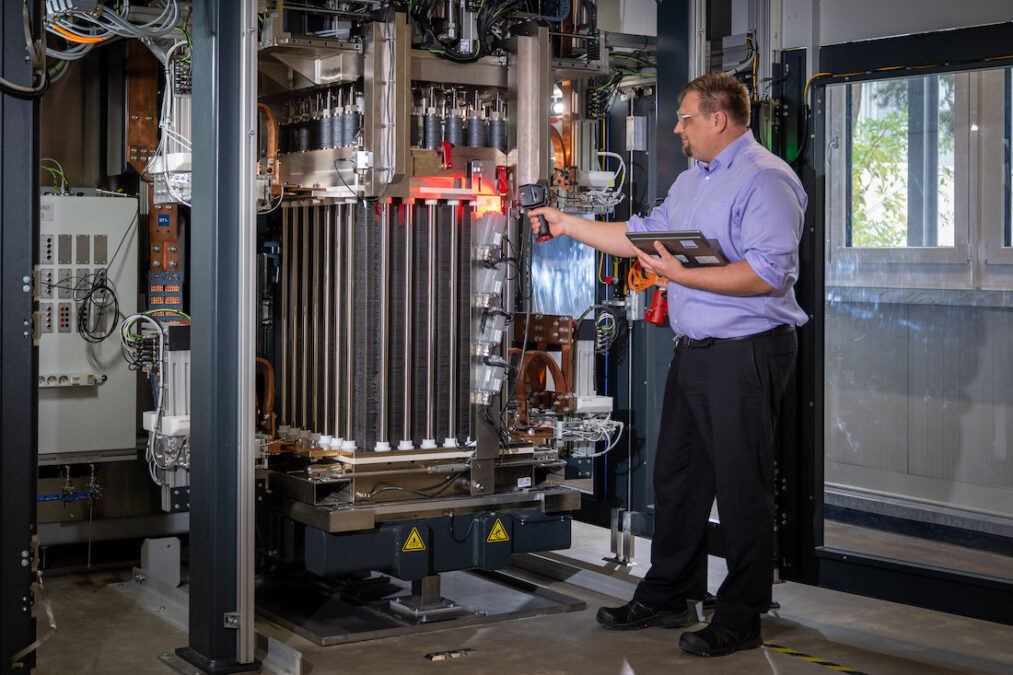
In a second test station, the "Hybrion" PEM electrolysis stacks manufactured in Bamberg are tested before delivery to customers. © Robert Bosch GmbH
The company installs these fuel cell power units (FCPMs) in a container and runs them continuously. The hydrogen produced in the electrolyzer is fed into the container via a network of pipes. The process that previously took place in the PEM electrolysis stacks to produce hydrogen is now reversed in the fuel cell stacks of the FCPMs. The electricity generated in this way is then fed back to the electrolyzer. The tests in this setup, called the "lifetime container," simulate various operating scenarios around the clock to ensure the longevity and reliability of the fuel cell propulsion systems.
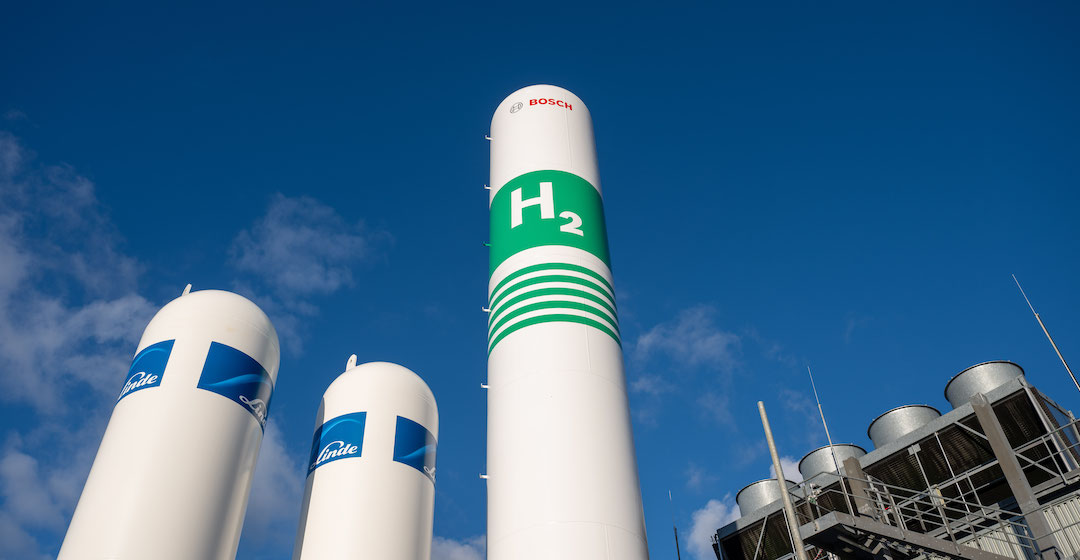
The hydrogen produced in the test environment in Bamberg is stored in a 21-meter-high tank at pressures of up to 50 bar. © Robert Bosch GmbH
A second test station in Bamberg also exists for the "Hybrion" PEM electrolysis stacks manufactured at the plant there. This allows Bosch to ensure that the stacks achieve their performance and efficiency under real operating conditions before delivery to customers. Various load profiles are simulated to test each stack's response to electrical fluctuations. Furthermore, each stack is activated before delivery so that it is immediately ready for use at the customer's site.
The test environment will be complemented by a 21-meter-high hydrogen tank, in which the energy carrier will be stored at 50 bar. Deliveries of the first units to customers have already begun since the start of electrolyzer production in March 2025.
Photo above
Two Bosch "Hybrion" PEM electrolysis stacks are integrated into the electrolyzer and can produce approximately one ton of hydrogen per day. © Robert Bosch GmbH



