
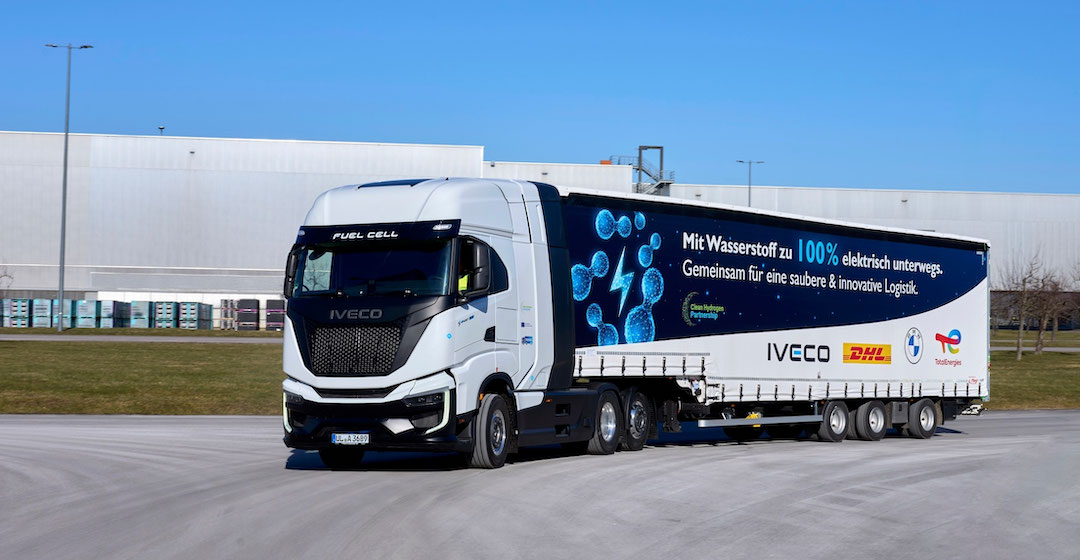
(Munich, Germany) – The BMW Group is expanding its transport logistics fleet with two fuel cell electric vehicles (FCEVs). Initially, a pilot operation is planned between the Leipzig, Landsberg, and Nuremberg locations "to test the practicality of this technology," the company stated. Two new hydrogen refueling stations are being built specifically for this purpose in Leipzig and Hormersdorf (Saxony).
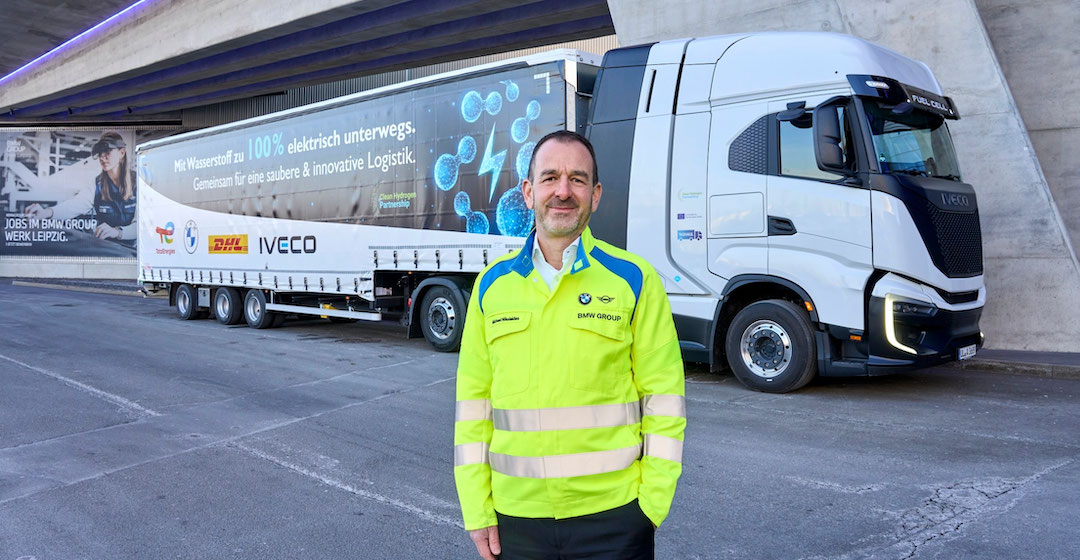
Michael Nikolaides, Head of Production Network and Logistics BMW Group: “Important milestone in gaining experience in series production and advancing this technology.” © BMW Group
Funded by the Clean Hydrogen Partnership, a total of 16 FCEVs are being used for testing in European countries. BMW is using two "S-eWay Fuel Cell" tractor units from the Iveco Group. According to the manufacturer, the range is up to 800 kilometers, and the refueling time for 70 kilograms of compressed hydrogen at 700 bar pressure is less than 20 minutes.
Gaining experience with FCEV technology in trucks
"For the first time, hydrogen-powered trucks are now being used in series production for German automobile production," says Michael Nikolaides, Head of Production Network and Logistics at the BMW Group. "This project is an important milestone in gaining experience and advancing this important technology." This should "pave the way for the commercialization of fuel cell trucks in Europe."
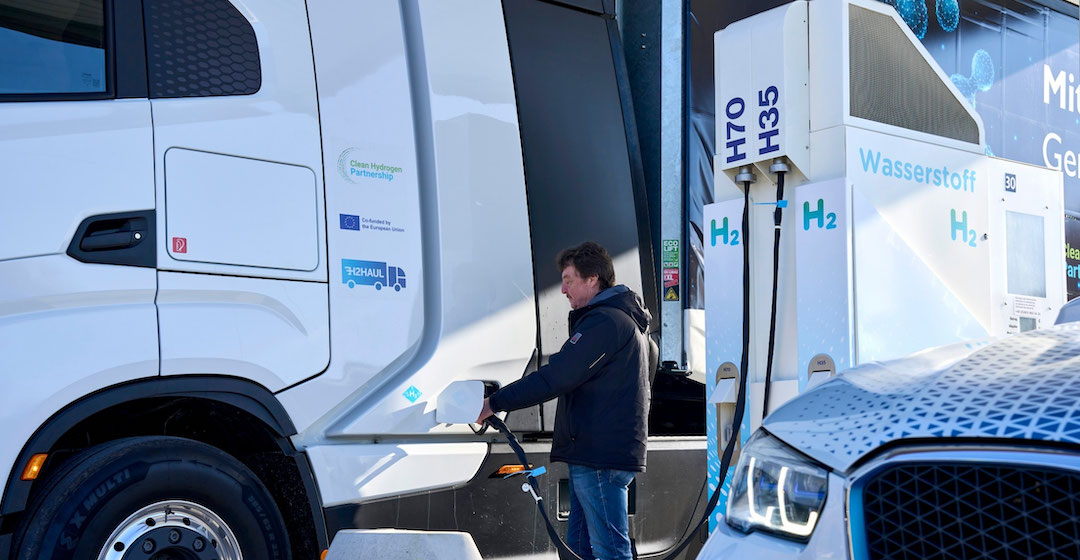
Refueling with 70 kilograms of hydrogen takes 20 minutes and the range is 500 kilometers. © BMW Group
Thanks to short refueling times and greater ranges, hydrogen trucks could be an important addition to electric trucks on the more than 500-kilometer-long Leipzig-Landsberg route, which are also used by the BMW Group. In addition, the H2 trucks offer "flexible logistics use" regardless of charging infrastructure or network expansion.
“The delivery of our first two tractor units to BMW is an important step in proving the practicality and scalability of hydrogen-powered long-distance transport,” says Giandomenico Fioretti, Head of Alternative Propulsion Business Development.
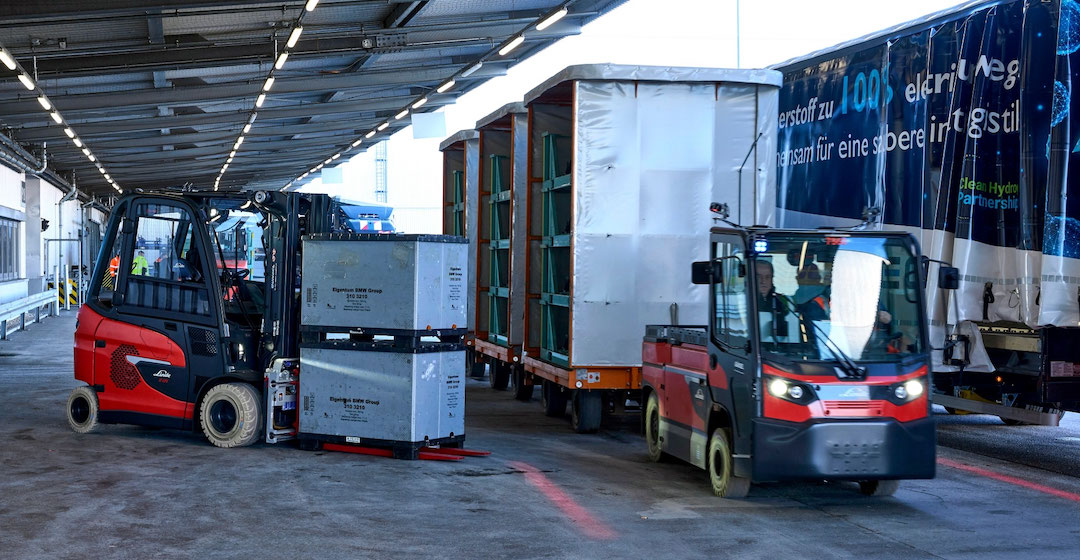
The BMW plant in Leipzig has five indoor hydrogen filling stations with automated refueling processes for fuel cell-powered forklifts and tugger trains. © BMW Group
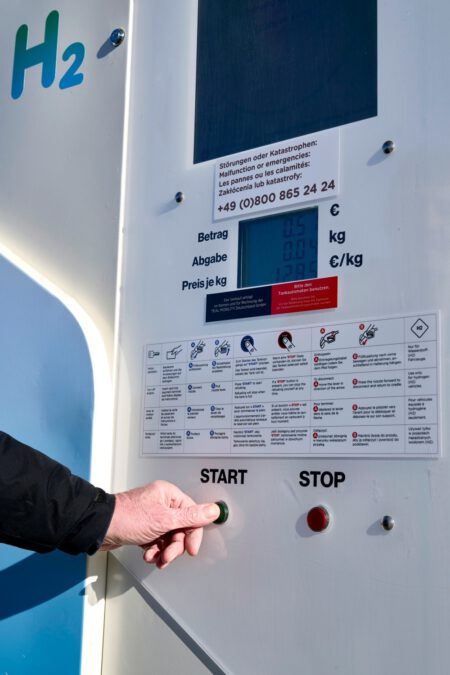
BMW had already set up its first indoor hydrogen filling station for internal factory logistics on the Leipzig factory premises in 2013 to refuel forklifts and tugger trains. Today, the plant has one of the largest fleets of fuel cell-powered industrial trucks in Europe. Five hydrogen filling stations enable fully automated refueling processes.
In addition, BMW uses five bivalent burners in its paint shop at the Leipzig plant that can use hydrogen as well as natural gas. Other burners will be gradually converted so that the use of natural gas can be completely eliminated in the long term.
Fuel cell cars are integrated into the portfolio
In the passenger car segment, after testing the pilot fleet of the "iX5 Hydrogen" model, BMW is now preparing to produce hydrogen-powered vehicles in 2028. The series model will be seamlessly integrated into the existing BMW vehicle portfolio, so that an existing model will also be offered in a fuel cell drive variant. The group expressly views FCEV technology "as a supplement to the already established drive technologies" such as battery electric vehicles (BEV), plug-in hybrid electric vehicles (PHEV) and internal combustion engines (ICE).
The BMW pilot project with hydrogen-fueled vehicles in cooperation with Iveco, DHL and Teal Mobility is part of the European H2Haul project. © BMW Group
The pilot project is part of the European "H2Haul" project to promote hydrogen mobility in freight transport. The BMW Group is working with Iveco, DHL and Teal Mobility. The two machines delivered are part of a fleet of twelve hydrogen-powered vehicles that Iveco is using in Germany, France and Switzerland as part of H2Haul "to demonstrate the future viability of fuel cell trucks". In addition to the participation in H2Haul, the HyCET research project to test trucks with H2 combustion engines was also initiated under the consortium leadership of BMW. In the future, two 40-ton trucks and one 18-ton truck will be used in logistics. The project is funded by the Federal Ministry for Digital and Transport (BMDV). The partners in this project are DHL, Volvo Trucks, Deutz, Keyou and Total Energies.
Compared to the fuel cell, the combustion engine does consume more fuel, but "due to its similarity to the established diesel engine, it can score points with lower production costs." Fuel cell trucks and H2 combustion engines use the same routes and the same filling stations. The aim of comparing the two drive technologies is to find the best possible application area for each technology.
Photo above
The BMW Group is sending two fuel cell trucks into pilot operation between the Leipzig, Landsberg and Nuremberg sites to test the practical suitability of this technology. © BMW Group



