
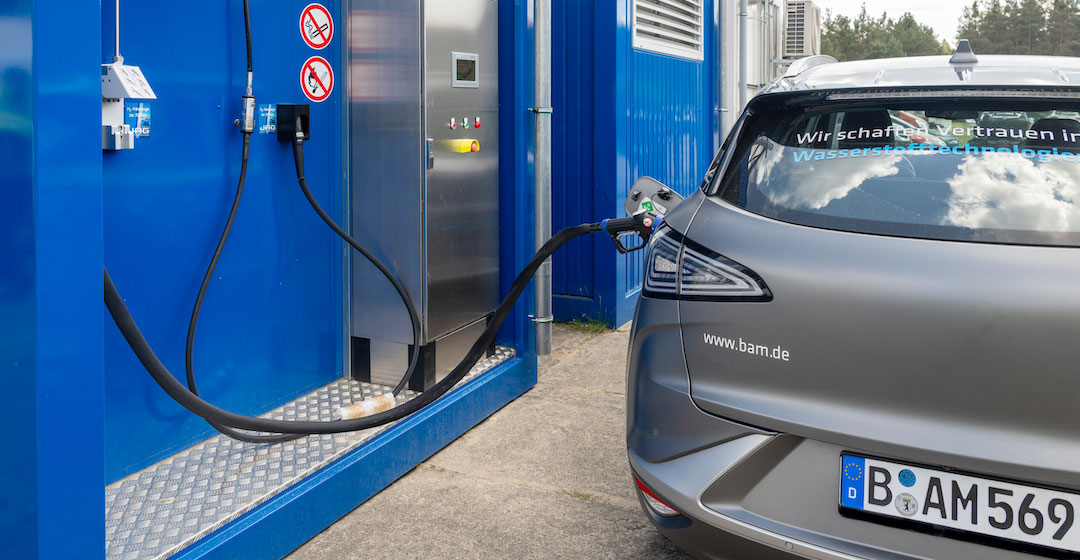
(Berlin / Germany) – The Federal Institute for Materials Research and Testing (BAM) has commissioned a digitally monitored research hydrogen refueling station. Sensors record all operational data so that it can be incorporated into digital models and twins.
Quality assurance of all processes
The aim is to "develop innovative technologies for quality assurance for all technical processes in the hydrogen infrastructure" and to test them together with industry and research partners, according to the authority. The facility will enable tests under realistic conditions and in-depth research into safety-relevant aspects such as leaks and material stress, as well as to optimize digital technologies for process monitoring.
The station serves "as a real-world laboratory for the hydrogen infrastructure to test all elements of future digital quality assurance," says Frank Wille, head of the Hazardous Goods Enclosures and Energy Storage department. "We want to optimize maintenance cycles, be able to detect critical conditions early, and further develop the quality standards for reliable hydrogen refueling stations."
The research filling station on the twelve-square-kilometer BAM test site for technical safety in Horstwalde near Berlin has its own electrolyzer, which will produce green hydrogen using solar power. BAM announced the construction back in 2022 ( as we reported ). The project will "significantly advance" the availability and economic viability of such facilities and thus also the acceptance of hydrogen infrastructure.
The pilot project is embedded in BAM's "H2Safety" Hydrogen Competence Center, which conducts research into the safety of hydrogen technologies. Its focus is on investigations into material suitability and compatibility, new concepts for component safety and testing, certifications, sensor technology and analytics, as well as process and plant safety.
Photos
The Federal Institute for Materials Research and Testing researches and tests all processes for a safe hydrogen infrastructure using real-time monitoring. © BAM



