
(Brussels / Belgium) – Spain, Lithuania, and Austria intend to participate in the European Hydrogen Bank's second auction, using the "Auctions-as-a-Service" system. In addition to the €1,2 billion in EU funding from the Innovation Fund, the three EU member states will contribute over €700 million in national funds to support renewable hydrogen production projects in their countries. This brings the total funds mobilized through the auction to approximately €2 billion. The auction begins on December 3.
Fixed premium vs voluntary state funding
For renewable hydrogen produced in the European Economic Area, the projects selected in these auctions typically receive a fixed production premium (pay-as-bid) for a maximum period of ten years. The premium is intended to close the gap between the production price and the price that consumers are currently willing to pay - in a market where non-renewable hydrogen is even cheaper to produce than renewable hydrogen, according to the European Commission.
The bids for the auctions are ranked in order of lowest to highest bid price and are accepted in this order until the auction budget is exhausted. The participants therefore have to weigh up the options: low bid, right at the bottom of what is still economically viable, or high bid and thus risk not being considered at all because the competition estimates lower costs.
To mitigate the risks, the Commission is offering, as part of the Hydrogen Bank, that countries participate in the "Auctions-as-a-Service" mechanism. Companies submit a single bid for two different sources of funding. The system allows Member States to finance additional projects in their country that participated in the auction but were not selected for funding from the Innovation Fund due to budget constraints. Mobilising these additional funds increases the industry's chances of obtaining (partial) funding and thus reduces its costs.
Germany as a pioneer
At the beginning of the year, Germany became the first member state to participate in the EU's "Auctions as a Service" mechanism, launching the first auction of its kind. The German government provided an additional €350 million in federal funding for electrolyzer projects. This supplemented the €800 million that the EU Innovation Fund had earmarked for EU-wide use. Three other countries are now following this principle.
- Spain will provide between 280 and 400 million euros for the auction system, using funds from its economic stimulus package. The total amount of support available still depends on the amount of funds used as aid for hydrogen clusters, which will be clarified by spring 2025. The Spanish government intends to national hydrogen strategy increase domestic electrolyzer capacity to twelve gigawatts by 2030.
- Lithuania is providing around 36 million euros from the budget of its modernisation fund. Participation is intended to help achieve the target of 1,3 gigawatts of electrolysis capacity and the production of 129.000 tonnes of renewable hydrogen per year by 2030. In the updated National Energy and Climate Plan and the National Strategy for energy independence, the Lithuanian government aims to make renewable hydrogen an important energy source in the near future.
- Austria is providing 400 million euros from its state budget. Hydrogen producers can receive a grant of up to 200 million euros per project, with a maximum production capacity of 300 megawatts being supported through this auction. The country aims to achieve climate neutrality by 2040. The national hydrogen strategy plans to increase domestic electrolyzer capacity to one gigawatt by 2030.
Member States voluntarily identify competitive projects in their territory and support companies that are "left empty-handed" in the auctions, without the need for a separate national auction or other selection procedure. Any support offered by Member States through this service is considered State aid and must be notified to the Commission. However, Member States then benefit from a simplified approval procedure.
promotion of domestic hydrogen production
The European Hydrogen Bank is an initiative to promote domestic production and import of renewable hydrogen in the EU. With an estimated total budget of €40 billion for the period 2020-2030 from the revenues of the EU Emissions Trading System, the Innovation Fund aims to create financial incentives for companies and public authorities to invest in low-carbon technologies and support Europe's transition to climate neutrality. So far, the Innovation Fund has awarded around €7,2 billion to innovative projects. The first auction started in November 2023 and was closed in February 2024.
Photos
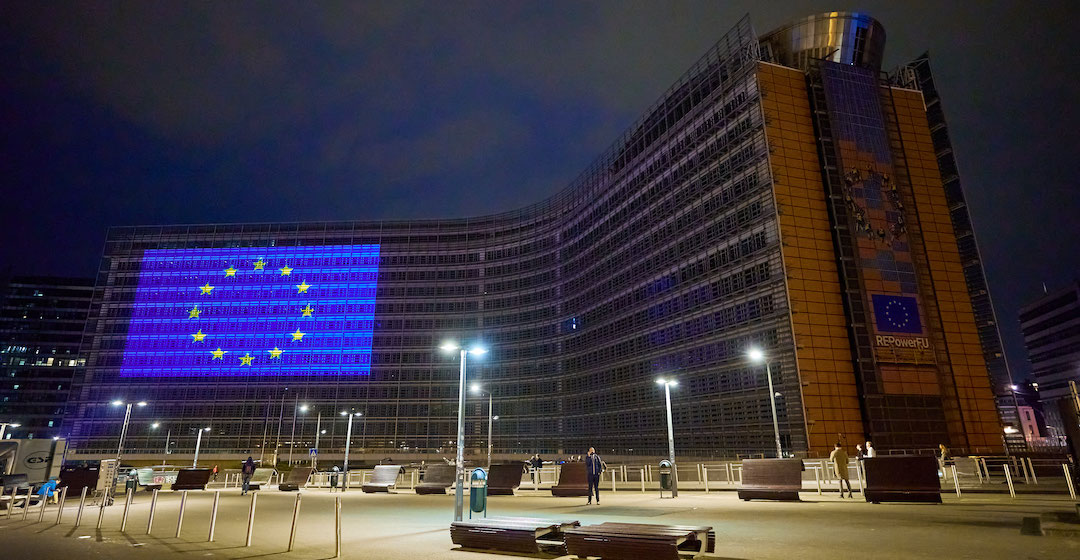
At the next hydrogen auction, Spain, Lithuania and Austria will participate in the "Auction-as-a-Service" program. © European Union / Claudio Centonze



